
Ronse (Renaix) — municipality in East Flanders, Belgium
Ronse (French: Renaix) is a municipality in East Flanders, Belgium, noted for its textile past, location in the Flemish Ardennes, medieval pilgrimage traditions and mixed cultural landscape.

Ronse (French: Renaix) is a municipality in the Belgian province of East Flanders. It lies at about 50°44′N 03°36′E in a hilly area of the Flemish Ardennes and historically counted a population of roughly 24,000 in the early 21st century. The town is officially Dutch-speaking and appears under local administration as Ronse, while French-language sources commonly use the name Renaix.
Image gallery
6 Images


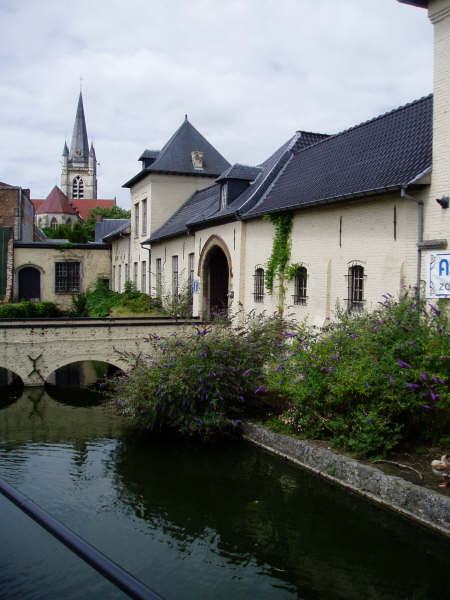
Geography and landscape
The municipality occupies a compact river valley surrounded by rolling hills and forested slopes typical of the southern part of East Flanders. Its terrain and narrow lanes make the area popular with walkers and cyclists; local roads and climbs are often included in recreational routes and regional road races. The setting gives Ronse a distinct character within the broader province of East Flanders.
History and development
Ronse developed in the Middle Ages around craft activity and pilgrimage. From medieval times the production of cloth — notably linen and woven goods — was an important local industry and later expanded during the industrial era. A longstanding tradition of pilgrimage to a Marian devotion also shaped the town's cultural life, attracting visitors and influencing its churches and public rituals.
Culture, economy and sights
Today Ronse combines pockets of light industry with services, tourism and cultural institutions. Visitors encounter historic streets, churches and municipal collections as well as local festivals and markets. Small museums, galleries and community centres present the town's textile heritage and local history, while cafés and shops reflect its cross-border cultural influences.
Practical notes and distinctions
Ronse serves as a local centre for surrounding villages and is linked by regional roads and public transport to nearby towns in the province. Its bilingual cultural atmosphere, hilly landscape and textile past are among the features that distinguish it within East Flanders province.

- Coordinates: 50°44′N 03°36′E
- Common names: Ronse (Dutch), Renaix (French)
- Noted for: textile history, pilgrimage tradition, hilly countryside
Related articles
Author
AlegsaOnline.com Ronse (Renaix) — municipality in East Flanders, Belgium Leandro Alegsa
URL: https://en.alegsaonline.com/art/84030
Sources
- statbel.fgov.be : Werkelijke bevolking per gemeente op 1 januari 2007 / Population de droit par commune au 1 janvier 2007 (.xls)
- statbel.fgov.be : Geografische coördinaten van de gemeenten (.xls)