
Robert II of France (Robert the Pious)
Robert II (972–1031), called the Pious, was King of the Franks from 996. Son of Hugh Capet, he reinforced the early Capetian dynasty, had complex relations with nobles and the Church, and was succeeded by Henry I.
Overview
Robert II (March 27, 972 – July 20, 1031), commonly called Robert the Pious, was a member of the Capetian dynasty and King of the Franks. He was born in Orléans and was the son of Hugh Capet and Adelaide of Aquitaine. To secure succession, he was associated as co-king during his father's lifetime and became sole ruler in 996. His long reign took place during a period when the Capetian house was still consolidating royal authority.
Image gallery
10 Images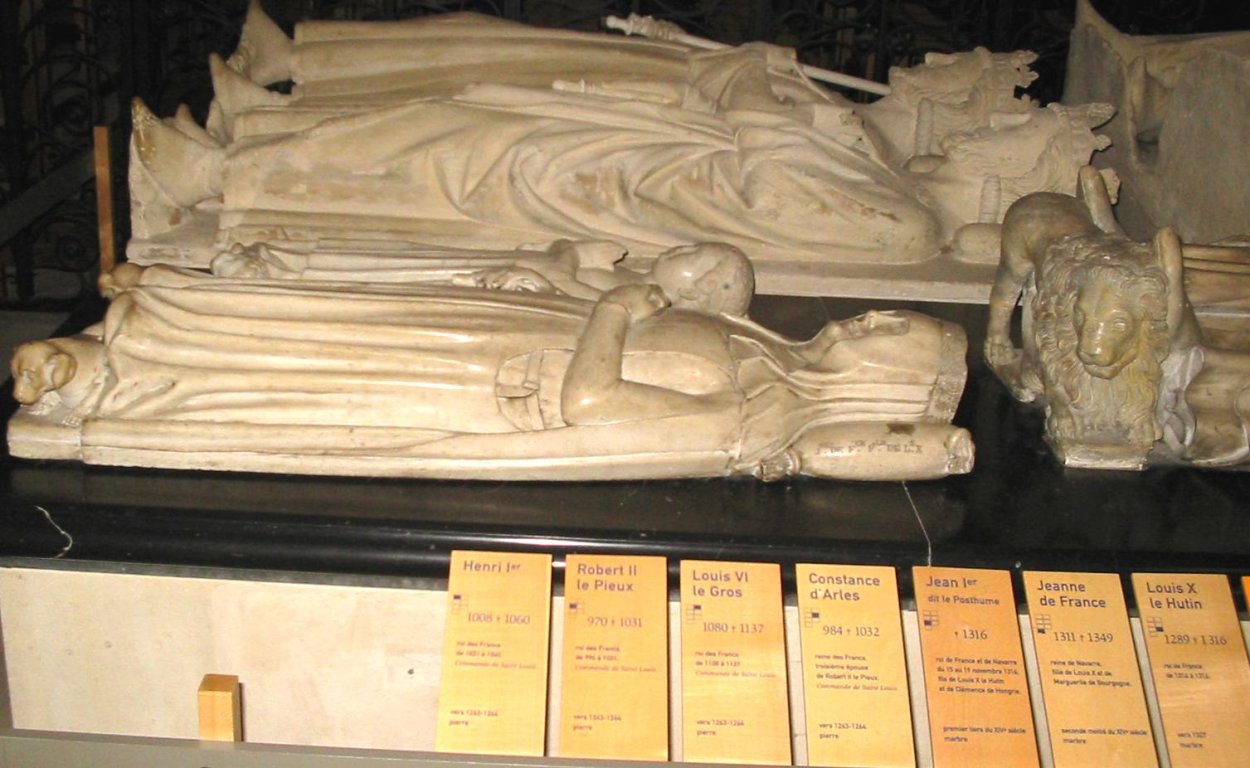


Reign and political life
Robert's rule combined pious public devotion with active engagement in secular politics. He struggled at times with powerful regional magnates and with members of the clergy over appointments and moral conduct. These tensions illustrate the fluid balance of power in France around the turn of the first millennium, when local lords often exercised more effective control on the ground than the king himself.
Family, marriages and succession
Robert married Constance of Arles, with whom he had several children. Their son Henry I succeeded Robert as king. The royal family used marriages and dynastic ties to build alliances across the fragmented political landscape of medieval France.
Characteristics and notable episodes
- Nickname "the Pious": Robert was known for visible religious devotion and support for monastic institutions, which shaped his public image.
- Church relations: his dealings with bishops and popes reflected broader conflicts between secular rulers and ecclesiastical authority.
- Dynastic consolidation: as an early Capetian king he helped establish hereditary succession practices that benefited later Capetian monarchs.
Legacy
Robert II's reign is often judged less by territorial expansion than by the slow strengthening of royal institutions and dynastic continuity. He was buried at the Basilica of Saint-Denis, the burial place of French kings, symbolizing his place in the royal lineage. Historians view him as a transitional figure: pious and ceremonially powerful, yet constrained by the realities of feudal fragmentation. His son Henry I continued the Capetian line that would dominate France for centuries.
Related articles
Author
AlegsaOnline.com Robert II of France (Robert the Pious) Leandro Alegsa
URL: https://en.alegsaonline.com/art/83339