
Richmond, North Yorkshire
Market town and civil parish in Richmondshire, North Yorkshire, England, noted for its Norman castle, Georgian streets, riverside setting and role as a gateway to the Yorkshire Dales. Population 8,413 (2011).
Richmond is a historic market town and civil parish in the district of Richmondshire, North Yorkshire, England. It sits beside the River Swale and had a population of 8,413 at the 2011 census. The town combines a medieval core with later Georgian architecture and functions today as a local service centre and tourist gateway to nearby rural landscapes.
Image gallery
10 Images


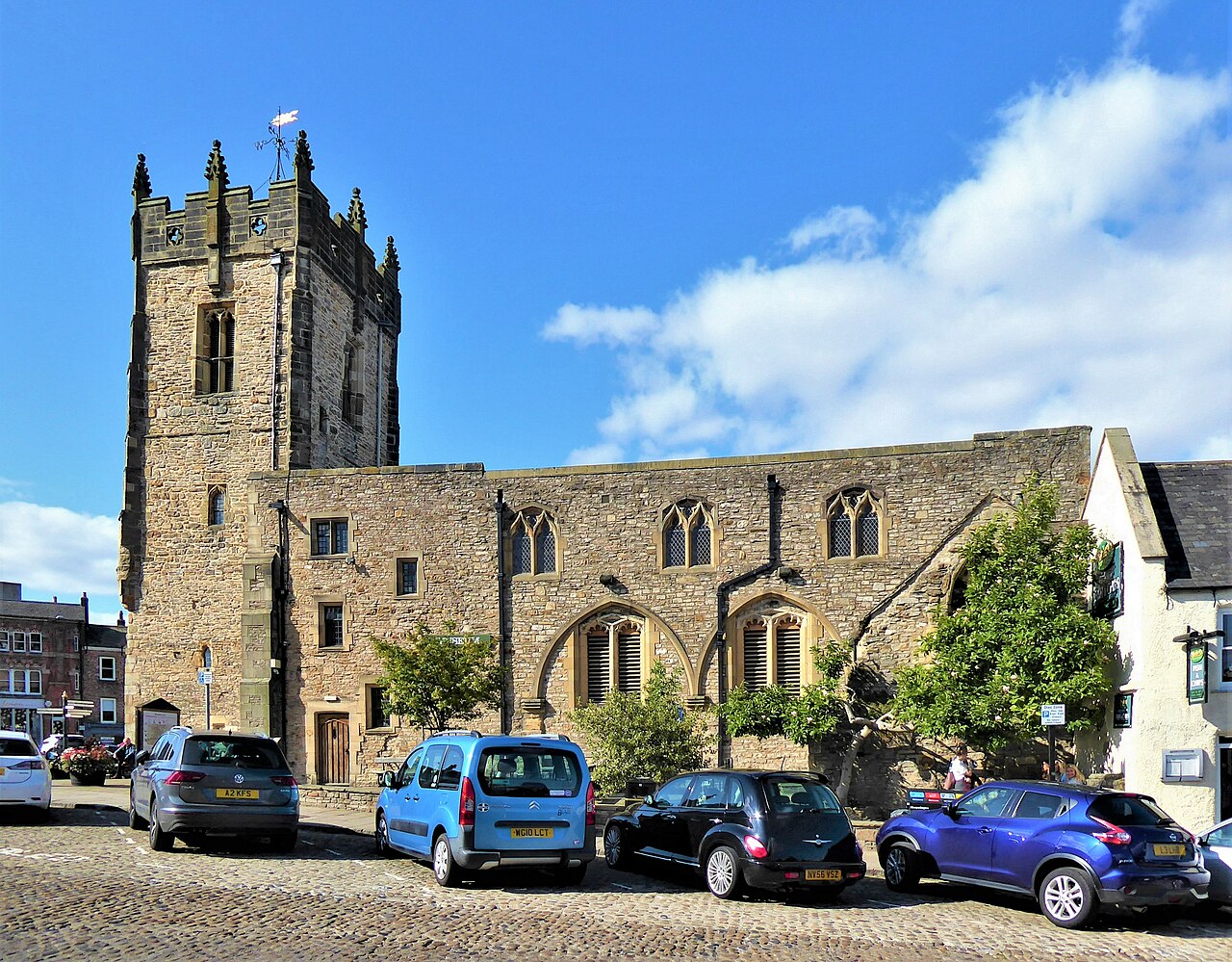


Geography and layout
Richmond occupies a sheltered position on a loop of the River Swale. Its centre features narrow streets and a traditional market square, while suburbs and surrounding villages extend into the surrounding countryside. The town is commonly used as a base for exploring the Yorkshire Dales and other upland areas to the west and north.
History
The town developed after the Norman Conquest when a castle and borough were established to control the surrounding region. Remnants of medieval fortifications survive alongside later 18th- and 19th-century buildings that reflect Richmond’s role as a regional centre. Over centuries it retained a market-town character, serving agricultural communities in the vale and uplands.
Economy and culture
Local economic activity combines retail, hospitality, professional services and tourism. Regular markets and independent shops are important to the town’s life. Cultural offerings include local festivals, historic interpretation at key sites, and recreational access to riverside walks and nearby dales.
Notable features
- Richmond Castle: a prominent Norman fortress overlooking the town.
- Market Square and Georgian terraces: fine examples of later town development.
- River Swale: offers walks and a historic riverside setting.
- Gateway to the Yorkshire Dales: popular with walkers and visitors.
Richmond remains a blend of historical interest and contemporary town life, valued both by residents and visitors for its heritage, scenery and local services.
Related articles
Author
AlegsaOnline.com Richmond, North Yorkshire Leandro Alegsa
URL: https://en.alegsaonline.com/art/82769
Sources
- genuki.org.uk : GENUKI
- neighbourhood.statistics.gov.uk : Neighbourhood Statistics