
Red Grange
Harold "Red" Grange (1903–1991), nicknamed "The Galloping Ghost," was a pioneering American football halfback whose college stardom at Illinois and barnstorming professional career helped popularize the NFL.
Harold Edward "Red" Grange was born June 13, 1903 and died January 28, 1991. Commonly called "Red" for his hair and celebrated as "The Galloping Ghost," he became one of the most famous figures in American football during the 1920s and early 1930s. He was an influential American player whose primary position was halfback, and he competed at both the collegiate and professional levels as the sport expanded in popularity.
Image gallery
10 Images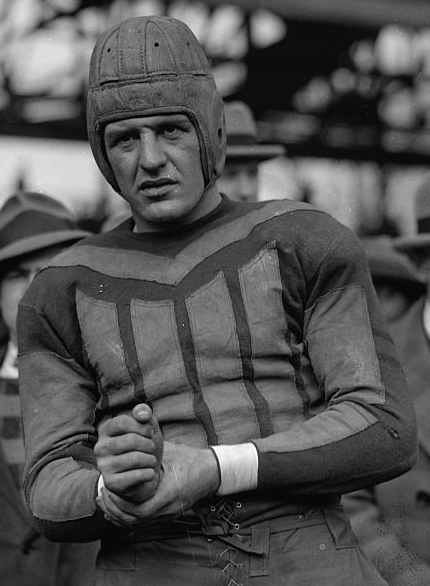



Early life and college
Grange rose to national prominence at the University of Illinois, where his combination of speed, vision and elusiveness made him a regular feature of contemporary sports reporting. Playing for Illinois under coach Bob Zuppke, he drew unusually large crowds and media attention for the era. Accounts from the period emphasize that his running style and ability to break long gains made him a household name well before professional football became widely followed.
Professional career
Following his collegiate success, Grange signed with professional teams and spent nine seasons in the early National Football League. He first joined the Chicago Bears in 1925 and played with the Bears again from 1929 to 1934; in between he also played for the New York Yankees football team. His participation in barnstorming tours and high-profile games with pro clubs helped draw attention to the NFL at a time when the league was still establishing itself as a major professional sport.
Style of play and reputation
Contemporary observers praised Grange for his combination of speed, balance and toughness. He was often described as a decisive runner who could change the momentum of a game with long runs or timely plays. Stories and later retrospectives contributed to a legend around his reliability as a ball carrier; some sources assert that he rarely fumbled, and such claims have become part of his sporting lore.
Films, public profile and off-field activity
Beyond the gridiron, Grange appeared in two silent films, including One Minute to Play (1926) and Racing Romeo (1927), which extended his recognition outside sports. He also participated in exhibition games and public appearances that promoted professional football in cities where the sport had previously received little attention. These activities illustrate how early star athletes could serve as promotional figures for professional leagues.
Honors and legacy
- Grange's jersey number (77) has been retired by the University of Illinois and was honored by the Chicago Bears, reflecting his lasting association with both institutions.
- He has been inducted into both major halls of fame recognizing collegiate and professional achievement in football, a testament to his impact at multiple levels of the sport.
- Long-term assessments of early football history frequently cite Grange as a pivotal figure whose popularity helped persuade fans and promoters that professional football could be a viable spectator enterprise.
Later life and historical perspective
After leaving the playing field, Grange remained a public figure and later worked in business and sports promotion. Historians view his career as an important bridge between the regional celebrity of college football stars and the emergence of professional players as national figures. Modern rankings and retrospectives often place him among the most influential early players; for example, some media surveys have named him among the greatest college players of all time.
For readers seeking dated primary references or biographical details, contemporary accounts and later histories provide context on his birth (date), early life (year), role in the rise of professional football (league), club affiliations (team), position (halfback), national identity (American), and the dates of his death (date, year).
Related articles
Author
AlegsaOnline.com Red Grange Leandro Alegsa
URL: https://en.alegsaonline.com/art/81656
Sources
- footballfoundation.org : Red Grange
- espn.com : "25 Greatest Players In College Football"