
Rectus abdominis muscle
A paired vertical abdominal muscle ("abs") that flexes the trunk, contributes to posture and breathing, and is clinically notable for the 'six-pack' appearance and conditions like diastasis recti.

The rectus abdominis is a long, paired muscle of the anterior abdominal wall in the human body. Colloquially called the "abs," it extends along the midline from the lower thorax toward the pelvis. Its segmented appearance in well-conditioned individuals gives rise to the familiar "six-pack" look.
Image gallery
3 Images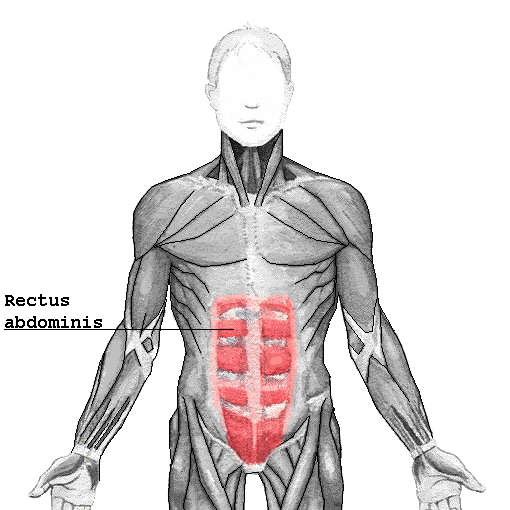

Anatomy and structure
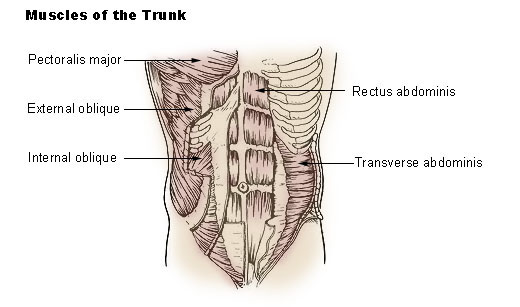
The muscle runs vertically on either side of the linea alba. Each muscle originates from the pubic crest and pubic symphysis and inserts into the xiphoid process and costal cartilages of the lower ribs near the lower chest. Tendinous intersections cross the muscle at several levels, creating visible segments. Innervation is primarily from the thoracoabdominal nerves, and blood supply includes the superior and inferior epigastric vessels.
Function
The rectus abdominis flexes the lumbar spine, bringing the rib cage toward the pelvis. It also increases intra-abdominal pressure to assist coughing, forced expiration, defecation, and childbirth. Acting with other trunk muscles, it helps stabilize the pelvis and maintain upright posture.
Clinical relevance and variation
- Diastasis recti: separation of the two muscle bellies along the linea alba, common after pregnancy or rapid weight change.
- Strain and injury: overuse or sudden exertion can produce pain and tears.
- Cosmetic and surgical contexts: the muscle is a landmark in procedures such as abdominoplasty and hernia repair.
- Anatomical variation: the number and completeness of tendinous intersections vary between individuals.
Training and practical notes
Exercises that emphasize trunk flexion and core stabilization—such as crunches, leg raises, and planks—engage the rectus abdominis. However, spot reduction of fat over the muscle is a myth: visible definition depends on overall body fat, muscle development, and genetics. Balanced training of surrounding muscles (obliques and transversus abdominis) is important for function and injury prevention.
Distinctions and notable facts
The rectus abdominis is one of four paired abdominal muscle groups; unlike the obliques, it runs longitudinally and is directly responsible for spine flexion. Its segmented appearance is aesthetic rather than functional; tendinous intersections do not increase strength but influence how the muscle contracts and looks. For further general information see related anatomy resources: muscle overview, human anatomy, directional terms, thoracic insertions.
Author
AlegsaOnline.com Rectus abdominis muscle Leandro Alegsa
URL: https://en.alegsaonline.com/art/81611