
Records of the Grand Historian (Shiji)
A foundational Chinese historical work by Sima Qian covering legendary rulers through the early Han court. Explains its structure, sources, authorship, style, and lasting influence on historiography and literature.
The Records of the Grand Historian, known in Chinese as 史記, is a landmark universal history compiled by the Han dynasty historian Sima Qian. It narrates Chinese history from early legendary rulers (the Three Sovereigns and Five Emperors) up to the reign of Emperor Wu of Han. The work is widely regarded as the first comprehensive narrative history in China and a model for later official histories.
Image gallery
4 Images
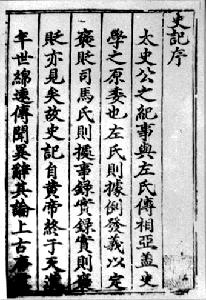

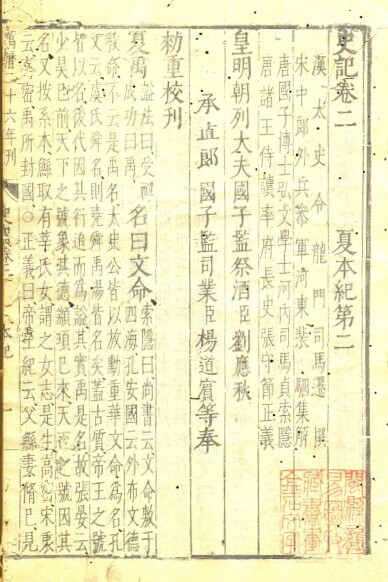
Structure and contents
The book combines several kinds of historical writing and is traditionally divided into five broad categories. Its arrangement and literary method set a standard for subsequent dynastic histories.
- Basic Annals (Benji): chronologies of emperors and major rulers.
- Tables (Biao): chronological and genealogical summaries to aid comparison.
- Treatises (Shu): thematic essays on law, rites, music, economy and astronomy.
- Hereditary Houses (Shijia): records of feudal states and noble families.
- Biographies (Liezhuan): narrative life-stories of important figures, generals, ministers, and foreigners.
The complete collection contains numerous chapters—often cited as about 130—that mix chronological annals with extended biographies and essays.
Authorship and composition
Sima Qian completed the work in the early Han period after inheriting the imperial historiographer's office from his father. He drew on court archives, local records, inscriptions, oral traditions and earlier writings. His personal circumstances were difficult: after defending a general who fell from favor he suffered severe punishment but continued and finished the work despite adversity.
Stylistically, the Records use narrative biography as a key method. Rather than a purely chronological list of events, Sima Qian emphasized character, motive and anecdote, producing vivid portraits that often read like literature as much as record-keeping.
Importance and legacy
The Shiji established conventions of Chinese historiography and influenced historians, novelists and scholars for centuries. It remains a primary source for early Chinese history and culture and has been translated and studied internationally. Modern readers should note that the work blends myth, oral tradition and documentary evidence; early sections are therefore treated with caution and compared with archaeology and later scholarship.
For further study, consult modern commentaries and translations to distinguish Sima Qian's narrative choices from established facts; the work is as much literary achievement as it is historical compilation.
Related articles
Author
AlegsaOnline.com Records of the Grand Historian (Shiji) Leandro Alegsa
URL: https://en.alegsaonline.com/art/81595