
Randa, Valais — Alpine village in the Matter Valley
Randa is a German-speaking municipality in the Mattertal (district of Visp), canton of Valais, Switzerland, noted for its dramatic mountain setting, hiking routes and history of large rockfalls.
Overview
Randa is a small municipality in the upper Matter Valley (Mattertal), administratively part of the district of Visp in the canton of Valais, Switzerland. The village lies in a narrow Alpine corridor surrounded by steep peaks and is one of several settlements that line the route toward Zermatt.
Image gallery
6 Images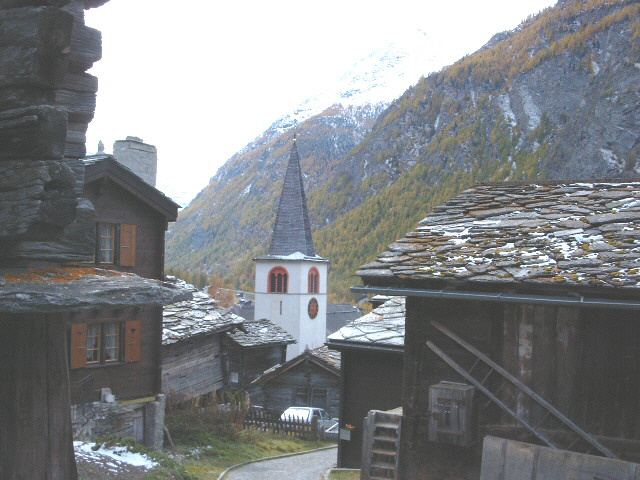


Geography and environment
Randa sits in the shadow of major four-thousanders: the Weisshorn and the Dom dominate the skyline and define the local climate and drainage. The valley floor narrows here, with steep talus slopes and rock faces that feed the Mattervispa river. Alpine pastures, mixed conifer forests and high-mountain terrain form the immediate surroundings, making the area important for biodiversity and traditional seasonal grazing.
History and geology
The village has long been shaped by its geology as well as by human mountain agriculture and transit. Over the past century large rockfalls and landslides have occurred in and above Randa, changing the local landscape and prompting engineering responses to reduce hazard and protect the settlement. These events are frequently cited in studies of slope instability in high mountains and have influenced how mountain villages manage risk.
Transport, economy and tourism
Randa is on the main road and rail axis that links Visp to Zermatt; the local railway station connects hikers and residents to the wider region. Economically the village combines traditional alpine farming with services for hikers, climbers and visitors. Randa is a convenient base for mountaineering, day walks and access to high trails that traverse the valley sides.
Attractions and activities
- Hiking and alpine trails, including links to high-level routes and viewpoints.
- Mountaineering approaches toward the Weisshorn, Dom and surrounding peaks.
- Local cultural features: village architecture, chapels and seasonal alpine farming practices.
- Interpretation of local geology and hazard mitigation efforts visible around the village.
Visitors come to Randa for scenery, tranquility and as a waypoint on longer treks. The combination of dramatic peaks, accessible trails and a vivid record of mountain processes makes it an instructive place for both recreation and learning about high-Alpine environments.
Related articles
Author
AlegsaOnline.com Randa, Valais — Alpine village in the Matter Valley Leandro Alegsa
URL: https://en.alegsaonline.com/art/81090
Sources
- bfs.admin.ch : "Arealstatistik Standard - Gemeinden nach 4 Hauptbereichen"
- bfs.admin.ch : "Ständige Wohnbevölkerung nach Staatsangehörigkeitskategorie Geschlecht und Gemeinde; Provisorische Jahresergebnisse; 2018"