
Race and Crime in the United States
Overview of how race and criminal justice interact in the U.S., covering data sources, historical roots, patterns of disparity, causes, policy responses, and ongoing debates.
The relationship between race and crime in the United States is a long-standing public policy and social issue that touches criminal law, policing, courts, and corrections. Debates center on why racial and ethnic disparities appear at many stages of the justice system—arrests, prosecutions, sentencing, and prison populations—and how best to interpret official crime statistics and reform practices.
Image gallery
3 Images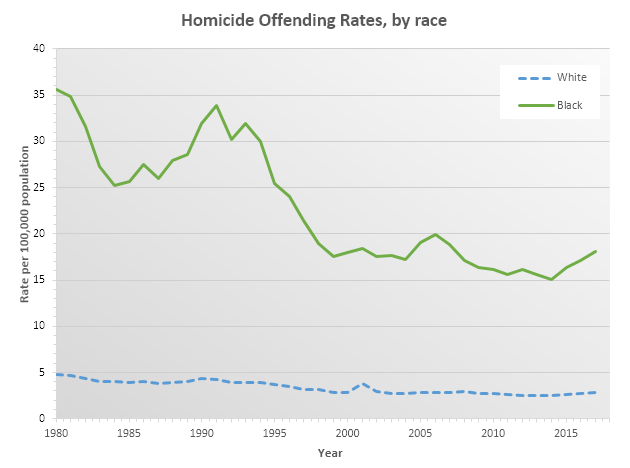


Measuring crime and disparities
Researchers use different data sources, notably the FBI's Uniform Crime Reports (UCR) and the National Crime Victimization Survey (NCVS), along with local court and correctional records. Each source has limits: reporting practices, underreporting by victims, and racial differences in contact with police can shape observed patterns. Analyses often distinguish between offending rates, victimization rates, and system responses.
Historical and structural context
Historical factors such as slavery, segregation, economic inequality, and discriminatory laws have shaped contemporary geographic and social patterns of crime and enforcement. Policy shifts in the late 20th century—expanded drug enforcement, mandatory minimum sentences, and aggressive policing strategies—contributed to rapid growth in incarceration and disproportionate impacts on Black and Hispanic communities.
Commonly cited causes and mechanisms
- Socioeconomic inequality and concentrated disadvantage in some neighborhoods.
- Policing practices, including stop-and-frisk, hot-spot policing, and racial profiling.
- Prosecutorial discretion and charging decisions; some studies report prosecutors seek mandatory minimums more often against certain racial groups (see research).
- Sentencing laws and policies that historically produced differential outcomes for offenses linked to particular populations.
Effects and public importance
Disparities in the justice system contribute to concentrated social harm: family disruption, reduced economic opportunity, and distrust of law enforcement. Differential rates of victimization also affect communities of color. Public perceptions of crime are shaped by media coverage and political discourse, which can amplify fears and influence policy.
Reform efforts and debates
Policy responses include sentencing reform, reducing mandatory minimums, diversion programs, community policing, body-worn cameras, and investments in prevention and reentry services. Laws such as federal and state sentencing reforms in recent years aim to reduce some disparities, while advocates argue broader structural change is needed to address root causes.
Understanding race and crime requires careful attention to data limitations, the distinction between criminal behavior and system responses, and the social and economic conditions that shape both offending and enforcement. The topic remains a central and contested area of research and public policy in the United States.
Related articles
Author
AlegsaOnline.com Race and Crime in the United States Leandro Alegsa
URL: https://en.alegsaonline.com/art/80677