
Provinces of Belgium
Summary of Belgium’s provincial system: which provinces exist, how they are organized within regions, their administrative roles, historical changes, linguistic distinctions, and notable facts.
Belgium (country overview) is organised into three regions: the Flemish Region (Flanders), the Walloon Region (Wallonia) and the Brussels-Capital Region (Brussels-Capital). Only Flanders and Wallonia are subdivided into provinces; each of those two regions contains five provinces. The Brussels-Capital Region is a separate, bilingual region and is not part of any province.
Image gallery
10 Images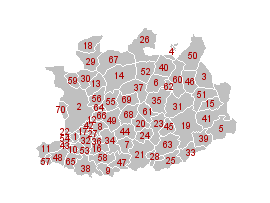


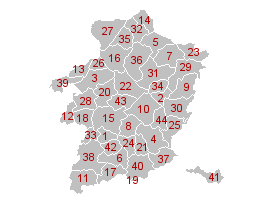


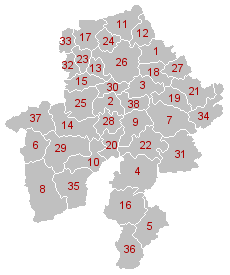

List of provinces
- Flemish Region (Flanders): Antwerp (Antwerpen), East Flanders (Oost-Vlaanderen), West Flanders (West-Vlaanderen), Flemish Brabant (Vlaams-Brabant), Limburg.
- Walloon Region (Wallonia): Hainaut (Henegouwen), Namur, Liège, Walloon Brabant (Brabant Wallon), Luxembourg.
For a concise index and additional administrative details see the provinces reference (provincial list).
Provinces form an intermediate level of government between the regions and municipalities. Each province typically has an elected provincial council, an executive college or board, and a governor who performs representative and coordinating duties. Provincial institutions oversee services such as regional planning, certain roads and infrastructure, support for schools and cultural initiatives, and coordination among municipalities.
Historically the present provincial borders evolved after Belgian independence in 1830 and through later reforms. A significant change occurred in 1995 when the former single Province of Brabant was divided into Flemish Brabant and Walloon Brabant and the Brussels area gained separate status as the Brussels-Capital Region. The modern provinces therefore reflect both older territorial traditions and adjustments to linguistic and political realities.
Language and political context are key distinctions: provinces in Flanders are Dutch-speaking, those in Wallonia are French-speaking, while a small German-speaking community exists within the province of Liège. Provinces are relevant in elections, regional planning, and public services, but many competences have shifted to regional or municipal levels over time. Brussels remains administratively distinct and is governed as a region rather than as a province.
As intermediate administrative units, the provinces of Belgium continue to play practical roles in coordination and local governance, even as the country’s complex federal structure assigns many responsibilities to the regional and community levels. For more on how provinces interact with municipalities and regions, consult the regional and provincial references above (provincial list, national overview).
Related articles
Author
AlegsaOnline.com Provinces of Belgium Leandro Alegsa
URL: https://en.alegsaonline.com/art/79731
Sources
- statoids.com : "Province of Belgium"
- peakbagger.com : "Hottondberg"
- vakantielandbelgie.nl : "Oost-Vlaanderen"