
Port Glasgow
Port Glasgow is a town on the River Clyde in Inverclyde, Scotland, known for its historical role as a maritime and shipbuilding centre, notable landmarks such as Newark Castle, and its waterfront parks and community amenities.
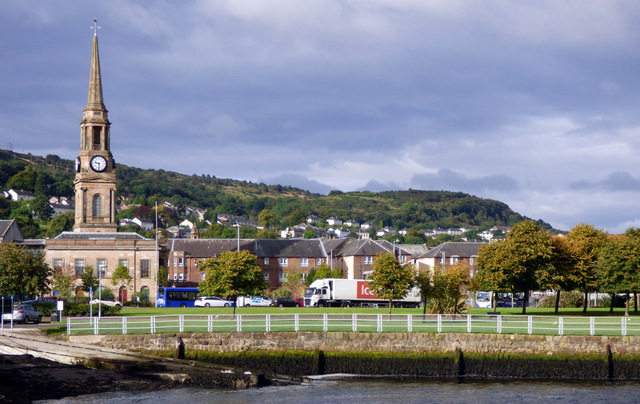
Port Glasgow is a town on the south bank of the River Clyde in the Inverclyde council area of Scotland. Historically developed as a harbour and shipbuilding centre, the town grew when larger vessels could no longer reach upstream quays. Today it functions as a mix of residential area, local services and heritage attractions while remaining closely connected to neighbouring towns by road and rail.
Image gallery
10 Images


History and development
The settlement expanded from a small riverside anchorage into an organised port from the 17th and 18th centuries as shipping activity moved downriver. Its streets and yards were reshaped in the 19th century by industrial growth: shipyards, ironworks and related marine trades dominated employment for many decades. Like other Clyde towns, Port Glasgow experienced decline in heavy industry in the later 20th century and has since diversified its local economy.
Landmarks and heritage
One of the town's most prominent historical sites is Newark Castle, a late medieval fortress standing close to the river shore; its origins date back several centuries and it is managed for public access by Historic Scotland. Several acres of foreshore at Parklea are cared for by the National Trust for Scotland, providing open space and a sense of the old waterfront landscape. In the town centre, Coronation Park was laid out on the former West Harbour in 1937 to mark the coronation of King George VI.
Characteristics and amenities
- Maritime heritage: extensive shipbuilding and marine engineering history along the Clyde.
- Parks and waterfront: foreshore reserves, community green spaces and river views.
- Transport links: local rail and road connections serve commuters travelling to nearby urban centres.
- Community facilities: local shops, leisure amenities and civic services supporting residents.
While many former industrial sites have been repurposed or cleared, traces of the town’s manufacturing past remain visible in riverside yards and surviving buildings. Conservation and community projects have emphasised preserving key historic assets while improving public access to the Clyde shore.
For regional context, Port Glasgow sits within the wider administrative area of Inverclyde, and it often forms part of cultural and tourism itineraries that explore the Clyde coast and the shipbuilding legacy of western Scotland. Visitors interested in maritime history, riverside walks and local parks will find a compact town with several points of historical and recreational interest.
Related articles
Author
AlegsaOnline.com Port Glasgow Leandro Alegsa
URL: https://en.alegsaonline.com/art/78198