
Pool (pocket billiards): rules, equipment, variants and history
Pool, or pocket billiards, is a family of cue sports played on a six-pocket table. This article covers equipment, basic play, main game types, origins, and competitive and recreational aspects.
Pool, commonly called pocket billiards, refers to a group of cue sports played on a rectangular table fitted with six pockets. Players use a cue stick to strike a cue ball and drive other balls into the pockets. While many rule sets exist, the general aim in most pool games is to legally sink designated object balls and score points or meet the game’s specific win condition.
Image gallery
10 Images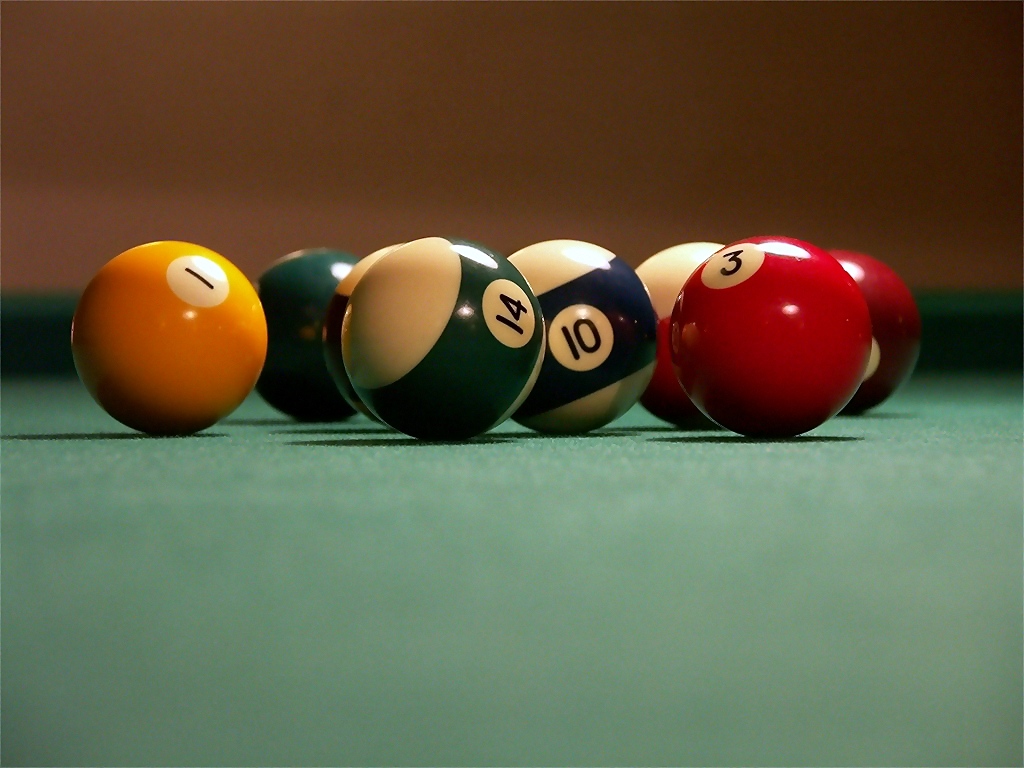




Equipment and playing surface
The essential elements of pool include a cloth-covered table, a set of balls, and one or more cue sticks. Typical equipment details:
- Table: A flat bed with rails and six pockets; common sizes vary for home and tournament play.
- Balls: Standard pool uses a white cue ball and numbered object balls, usually arranged by a rack at the break.
- Cues and accessories: Cue sticks, chalk, racks, and sometimes gloves or mechanical bridges are used to assist shots and maintain accuracy.
- Cloth and cushions: The table’s felt and rubber cushions affect speed and rebound angles.
Basic play and rules
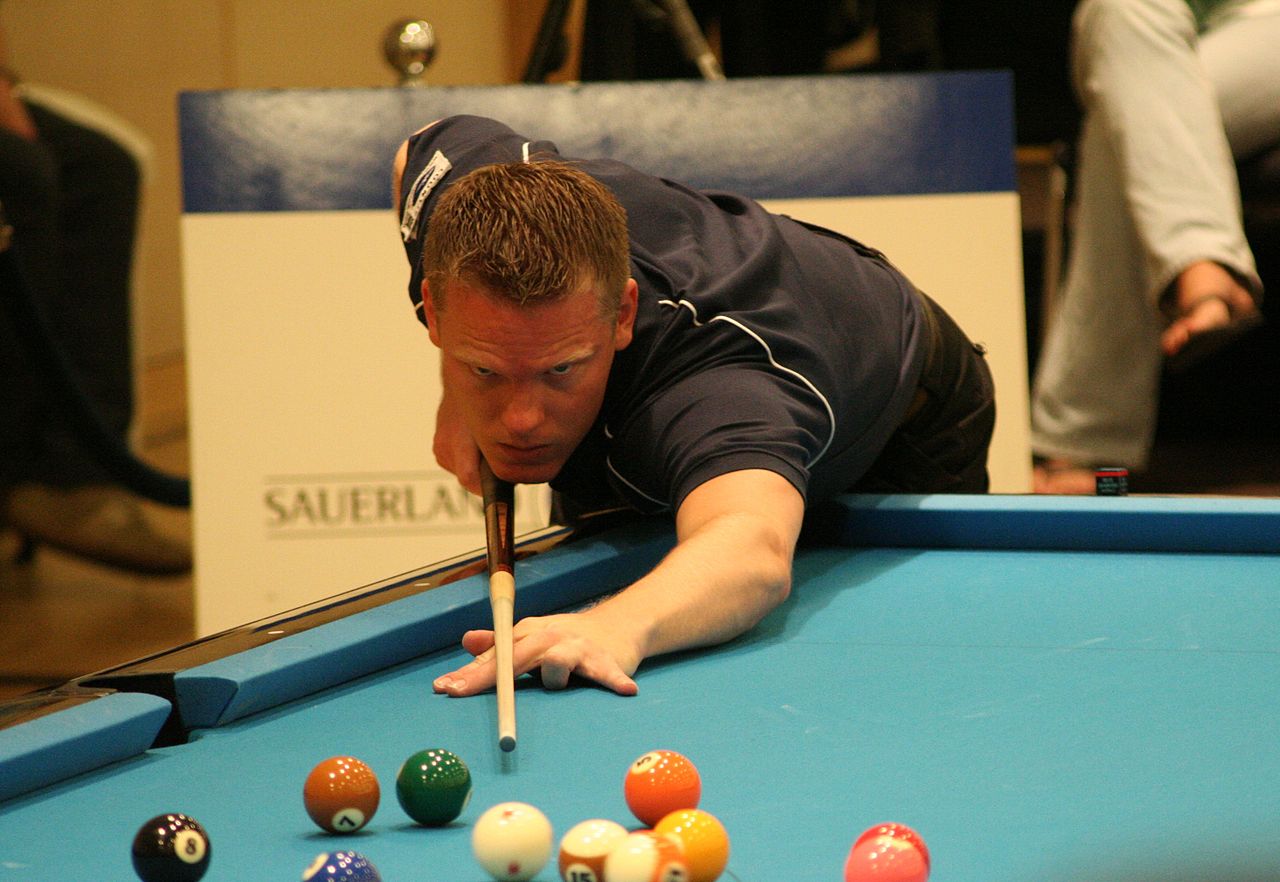
Play begins with a break shot that scatters racked balls. Rules differ by discipline, but common concepts include legal contact with the cue ball, sinking object balls into pockets, fouls for illegal shots, and turn-taking until a miss or foul ends a player’s inning. Some games require players to call shots or adhere to a particular sequence of target balls, while others reward pocketing balls in any order under specified constraints.
Major variants
- Eight-ball: Players are assigned solids or stripes and win by legally pocketing their group and the 8-ball.
- Nine-ball: A rotation-style game where the lowest-numbered ball on the table must be struck first; pocketing the 9-ball under legal play wins the rack.
- Straight pool: Also called 14.1 continuous, players score points by pocketing any ball and can continue until they miss.
- Many other regional and specialty games exist, each with distinct rules and strategies.
For context, pool is one branch of cue sports; its family relationships and variations are discussed further in general resources on cue sports (see overview).
Historically, pool evolved from outdoor stick-and-ball lawn games to indoor billiards tables in Europe, gaining organized rules and popularity in the 19th and 20th centuries. Today it is played casually in bars and homes, as well as professionally in international tournaments. Competitive play emphasizes shot-making, position play, safety shots, and strategic thinking, while social games focus on accessibility and recreation. Distinctions from other cue sports—such as snooker (larger table, more balls, different scoring) and carom billiards (no pockets)—help clarify pool’s particular place within the broader cue-sports family.
Related articles
Author
AlegsaOnline.com Pool (pocket billiards): rules, equipment, variants and history Leandro Alegsa
URL: https://en.alegsaonline.com/art/78030
Sources
- umb.org : World Rules of Carom Billiard