
Penalty (ice hockey)
An explanation of penalties in ice hockey: what they are, how they are assessed and enforced, common types, historical development, and tactical effects on play.
Overview
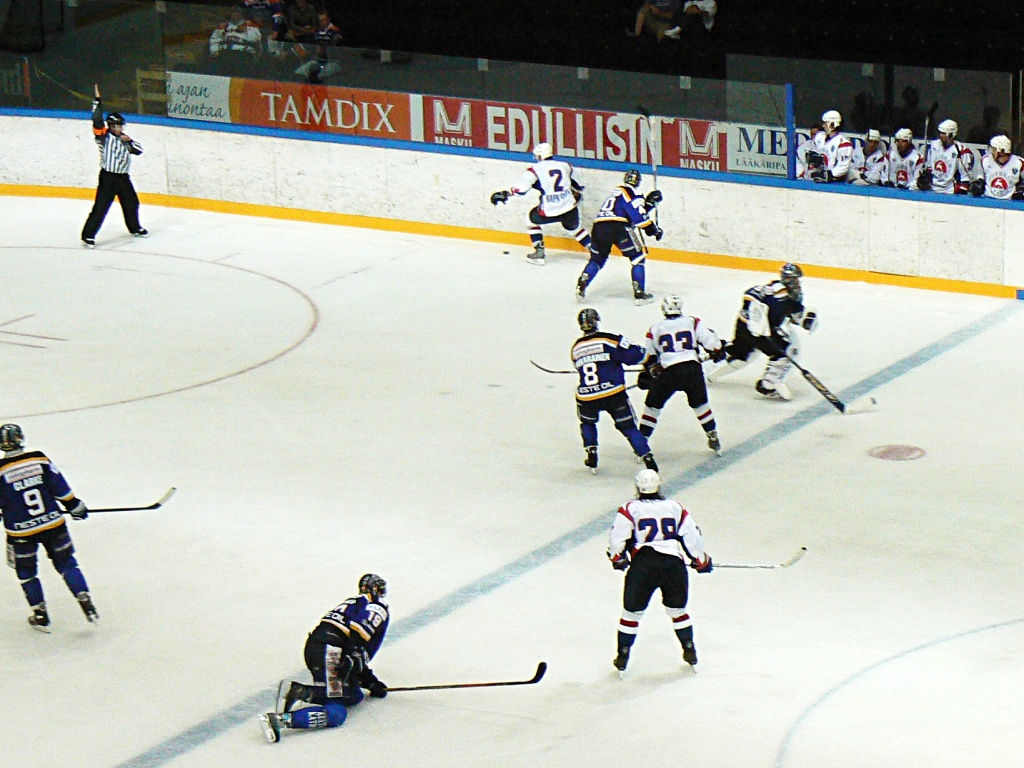
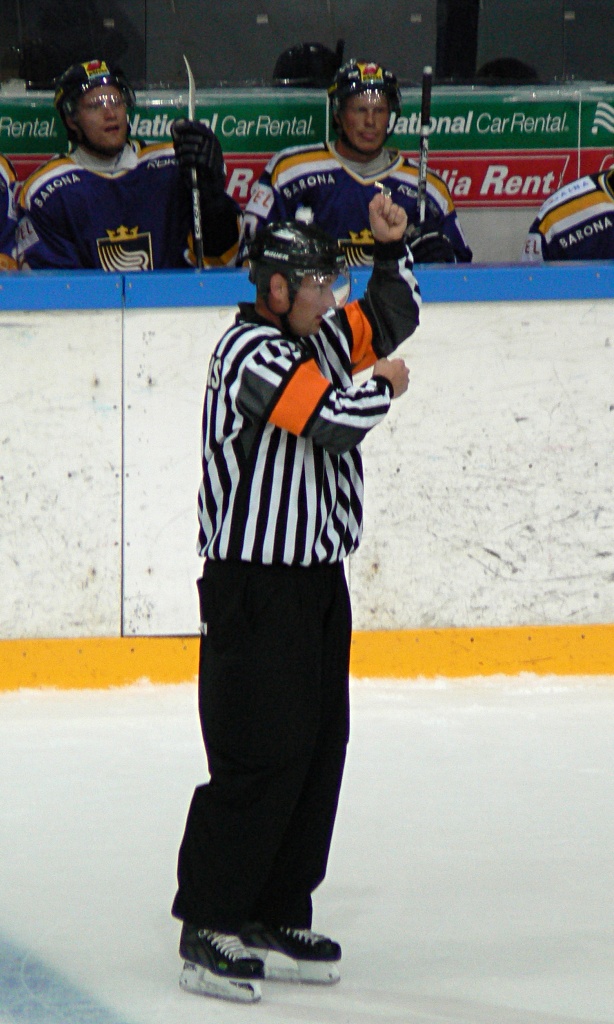
In ice hockey, a penalty is a formal punishment applied when a player or substitute breaks the rules during play. On-ice officials — referees and linesmen — determine whether an infraction has occurred and what sanction is appropriate. A penalized player is normally required to serve time in the penalty box, during which the offender's team usually plays with fewer skaters and the opposing team receives a power-play opportunity. Official rulebooks and league guides explain the full list of infractions and procedures.
Image gallery
6 Images


Types and enforcement
Penalties are grouped by severity and effect. Common categories include minor penalties, major penalties, misconducts and match or game misconducts. A minor penalty is typically assessed for less dangerous rule breaches; a major is given for more serious or violent actions. Misconduct penalties remove a player from play without necessarily reducing the number of skaters on the ice in the same way as a minor or major. Specific durations and consequences vary by league but many follow similar conventions. For further detail on common sanctions, consult an official source: rules reference.
- Minor penalty — awarded for infractions such as tripping, hooking or holding; usually short-term and results in a temporary numerical disadvantage.
- Major penalty — given for actions like fighting or dangerous hits; carries a longer time in the box and often remains in force even if a goal is scored by the opposing team.
- Misconduct — removes a player for a prolonged interval; the team may or may not be shorthanded depending on the specific ruling.
- Match/game misconduct — more severe punishment that can include ejection from the game and possible supplementary discipline.
- Penalty shot — awarded when a clear scoring opportunity is illegally denied; the fouled player is given an unobstructed attempt against the goaltender.
Several situational rules influence how penalties change play. In a delayed penalty the non-offending team retains possession until the offending team touches the puck, at which point play stops and the penalized player goes to the box. Coincidental penalties — when players on both teams are penalized at the same time — may leave full-strength play unchanged if equal numbers are sidelined. Teams also deploy tactical responses such as penalty killing systems and power-play formations to cope with or exploit these moments.
History and purpose
Penalties evolved with organized hockey as a way to deter dangerous behavior, keep the game fair and protect player safety. Early rulebooks introduced structured punishments to replace ad hoc expulsions and disputes. Over time leagues refined the gradations of penalties and added procedures for on-ice officiating and post-game discipline, balancing deterrence, spectator interest and player welfare. Contemporary hockey continues to adjust enforcement to address rule changes and safety concerns.
Practical effects and notable distinctions
Beyond the immediate manpower disadvantage, penalties influence strategy, momentum and scoring. Special teams — power play and penalty kill units — are specialized groupings that maximize advantage or minimize damage during penalties. Some leagues apply supplementary discipline for particularly reckless actions beyond the in-game sanction, and different competitions may define and penalize specific infractions in distinct ways. For rules, appeals and interpretations consult a league's official materials or an authoritative summary: interpretation guide and officiating resources.
Related articles
Author
AlegsaOnline.com Penalty (ice hockey) Leandro Alegsa
URL: https://en.alegsaonline.com/art/75532