
Paul Villard — discoverer of gamma rays (1860–1934)
French scientist Paul Villard identified a highly penetrating form of radiation in 1900 while studying radium; his finding established the existence of gamma rays and shaped later nuclear and medical research.
Overview
Paul Villard was a French scientist who, in 1900, reported the existence of a third kind of radiation emitted by radium. Working in the context of late 19th‑century studies of radioactivity, Villard distinguished this new component by its exceptional ability to penetrate materials and by its apparent lack of electric charge.
Image gallery
1 Image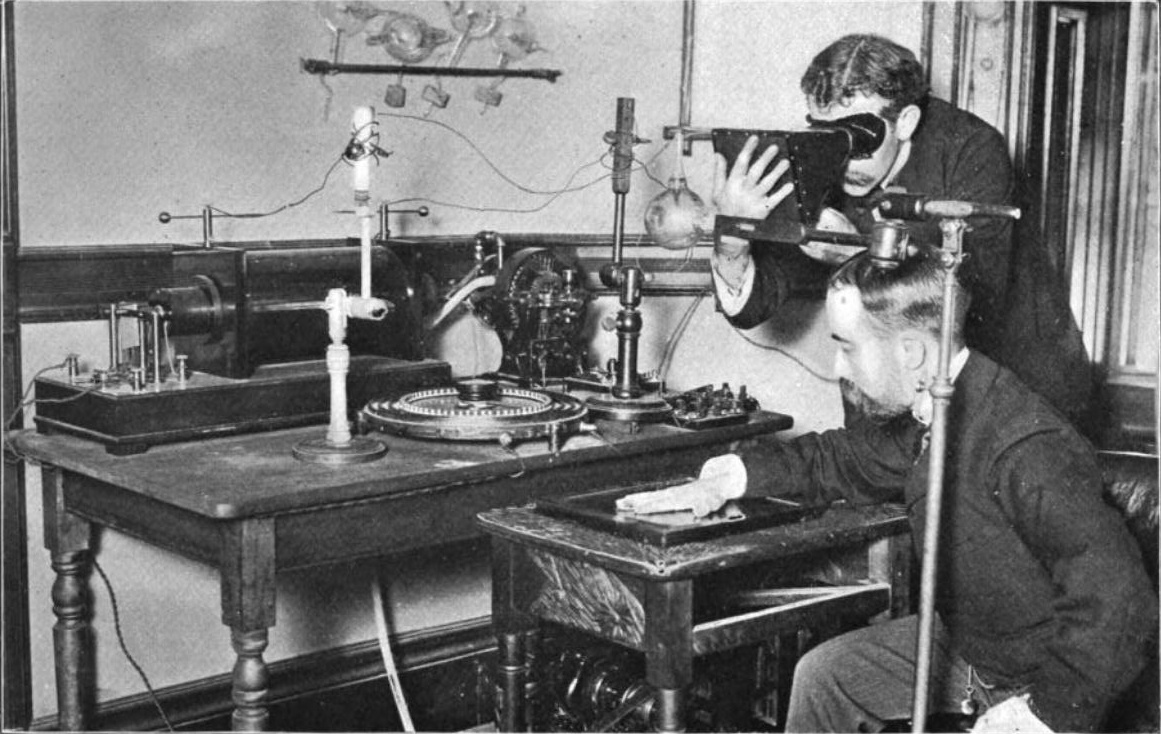
Discovery and context
Following discoveries by Henri Becquerel and the Curies of alpha and beta emissions, Villard investigated radium's penetrating rays. He observed that one component was far more penetrating than alpha or beta particles and not appreciably deflected by magnetic fields. Although he described the phenomenon, the term "gamma rays" was applied later by Ernest Rutherford to denote the most penetrating type of radioactive emission.
Characteristics
- Neutral, highly penetrating radiation that can traverse dense materials.
- Later understood to be high‑energy electromagnetic radiation produced by nuclear transitions.
- Distinguished from alpha (helium nuclei) and beta (electrons/positrons) by its lack of charge and different interaction mechanisms.
Uses and significance
Villard's identification of the third component expanded understanding of radioactive decay and the structure of the atom. Gamma radiation has since become important in medical treatments (radiotherapy), diagnostic techniques, industrial radiography, and sterilization. Its discovery also helped establish techniques for probing nuclear processes and led to further theoretical work on electromagnetic radiation at very short wavelengths.
Legacy and further reading
Though less widely known than some contemporaries, Villard's experimental observation was a key step in early nuclear physics. For a concise sketch of his life see biography, and for collections of early radioactivity papers consult primary publications or resources on radium research at the turn of the century radium studies.
Notable distinction: gamma rays and X‑rays are both electromagnetic but originate by different processes—gamma rays from nuclear transitions and X‑rays mainly from electronic interactions—so energy ranges and sources typically differ.
Related articles
Author
AlegsaOnline.com Paul Villard — discoverer of gamma rays (1860–1934) Leandro Alegsa
URL: https://en.alegsaonline.com/art/75192