
Passaic County, New Jersey
Passaic County is a densely settled county in northern New Jersey with urban and suburban communities, an industrial history centered on Paterson, and strong commuter ties to the New York City region.
Overview
Passaic County lies in the northeastern part of New Jersey, bordering the New York metropolitan area. Its county seat is Paterson, a historically industrial city. The county had a population of about 501,226 at the 2010 census and combines dense urban corridors with suburban and more rural highlands.
Image gallery
5 Images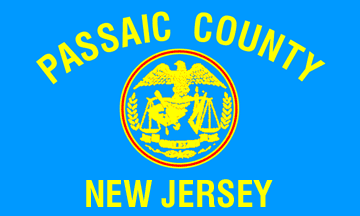


History and development
Passaic County was created on February 7, 1837, from portions of adjacent counties. During the 19th and early 20th centuries the county, and Paterson in particular, became an important center of manufacturing—most famously silk production—earning Paterson nicknames tied to its industrial output. Elements of that industrial past are preserved as historic sites and parks.
Geography and communities
The county includes a mix of municipalities: the cities of Paterson, Clifton and Passaic, plus large boroughs and townships such as Wayne and West Milford. The Passaic River and several reservoirs and forests shape the landscape, with steeper, less developed terrain in the northwest and more built-up areas to the east and south.
Economy, transportation and daily life
Today the economy blends manufacturing, retail, professional services and public-sector employment. Many residents commute to nearby job centers; the county is served by regional rail and bus services and by major highways that connect to the broader New York–New Jersey transportation network. Local commerce includes diverse small businesses, ethnic markets and community institutions.
Culture, demographics and notable features
Passaic County is culturally diverse, with longstanding immigrant communities that contribute to a rich local food and cultural scene. Notable sites include industrial-era landmarks and natural attractions such as waterfalls and county parks. Municipal governments and county agencies administer services from courts to parks.
Further reading and resources
- County government and services
- Census and demographic information
- Paterson city resources
- Regional context with New York City
- City of Passaic information
Note: The name "Passaic" appears in river, city and county names in the region and reflects local geographic and historical ties. For specifics about municipal boundaries, population trends and historic sites consult official county and federal sources.
Related articles
Author
AlegsaOnline.com Passaic County, New Jersey Leandro Alegsa
URL: https://en.alegsaonline.com/art/74925