
Parts of a Sail: Terms, Structure, and Variations
Overview of sail anatomy, common terms (luff, leech, clew, tack), mainsail types (three- and four-sided), specialized components, reefing and control systems, materials, and historical notes.
An individual sail is made up of named edges, corners and reinforcements that allow it to be hoisted, trimmed and reefed. In the context of sailing, these standardized terms help crew communicate about trim, repairs and sail handling. While simple sails share the same basic vocabulary, different rigs and purposes produce distinct shapes and additional parts.
Image gallery
10 Images


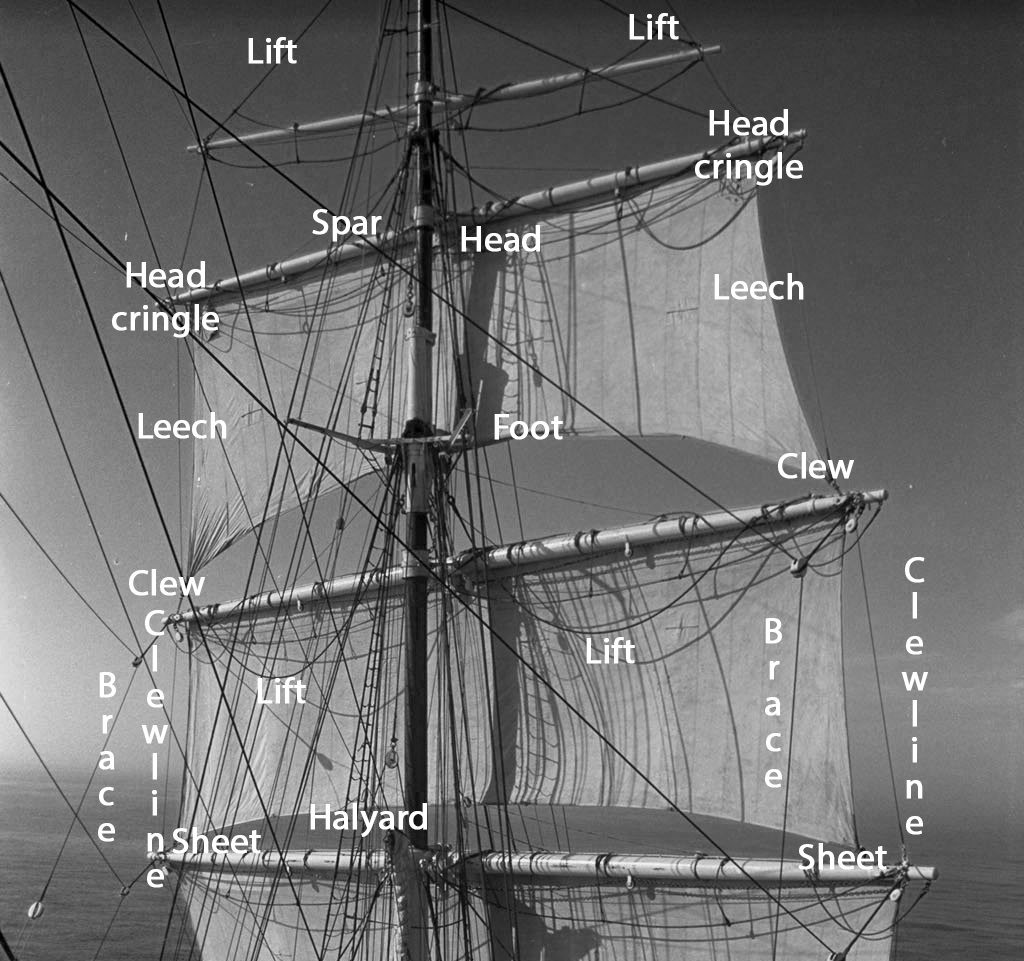


Common parts
Most fore-and-aft sails—mainsails, jibs and genoas—use the same basic anatomy. Important features include:
- Luff: the forward (leading) edge that runs along the mast or stay and is usually attached to a halyard for hoisting.
- Leech: the trailing edge that runs aft; its shape and stiffness affect flow and twist.
- Foot: the lower edge which often attaches to the boom or the deck.
- Head: the top corner where the halyard leads.
- Tack: the lower forward corner, fixed near the mast or deck.
- Clew: the lower aft corner taken in by the sheet or outhaul.
- Battens: flexible inserts that support an extended roach or control sail shape.
- Telltales: small ribbons or yarns attached to the sail used to monitor airflow.
Specialized parts and rigs
Not all sails are simple triangles. Two commonly contrasted mainsail types are a three-sided mainsail (triangular, typical of the modern Bermuda or Marconi rig) and a four-sided mainsail (found on gaff-rigged or other traditional rigs). The difference usually reflects the number and orientation of supporting spars:
- Three-sided mainsail: triangular with head, tack and clew. It is hoisted on a single halyard and often set on a boom and mast.
- Four-sided mainsail: uses a gaff or yard as a second spar; its two upper corners are called the throat and peak and require separate halyards or lift points.
Additional elements appear on specialized sails: spinnakers have symmetric clews and a large head, whereas storm sails and staysails are cut for heavy-weather handling and attachment points.
Reefing hardware—reefing cringles, lines and points—lets crews reduce sail area quickly. Systems vary from slab (points sewn into the sail) to in-boom or in-mast furling, each changing how the foot and luff are secured and how forces are distributed.
Materials and construction influence performance and care. Modern sails use woven polyester (Dacron), laminated films, or high-modulus fibers (Kevlar, carbon) with reinforced corners, bolt ropes, and webbing at high-load areas. Sailmakers add patches at clew, tack and head and apply stitching or rivets to spread loads.
Historically, sail shapes evolved from square and lateen rigs to the fore-and-aft designs common today, driven by the need for windward performance and easier handling. Learning the parts of a sail is essential for efficient trimming, safe reefing and clear communication on deck.
Author
AlegsaOnline.com Parts of a Sail: Terms, Structure, and Variations Leandro Alegsa
URL: https://en.alegsaonline.com/art/74850
Sources
- wyc.org : "Sailing Quick Reference Guide"
- asa.com : "Sailing Terms Everyone Should Know"
- seatalk.info : "Boom"