
Overhand knot
A simple, ancient knot formed by passing the working end over and under the standing part; commonly used as a stopper, for joining, and as the basis of many knot variations.
The overhand knot is one of the simplest and most widely recognized knots. It is formed by passing the working end of a rope over and then under the standing part to create a single loop with the end pulled through. Despite its simplicity, the overhand knot appears across many cultures and practical contexts because it is quick to make and serves as the foundation for more complex knots.
Image gallery
3 Images

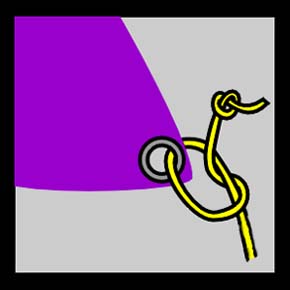
Characteristics
The overhand knot has a compact, symmetric shape and several predictable properties that affect its use:
- Easy to tie: can be formed in a single, short motion.
- Stops a rope end: acts as a basic stopper to prevent a rope slipping through an eye or device.
- Can jam under load: tends to tighten and become hard to untie after bearing strain.
- Reduces strength: introduces a bend that weakens a rope more than some alternative knots.
How to tie
Make a simple loop with the rope, pass the working end through the loop, and pull both ends to snug the knot. Variations include the double overhand (an extra turn) and using the knot on a bight to form a loop.
Uses, variations and cautions
Common uses include acting as a temporary stopper, preventing frayed ends, forming the basis of the reef knot and surgeon's knot, and serving in handicrafts. Because it can jam and weakens line strength, people often substitute a figure-eight stopper or a properly dressed bend when security and strength matter.
For technical references and illustrations, see knot reference and general rope technique guides at rope techniques.
Author
AlegsaOnline.com Overhand knot Leandro Alegsa
URL: https://en.alegsaonline.com/art/73720