
Obersteckholz
Obersteckholz is a small German-speaking municipality in the Oberaargau administrative district of the canton of Bern, Switzerland, with a rural landscape, local governance and traditional community life.
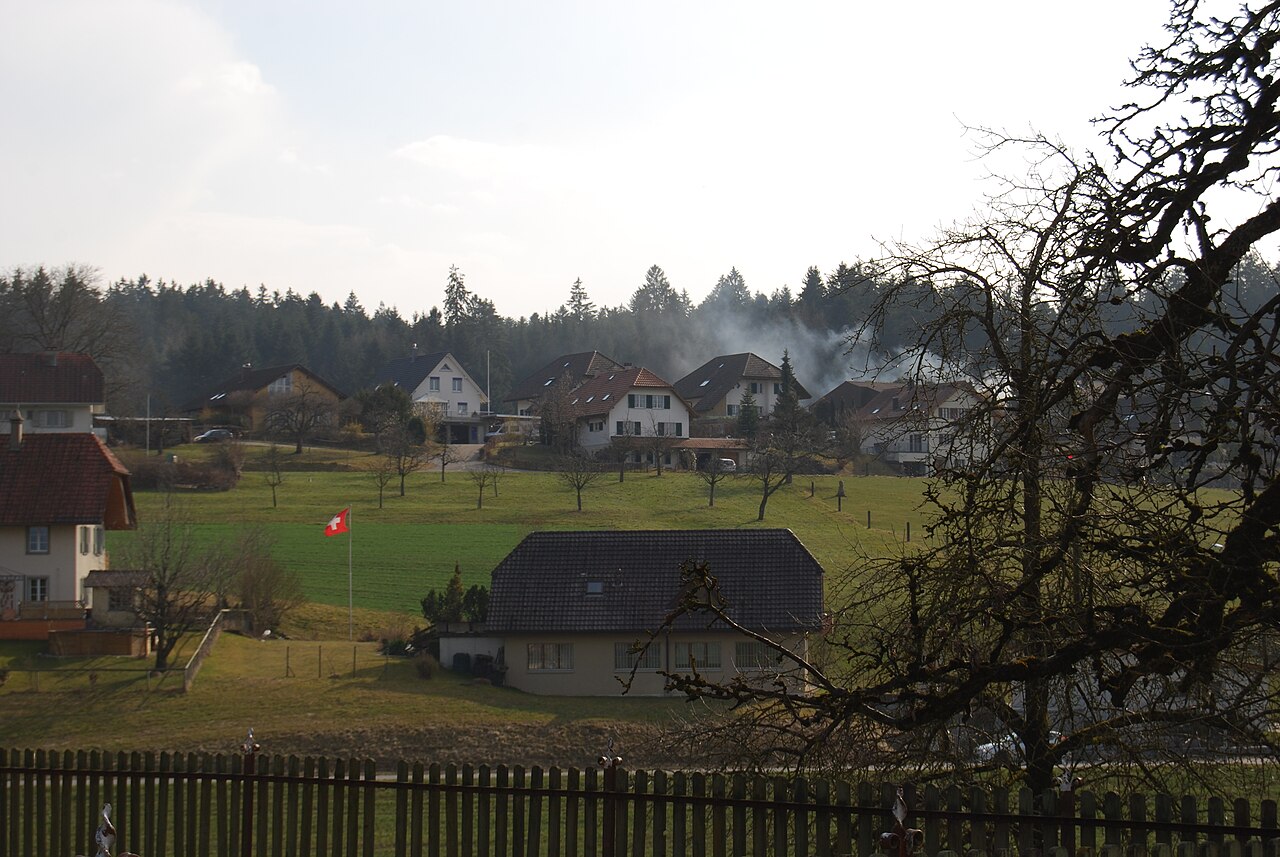
Obersteckholz is a small municipality in the administrative district of Oberaargau in the canton of Bern, Switzerland. It functions as a local political community with the responsibilities and rights typical of Swiss communes (municipality). Located in the German-speaking part of the canton, Obersteckholz is characterized by a predominantly rural setting and a dispersed settlement pattern of farms and hamlets.
Image gallery
4 Images


Characteristics
The municipality displays features common to small Swiss rural communities. Agricultural land and pastures shape much of the landscape, while minor woodlands and country roads connect the village centers. Local infrastructure typically includes a municipal administration, community buildings, and basic road links to neighbouring towns. Public services are often shared with nearby municipalities, and many residents commute to larger regional centres for employment and specialized services.
History and development
Like many villages in this part of central Europe, Obersteckholz has medieval roots and developed over centuries around farming and local crafts. Over time it became integrated into the administrative framework of the canton of Bern and the Oberaargau district, adapting to changes in agriculture, transport and municipal governance while retaining a distinct local identity.
Community, culture and economy
Community life in Obersteckholz centers on local associations, church and village events, and traditions linked to rural rhythms. The economy remains oriented toward agriculture, though services, small businesses and commuting contribute to household incomes. Built heritage often includes traditional farmhouses and a village church or chapel, reflecting regional architectural styles.
Notable facts and distinctions
- Obersteckholz is administered within the Oberaargau district and subject to cantonal law from Bern.
- It exemplifies the Swiss model of municipal autonomy, with locally elected bodies managing communal matters.
- Its rural character and proximity to larger towns make it representative of many small municipalities balancing preservation and modern needs.
For administrative, demographic or practical details one can consult official cantonal and municipal sources or regional guides; these provide up-to-date information on services, governance and local events. Additional general information is available from regional administrative portals and civic resources (municipal information, district details, cantonal pages, national context).
Related articles
Author
AlegsaOnline.com Obersteckholz Leandro Alegsa
URL: https://en.alegsaonline.com/art/71750
Sources
- bfs.admin.ch : "Arealstatistik Standard - Gemeinden nach 4 Hauptbereichen"
- bfs.admin.ch : "Ständige Wohnbevölkerung nach Staatsangehörigkeitskategorie Geschlecht und Gemeinde; Provisorische Jahresergebnisse; 2018"