
Nilphamari District
Nilphamari District is an administrative region in northern Bangladesh, part of Rangpur Division, known for its agricultural economy, district headquarters in Nilphamari town, and role in regional transport and culture.
Overview
Nilphamari District is an administrative district in the northern part of Bangladesh. Its name is represented in Bengali as Nilphamari জেলা. The district is a constituent of the larger Rangpur Division and lies within the national boundaries of Bangladesh. Nilphamari functions as a local government unit with an administrative headquarters in Nilphamari town and several sub-districts that manage day-to-day affairs.
Image gallery
6 Images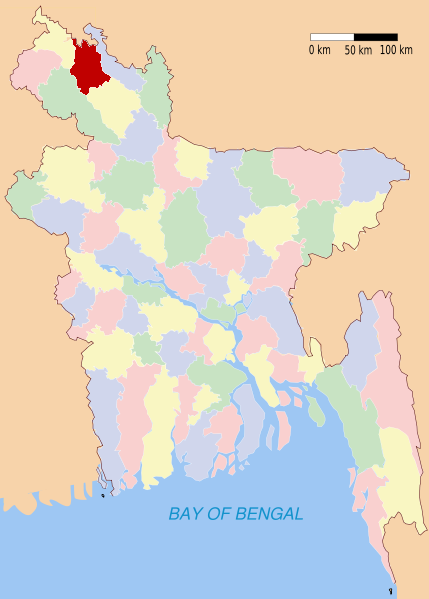


Geography and administration
The district occupies flat, fertile plains typical of northern Bangladesh. Its landscape supports intensive agriculture and is intersected by smaller rivers and irrigation channels. Administratively, Nilphamari is divided into several upazilas (sub-districts), each centered on a town or market, with municipal services, rural unions, and local councils carrying out governance and development activities.
Economy and transport
Agriculture is the primary livelihood for many residents; rice and seasonal vegetables are widely cultivated alongside other cash crops common to the region. Local markets and periodic fairs provide trade opportunities, and the district benefits from road and rail links that connect it to larger urban centers, facilitating movement of people and goods. Small-scale industry, services, and education institutions have grown around the district headquarters and major towns.
History and culture
The area now called Nilphamari has a history shaped by rural settlement, colonial-era administration, and post-independence reorganization. It became a distinct administrative unit during nationwide administrative reconfigurations in the late 20th century. Cultural life reflects broader Bengali traditions: religious festivals, seasonal fairs, music, and local cuisine. Language, dress, and social customs are rooted in the Bengali heritage of northern Bangladesh.
Key features and distinctions
- Administrative center: Nilphamari town serves as the district headquarters and service hub.
- Agricultural base: fertile plains support intensive farming and local food markets.
- Transport links: roads and railways connect the district to regional markets and cities.
- Local governance: upazilas and union councils handle community administration and development.
Nilphamari plays a steady role in the economy and society of northern Bangladesh as a center for agriculture, local trade, and regional administration. For more detailed administrative, statistical, or travel information, consult the district's official resources or regional guides.
Related articles
Author
AlegsaOnline.com Nilphamari District Leandro Alegsa
URL: https://en.alegsaonline.com/art/70225