
Netsplit (IRC server network partitioning)
Netsplit: temporary partitioning of an IRC network when servers lose connectivity, causing visible quits, channel splits, and potential nickname or operator conflicts until servers reconnect and reconcile state.
Overview
A netsplit is a temporary partition that occurs when two or more servers in an Internet Relay Chat (IRC) network lose their network connection to one another. Because many IRC networks are formed as a connected graph of servers that forward messages and manage user presence, a broken link divides the network into separate halves. To users this typically appears as many people on other servers abruptly quitting the network.
Image gallery
3 Images
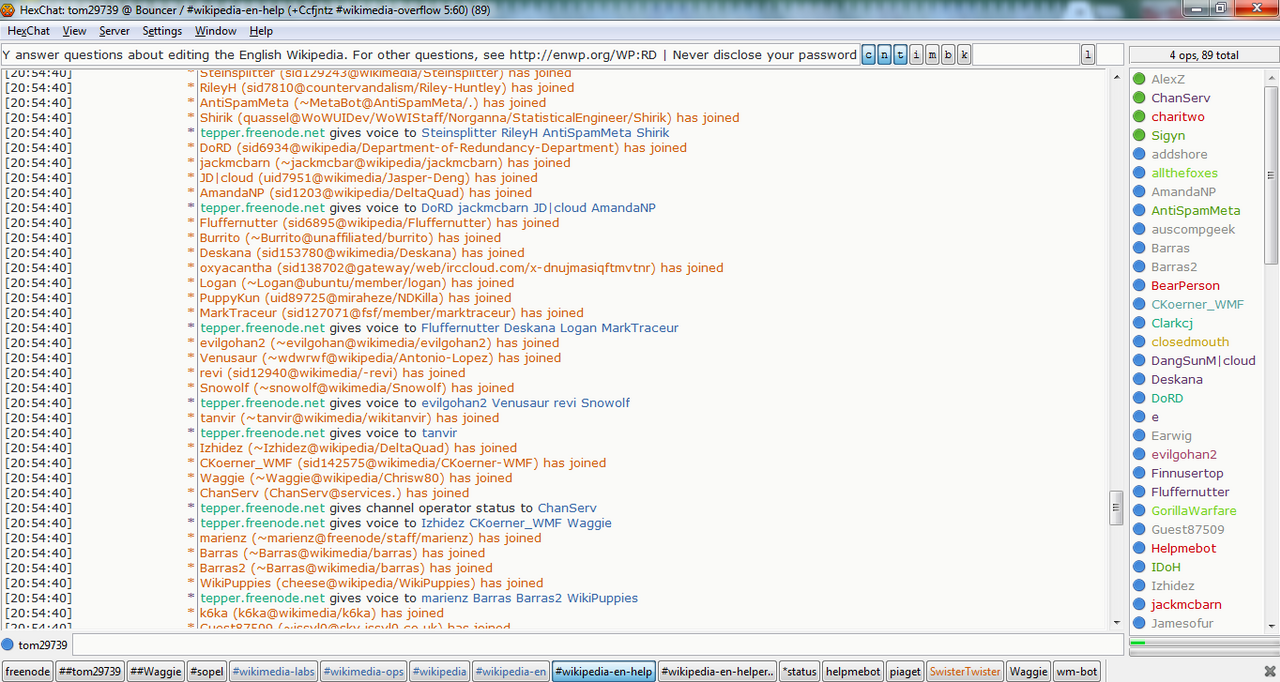

How a netsplit happens
IRC networks are usually built from cooperating servers that exchange information about users, channels, and modes. If a connection between servers fails—due to software crashes, routing problems, or deliberate isolation—the servers on each side stop receiving updates from the other side. Each server then reports its own local state independently, so clients see remote users vanish (often shown as QUIT messages referencing the server name).
Typical consequences
Visible effects of a netsplit include:
- Mass "quit" notices for users on the other segment, giving the impression of widespread disconnection.
- Temporary channel state divergence: channel operators and user lists can differ between partitions.
- Nickname and channel collisions when the partitions rejoin, sometimes leading to nick changes or loss of channel operator privileges.
Resolution and conflict handling
When the broken connections are restored the servers resynchronize. Modern IRC networks use protocols and heuristics—such as timestamps for nicknames and channel modes—to resolve conflicting changes made during the split. Services and bots may replay or restore channel modes, and users who were manually granted operator status on one side may need to re-establish privileges if the network's reconciliation process does not preserve them.
Mitigation and practical notes
Operators reduce the disruptive effects of netsplits by using well-tested server software, redundant links, and persistent service implementations (NickServ, ChanServ) that maintain authoritative records. Clients and bots often include split detection to log the event and notify channel occupants. Because netsplits are visible and sometimes abused—for example, to force a channel takeover during split/merge cycles—good operational practices and timestamp-based reconciliation are important to keep channel state consistent.
Historical and cultural context
In IRC culture the term "netsplit" is widely used and understood; users may colloquially say a network "split" or that the network "netsplit". While less common on modern, highly redundant networks, netsplits remain a distinctive artifact of distributed real-time chat architectures and illustrate the broader networking challenge of maintaining consistent shared state across imperfect links.
Questions and answers
Q: What is a netsplit in computer networking?
A: A netsplit is an event in computer networking, mainly IRC, which occurs when two servers disconnect.
Q: What happens when a netsplit occurs?
A: When a netsplit occurs, the entire network gets split into two parts, and people on one half of the network appear as if they have quit from IRC.
Q: Which types of computer networking mostly experience netsplit?
A: Mainly Internet Relay Chat (IRC) networks experience netsplit.
Q: How are IRC networks built that makes netsplit happen?
A: Netsplit happens because of how IRC networks are built that causes the entire network to split into two parts on disconnection between two servers.
Q: How do netsplit events affect people on an IRC network?
A: Netsplit events on an IRC network create an illusion for those on the network that people on the other half of the network have quit from IRC.
Q: Can a netsplit occur without disconnecting two servers?
A: No, a netsplit cannot occur without disconnecting two servers.
Q: Is a netsplit a common occurrence in computer networking?
A: Netsplit is a common occurrence in Internet Relay Chat (IRC) networks.
Related articles
Author
AlegsaOnline.com Netsplit (IRC server network partitioning) Leandro Alegsa
URL: https://en.alegsaonline.com/art/69273
Sources
- en.wiktionary.org : netsplit
- books.google.com : The Internet Encyclopedia