
Negoi (commune in Dolj County, Romania)
Negoi is a rural commune in Dolj County, in the Oltenia region of southern Romania. This article summarizes its location, administrative role, geography, economy, history, and local life.
Negoi is a rural commune situated within Dolj County in the historical region of Oltenia, southern Romania. In Romanian administration a commune denotes a local government unit that typically groups one or several villages and handles everyday public services for its inhabitants. Negoi functions as a local centre for nearby farmland and settlements.
Image gallery
2 Images
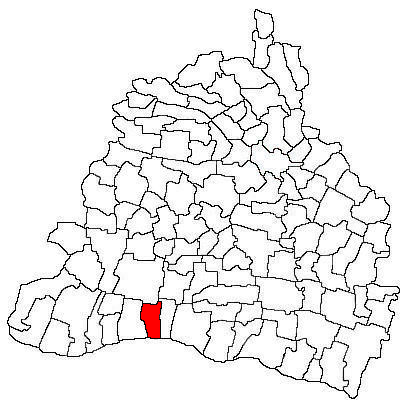
Administration and geography
As with other Romanian communes, Negoi is governed by a mayor and a local council elected by residents. The territory of the commune is predominantly rural: agricultural land, small roads, and village clusters form its landscape. Local infrastructure tends to focus on basic services such as primary education, a community hall, and road links to larger towns in Dolj County.
Economy and daily life
The local economy is commonly based on agriculture, family farms, and small-scale trade. Residents often raise crops and livestock, and seasonal rhythms shape community life. Access to regional markets, public services, and modern utilities has improved over recent decades, partly through national programmes and European rural development funds.
History and cultural notes
Negoi shares the broader history of Oltenia: medieval settlement patterns, Ottoman-era influences, and integration into the modern Romanian state. Local churches, folk traditions and annual celebrations reflect regional customs. Like many rural areas, Negoi has experienced demographic shifts as younger people move to cities or abroad for work.
Notable characteristics
- Typical communal administration: mayor and council responsible for services.
- Predominantly agricultural landscape with small village centres.
- Part of Dolj County's network linking countryside to urban centres.
Understanding Negoi benefits from situating it within Dolj and Oltenia: its role is similar to many Romanian rural communes, balancing local tradition with gradual modernization and regional connectivity.
Related articles
Author
AlegsaOnline.com Negoi (commune in Dolj County, Romania) Leandro Alegsa
URL: https://en.alegsaonline.com/art/69027
Sources
- web.archive.org : Romanian census data, 2002