
National Lampoon's Animal House (1978 film)
1978 American ensemble comedy directed by John Landis, written by Harold Ramis, Douglas Kenney and Chris Miller; a landmark college-set satire noted for its anarchic humor and cultural influence.
National Lampoon's Animal House is a 1978 American ensemble comedy film directed by John Landis. The screenplay was written by Harold Ramis, Douglas Kenney and Chris Miller, and the picture was released by Universal Pictures. Ostensibly set at a fictional Midwestern college in the early 1960s, the film follows an unruly fraternity whose members clash with the administration and rival students. Its mix of broad slapstick, irreverent satire and episodic set pieces established many conventions of the modern college comedy.
Image gallery
4 Images
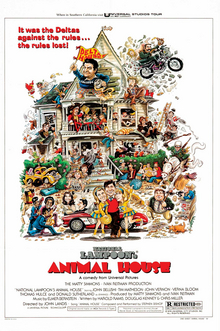


Cast and principal contributors
The movie features an ensemble that combined established performers and relative newcomers. Notable cast members include John Belushi, whose energetic central performance became closely associated with the film; Tim Matheson; Peter Riegert; Stephen Furst; Bruce McGill; Karen Allen; and character actor John Vernon in a prominent supporting role. The cast also contains early appearances by actors who would later become better known, such as Kevin Bacon in a small part. Several other contemporary film figures are often mentioned when discussing the late 1970s comedy scene, including filmmakers and performers like Ivan Reitman and actors such as Donald Sutherland, though they were not principal contributors to this production.
Style and memorable scenes
The film is episodic rather than tightly plotted, built around a succession of gags and ensemble set pieces. Two sequences in particular entered popular culture as emblematic of the film’s tone: a rambunctious toga party and an extended cafeteria sequence often referred to simply as the “food fight.” The humor ranges from satirical jabs at authority to broad physical comedy and intentionally crude jokes, delivered with an anarchic energy that contrasted with many mainstream films of the period.
Production, release and reception
Originating from material associated with the National Lampoon magazine, the film was developed by a creative team that brought a magazine sensibility to feature filmmaking. Upon release it became a commercial success and provoked a range of responses from critics: some praised its comic invention and performances, while others criticized its coarse elements. Over time it came to be seen as a landmark in American comedy cinema for showing that R‑rated, youth‑oriented comedies could reach a broad audience.
Legacy and influence
Animal House influenced a generation of college and raunch comedies that followed in the 1980s and 1990s, and many of its scenes and lines remain widely referenced. The film helped launch or raise the visibility of several performers and contributed to a shift in mainstream comedy toward edgier, youth‑focused material. In 1979 the film inspired a short‑lived television adaptation, Delta House, which brought characters and situations from the movie to a weekly sitcom format for a single season.
Notes
- The screenplay credits go to Harold Ramis, Douglas Kenney and Chris Miller; other filmmakers of the era are sometimes linked to the picture in broader cultural discussions but were not credited writers on the film.
- The film’s reputation rests more on its cultural impact and memorable scenes than on formal innovation; it is most often discussed in histories of American comedy and popular cinema of the 1970s.
Related articles
Author
AlegsaOnline.com National Lampoon's Animal House (1978 film) Leandro Alegsa
URL: https://en.alegsaonline.com/art/68635