
Asturian language: overview, classification, history and current status
Asturian (Bable) is a Romance language of northern Spain, spoken mainly in Asturias and related to Leonese and Mirandese. It has regional protection, a standard norm, and ongoing revitalization efforts.
Overview
The Asturian language, often called Asturianu or locally Bable, is the traditional Romance language of the Principality of Asturias in northern Spain. It is spoken across much of Asturias and in neighbouring border areas, with estimates of speakers varying by source; many accounts place the number of people who can speak or understand Asturian in the low hundreds of thousands. Asturian is distinct from but closely related to the Spanish (Castilian) of the region, and it occupies a recognized cultural place in Asturian public life. Asturias is the principal territory where it is used as a community language.
Image gallery
10 Images






Linguistic classification and characteristics
Asturian belongs to the Ibero‑Romance branch of the Romance languages and is typically grouped with Leonese and Mirandese under the wider Astur‑Leonese family. Its phonology, morphology and vocabulary reflect common Latin roots together with innovations shared across northwestern Iberia. Typical features include conservation of certain medieval vowel and consonant contrasts, a rich verbal morphology, and lexical items that differ from standard Spanish. The language has a standardized orthography recommended by a regional language academy and is used in both oral and written forms.
Dialects and related varieties
There is internal diversity within Asturian. Linguists and speakers commonly distinguish central Asturian varieties from eastern and western ones. In westernmost Asturias a group of speech forms called Eonavian or Galician‑Asturian shows transitional traits toward Galician; these varieties are sometimes treated separately in local and academic contexts. Beyond Asturias proper, closely related languages include Leonese (spoken in parts of León and Zamora) and Mirandese (spoken in Miranda do Douro in Portugal), which share many features but have their own standard forms or recognitions.
History and literary development
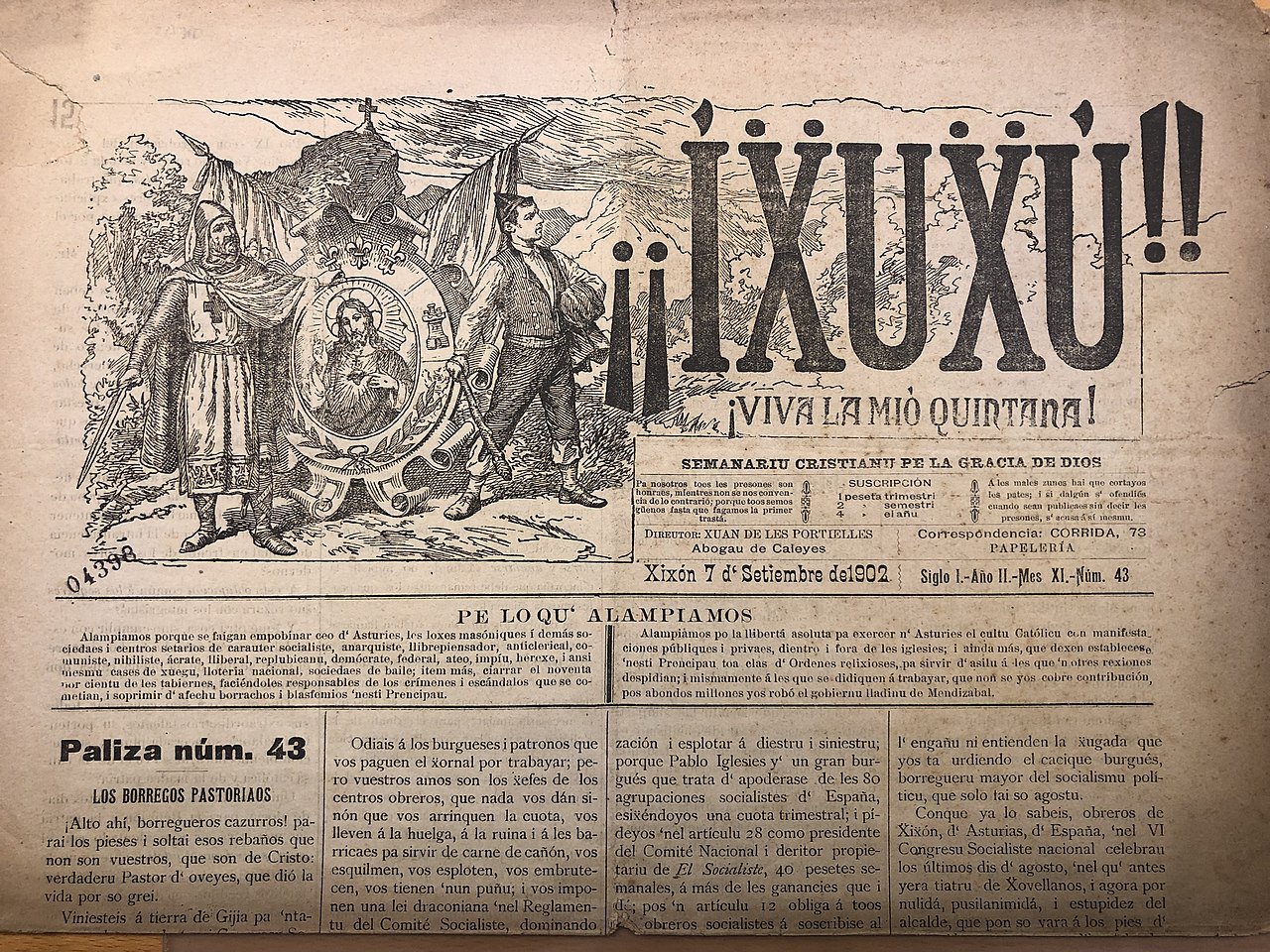
Asturian traces its roots to the vernacular Latin spoken in the Cantabrian‑Leonian area after the fall of the Roman Empire. During the medieval period the linguistic continuum of the Kingdom of León produced written forms and legal and literary texts; over later centuries, the dominance of Castilian Spanish reduced the use of regional Romance varieties in official domains. From the late 19th and especially the 20th century there has been a gradual cultural and literary revival, with locally produced poetry, prose and journalism helping to modernize and spread the language.
Status, education and public use
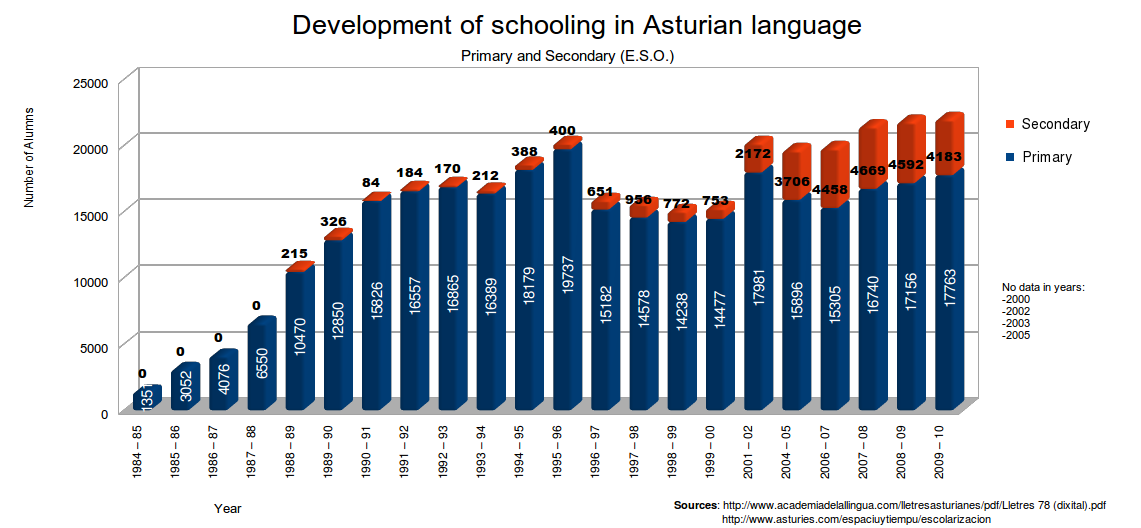
Asturian enjoys institutional support at the regional level focused on promotion, teaching and cultural programs, but it is not co‑official with Spanish in the way that Catalan, Basque or Galician are in their communities. Many schools in Asturias offer Asturian as an optional subject and there are initiatives for bilingual education, local media broadcasts, community workshops and municipal signage in the language. A normative body, the Academia de la Llingua Asturiana, issues recommendations for spelling and grammar to encourage consistent use in education and publishing.
Importance, conservation and notable facts
Asturian is considered an important element of regional identity and heritage. While numbers of habitual speakers are smaller than the overall population who understand it, active use continues in families, cultural associations and artistic expression. Language activists and institutions emphasize revitalization to counteract decline; some international organizations and scholars regard Asturian and related Astur‑Leonese varieties as vulnerable or at risk without continued support. The close relationship with Leonese and Mirandese is a notable feature for comparative study of Iberian Romance languages.
Tags
Related articles
Author
AlegsaOnline.com Asturian language: overview, classification, history and current status Leandro Alegsa
URL: https://en.alegsaonline.com/art/6846
Sources
- ethnologue.com : Asturian