
Mutesa II of Buganda (Kabaka and first President of Uganda)
Kabaka Mutesa II (1924–1969) led the Kingdom of Buganda (1939–1969), served as Uganda's ceremonial president after independence, and played a central role in mid-20th-century Ugandan politics.
Overview
Sir Edward Frederick William David Walugembe Mutebi Luwangula Muteesa II (19 November 1924 – 21 November 1969), usually referred to as Mutesa II, was the 35th Kabaka (king) of Buganda and a major political figure in the transition from colonial rule to independent Uganda. He reigned from 1939 until his death in 1969 and served as Uganda's first ceremonial President after independence. International reporters sometimes called him "King Freddie," a sobriquet rarely used within Uganda.
Image gallery
2 Images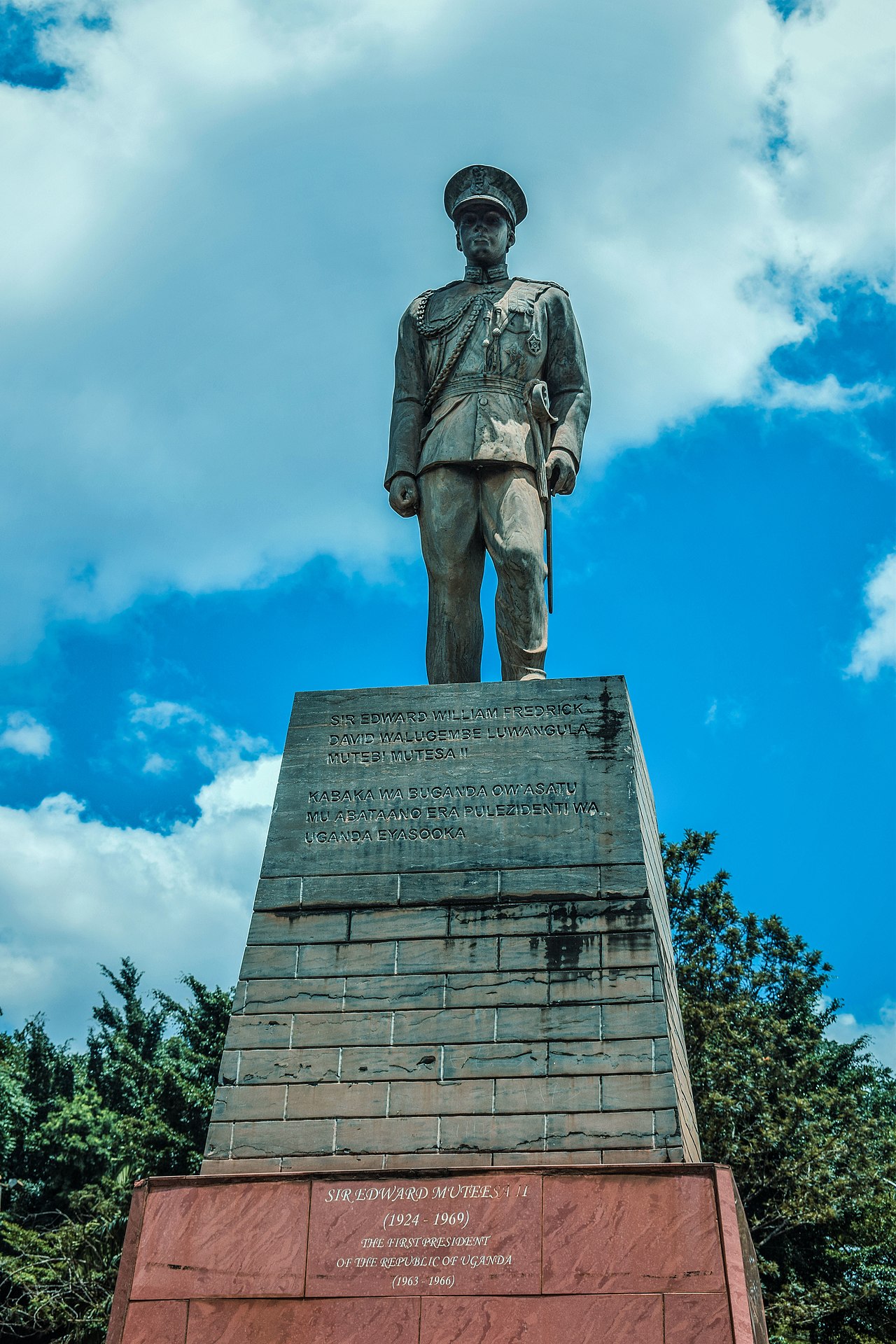

Early reign and colonial conflict
Mutesa became Kabaka while still young and inherited a kingdom with its own traditions, institutions and a strong sense of identity. Throughout the late colonial period he negotiated with British authorities over Buganda's status and autonomy. Disputes with the colonial governor culminated in his deposition and exile to Britain in the early 1950s; he returned to Buganda after a negotiated settlement a few years later and resumed his position as a focal point of Baganda politics.
Role in independence and presidency
During the debates that produced Ugandan independence in 1962, Mutesa was a negotiator for Buganda's interests and an influential regional leader. After independence he struck a political arrangement with national leaders that left him a constitutional, largely ceremonial head of state. From 1963 until 1966 he served as Uganda's first President while executive power remained with the Prime Minister. His presidency exemplified the complicated balance between traditional monarchies and modern post-colonial state structures.
The 1966 crisis and final exile
Political tensions between Prime Minister Milton Obote and Mutesa's supporters escalated into crisis in 1966. The central government suspended the constitution, and an armed assault on the Kabaka's residence forced Mutesa to flee Uganda. He went into exile in the United Kingdom, where he died in London in 1969. His departure marked the effective end of Buganda's political autonomy within Uganda for many years.
Cultural role and personal traits
Beyond politics, Mutesa was an important cultural figure for the Baganda people. As Kabaka he presided over ceremonies, patronized traditional arts and was widely regarded as a symbol of Baganda identity. Contemporary accounts describe him as charismatic and urbane, able to command loyalty across social divides while also attracting international attention. His mixed reputation reflects both his role as a custodian of tradition and his engagement in high-stakes national politics.
Significance and legacy
Mutesa II's life illustrates the tensions common to many African leaders who bridged pre-colonial institutions and modern nation-states. He is remembered for defending Buganda's privileges, for his part in the negotiations that led to independence, and for the dramatic political rupture of the 1966 crisis. Today his reign is studied as a pivotal episode in Uganda's political history and in debates about the place of traditional monarchies in independent African countries.
Key events
- Ascended as Kabaka of Buganda in 1939.
- Exiled by colonial authorities in the early 1950s and returned mid-decade after negotiations.
- Played a key role in discussions surrounding Uganda's 1962 independence.
- Served as Uganda's first President (1963–1966) in a largely ceremonial capacity.
- Forced into exile after the 1966 crisis; died in London in 1969.
Related articles
Author
AlegsaOnline.com Mutesa II of Buganda (Kabaka and first President of Uganda) Leandro Alegsa
URL: https://en.alegsaonline.com/art/67827