
Murphy's Romance (1985 film)
A warm 1985 romantic comedy directed by Martin Ritt, adapted from Max Schott’s novella, starring James Garner and Sally Field. Noted for mature themes, strong performances and two Academy Award nominations.
Overview
Murphy's Romance is a 1985 American romantic comedy adapted from a 1980 novella by Max Schott and directed by Martin Ritt. The film pairs veteran actor James Garner with Sally Field in a restrained, character-driven story distributed by Columbia Pictures. It earned recognition from critics and was nominated for two Academy Awards.
Image gallery
1 Image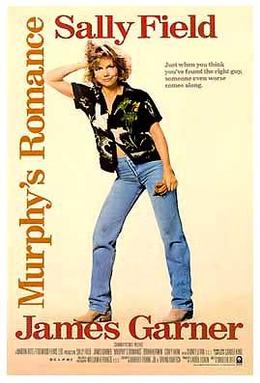
Premise and themes
Rather than relying on broad gags or melodrama, the picture unfolds as a gentle study of companionship, daily responsibilities and second chances. At its center is an evolving relationship between an older, steady man and a woman navigating family and personal change. The film emphasizes small-town rhythms, interpersonal dignity and quiet humor over sensational plot turns.
Cast and key contributors
- James Garner — lead performance widely noted for its warmth and restraint.
- Sally Field — co-lead, bringing empathy and comic timing to the role.
- Corey Haim — appears in a supporting role early in his career.
- Brian Kerwin, Carole King and Anna Levine — supporting cast who add local color and depth.
- Directed by Martin Ritt, known for character-focused, socially aware filmmaking.
- Distributed by Columbia Pictures.
Style and production
The film is marked by modest production values that foreground performance and dialogue. Direction and screenplay work together to build believable domestic interactions and steady pacing. Costuming, location work and a restrained musical approach support a feeling of authenticity rather than spectacle.
Reception and legacy
Critics praised the leads' chemistry and the film’s respectful treatment of mature romance. It received two Academy Award nominations, which helped secure its status as a noteworthy example of adult-oriented romantic comedy from the 1980s. Over time it has been remembered for its humane tone and the strength of its central performances rather than as a blockbuster.
Notable facts
Murphy's Romance is an adaptation of a contemporary novella and stands out among romantic comedies for centering middle‑aged protagonists. It remains of interest to viewers who prefer character-driven stories and to those studying film portrayals of later-life relationships and small‑town American life.
Questions and answers
Q: When was Murphy's Romance released?
A: Murphy's Romance was released in 1985.
Q: Who directed Murphy's Romance?
A: Martin Ritt directed Murphy's Romance.
Q: What is the source material for Murphy's Romance?
A: The source material for Murphy's Romance is a 1980 novella by Max Schott.
Q: Who are some of the actors that appear in Murphy's Romance?
A: James Garner, Sally Field, Corey Haim, Brian Kerwin, Carole King, and Anna Levine are all actors who appear in Murphy's Romance.
Q: Who distributed Murphy's Romance?
A: Murphy's Romance was distributed by Columbia Pictures.
Q: How many Oscars was Murphy's Romance nominated for?
A: Murphy's Romance was nominated for two Oscars.
Q: What genre does Murphy's Romance fall under?
A: Murphy's Romance falls under the romantic comedy genre.
Related articles
Author
AlegsaOnline.com Murphy's Romance (1985 film) Leandro Alegsa
URL: https://en.alegsaonline.com/art/67653