
Monocle: single-eye optical lens and cultural symbol
A monocle is a single corrective lens worn before one eye. Once common in the 19th and early 20th centuries, it served practical vision needs and later became a cultural and stylistic emblem.
Overview
A monocle is a single corrective glass or plastic lens designed to be worn in front of one eye to improve vision. Unlike spectacles, which supply correction for both eyes, a monocle addresses refractive error in only one eye and is typically custom-ground to the wearer’s prescription. It can be held in place by the musculature of the eye socket, by a fitted rim, or by a gallery that sits against the brow or cheek.
Image gallery
4 Images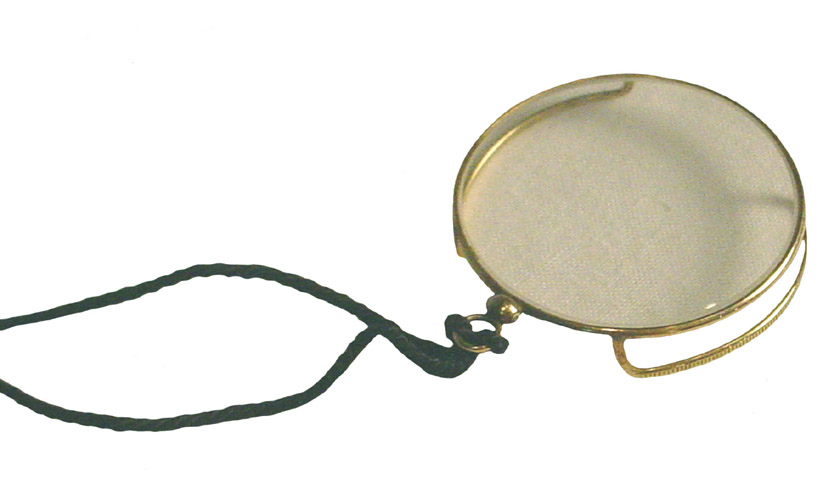



Design and types
Monocles are made in several basic forms: simple rimless lenses, rimmed varieties with a metal surround, and gallery monocles that include a flange or fold to steady the piece within the eye socket. Materials include glass or modern plastics set into metal frames or decorative surrounds; some examples incorporate a short chain or cord to attach to clothing so the monocle will not be lost. A properly fitted monocle should be comfortable without excessive pressure and remain stable during ordinary movement.
History
The monocle became fashionable in the 1800s and remained in use into the early 20th century, especially among certain social and professional groups. Advances in lens grinding and small metalworking made single-eye lenses practical. As binocular spectacles became more comfortable, affordable and cosmetically varied, and later as contact lenses were developed, the monocle declined as a routine corrective device.
Cultural role
Beyond its optical role, the monocle acquired symbolic value. It has often been used in caricature and costume to suggest wealth, aristocracy, eccentricity, or an old-fashioned professional identity. In theatre, photography and film the monocle has served as a quick visual shorthand for particular social types rather than as a common everyday accessory.
Distinctions, care and fitting
- Distinguished from pince-nez (which pinches the nose) and the lorgnette (a handled lens).
- Fitting requires accurate sizing: an ill-fitting monocle can slip, cause strain, or press uncomfortably on the eye socket.
- Care is similar to other small optical devices: clean with a suitable cloth, protect from scratches, and store in a compact case.
Modern uses and collecting
Today monocles are seldom prescribed for routine vision correction but remain of interest as retro fashion, theatrical props and collector’s items. Reproductions are made for costume use, and antique pieces are collected for their historical and decorative value. For anyone considering a monocle for vision reasons, consult a qualified optician; for general information on optical devices and how they affect sight, authoritative optical references are recommended.
Related articles
Author
AlegsaOnline.com Monocle: single-eye optical lens and cultural symbol Leandro Alegsa
URL: https://en.alegsaonline.com/art/66096