
Mikoyan-Gurevich MiG-1
Early Soviet single-seat fighter introduced in 1941, designed by Artem Mikoyan and Mikhail Gurevich; built in limited numbers and refined into the MiG-3, it was optimized for high-altitude combat on the Eastern Front.
Mikoyan-Gurevich MiG-1 was an early Soviet single-seat fighter developed at the start of the Second World War. Designed by the bureau of Artem Mikoyan and Mikhail Gurevich, the MiG-1 represents the first production type to bear the MiG designation and entered service with the Soviet Air Force in 1941.
Image gallery
1 Image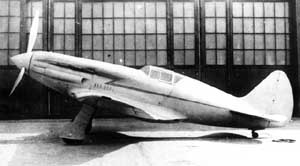
Design and characteristics
The MiG-1 was a streamlined, low-wing monoplane intended for high-altitude interception. Its layout featured a liquid-cooled inline engine, a single pilot cockpit and a fixed armament mix of cannon and machine guns typical of contemporary Soviet fighters. Emphasis was placed on speed and climb performance rather than maneuverability at low level.
- Role: single-seat high-altitude fighter
- Structure: all-metal stressed-skin construction
- Powerplant: Klimov-series inline engine (early production)
- Armament: a combination of cannon and machine guns
The design delivered good performance at altitude, but pilots reported limited forward visibility on the ground and relatively poor handling at low altitudes compared with more agile types. These traits influenced subsequent refinements.
Development, variants and production
The MiG-1 was an initial production run that was soon modified into the improved MiG-3. That successor retained the basic layout while introducing aerodynamic, structural and systems changes to address handling and pilot visibility. Only a limited number of MiG-1 airframes were built before the series designation shifted to the MiG-3 for mass production.
Operational history and legacy
MiG-1s served on the Eastern Front during the first year of the German invasion, operating where higher-altitude performance could be exploited. In practice much air combat on the Soviet front occurred at lower levels, where the type was less competitive than contemporary fighters. The lessons learned from the MiG-1 program fed directly into the MiG-3 and helped establish the Mikoyan-Gurevich design bureau as a leading Soviet fighter manufacturer.
While the MiG-1 itself was a brief chapter in wartime aviation, its development marked the start of a long series of MiG fighters that would have a significant impact on military aviation in later decades.
Author
AlegsaOnline.com Mikoyan-Gurevich MiG-1 Leandro Alegsa
URL: https://en.alegsaonline.com/art/64891