
Mikhail Tolstykh (Givi) — Commander of the Somalia Battalion
Mikhail 'Givi' Tolstykh (1980–2017) was a pro‑Russian commander in the Donbas conflict, leader of the Somalia Battalion, subject to EU sanctions and killed in Donetsk in 2017.
Overview
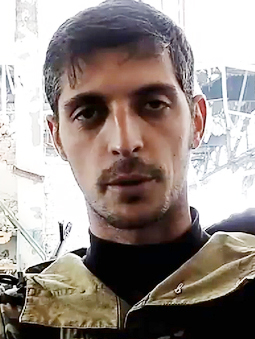
Mikhail Sergeyevich Tolstykh (Russian: Михаил Сергеевич Толстых; 19 July 1980 – 8 February 2017), widely known by his nom de guerre "Givi," was a prominent commander aligned with pro‑Russian separatist forces during the armed conflict in eastern Ukraine commonly referred to as the War in Donbas. He led the Somalia Battalion, one of several volunteer units that fought on the side of the self‑proclaimed Donetsk People's Republic (DPR). Tolstykh gained public attention for his frontline role, media appearances, and outspoken persona.
Image gallery
2 Images
Military role and activities
As leader of the Somalia Battalion, Tolstykh commanded a mixed force of local fighters and volunteers. The unit saw action in several major engagements around Donetsk and the surrounding region during 2014–2016. Within separatist structures he held a rank commonly translated as lieutenant colonel. His unit became known for its involvement in urban combat and for featuring in separatist media coverage, which helped elevate Tolstykh to one of the conflict's better‑known field commanders.
Sanctions and allegations
Western and Ukrainian authorities regarded Tolstykh as a controversial figure. In February 2015 he was listed in measures adopted by the European Council that targeted individuals believed to be undermining Ukraine's territorial integrity; the listing appears in records summarized by the European Council. Ukrainian officials and human rights groups also accused several separatist commanders, including Tolstykh, of involvement in unlawful detentions, mistreatment of prisoners and other abuses—claims that were part of broader investigations into conduct by all sides in the conflict. Tolstykh and his supporters denied many specific allegations, and responsibility for particular incidents remains contested in public records.
Death and circumstances
Mikhail Tolstykh was killed on 8 February 2017 in Donetsk. He died as the result of an explosion that occurred in his place of work, a death that drew immediate media attention. Details about the weapon used and the identity of those responsible were the subject of differing accounts in Ukrainian, Russian and international reporting. Official investigations and commentaries offered competing theories, and no universally accepted, independently verified conclusion about the perpetrator has been published in open sources.
Legacy and wider significance
Tolstykh's life and death illustrate several features of the Donbas war: the prominence of locally raised volunteer units, the blurred lines between formal and informal command structures, and the intense propaganda and information battles that accompanied combat operations. For supporters he was a committed fighter and local leader; for critics he represented the paramilitary violence and lawlessness that affected civilian life in contested areas. His death prompted renewed debate about security, internal divisions within armed groups, and the risks faced by prominent militant figures in prolonged conflicts.
Notable traits and public profile
- Known by the callsign "Givi" and frequently featured in separatist media programs.
- Regarded as a charismatic and controversial frontline commander.
- Subject to international restrictive measures; emblematic of commanders targeted by sanctions.
For further background on the broader conflict and sanctions regime, see related policy summaries and chronologies produced by international organizations and news outlets. Additional primary documents and contemporaneous reporting provide more detailed timelines of Tolstykh's activities and the military engagements in which the Somalia Battalion participated. References to specific legal proceedings or forensic conclusions should be sought in official investigative reports and court records where available. For a concise reference to his military rank in separatist structures see rank details.
Related articles
Author
AlegsaOnline.com Mikhail Tolstykh (Givi) — Commander of the Somalia Battalion Leandro Alegsa
URL: https://en.alegsaonline.com/art/64877
Sources
- nytimes.com : "In Ukraine, Civilians in Crossfire"
- youtube.com : Lt. Col. Givi prepares "surprise" for Ukrainian troops
- eur-lex.europa.eu : "Council Decision (CFSP) 2015/241 of 9 February 2015 amending Decision 2014/145/CFSP concerning restrictive measures in respect of actions undermining or threatening the territorial integrity, sovereignty and independence of Ukraine"
- cbc.ca : "Separatist commander Mikhail Tolstykh, 'Givi', killed in eastern Ukraine"