
Michael J. C. Gordon
British computer scientist (1948–2017), pioneer of interactive theorem proving and hardware verification, lead developer of the HOL theorem prover and a Fellow of the Royal Society.
Overview
Michael John Caldwell "Mike" Gordon (28 February 1948 – 22 August 2017) was a British computer scientist known for founding work in interactive theorem proving and formal verification, especially of hardware. Born in Ripon, in Yorkshire, he spent much of his career advancing rigorous methods to specify, reason about, and prove properties of computing systems. He died in Cambridge, Cambridgeshire in 2017.
Image gallery
1 Image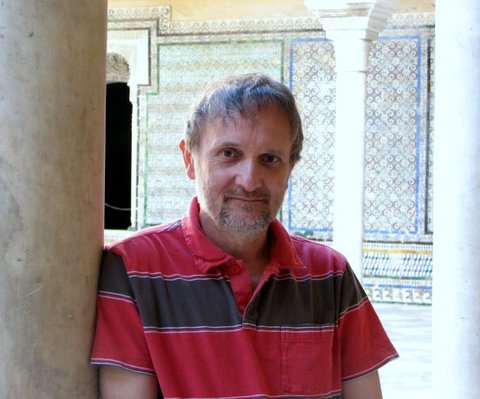
Contributions and focus
Gordon is best known for leading the development of the HOL family of theorem provers (higher-order logic). His work emphasized using a single, expressive logic as a uniform framework for modelling both hardware and software, and for building interactive proof tools that help engineers establish correctness with mathematical certainty. These ideas have influenced both academic research and practical verification efforts in industry.
HOL theorem prover
The HOL systems are interactive, higher-order logic theorem provers originally developed under Gordon's leadership. They combine a small, trusted logical core with a programmable environment for constructing proofs. The approach championed by Gordon balanced expressive logical foundations with tool support, enabling verification of substantial designs such as microprocessors and communication protocols. HOL and its descendants remain widely used in formal methods communities.
Approach and methods
Gordon advocated for mechanized reasoning that tightly couples specification, implementation, and proof. Rather than relying solely on automated procedures, his work promoted interactive development of proofs supported by a programmable meta-language. This methodology made it practical to tackle complex verification tasks while keeping the logical kernel small and auditable.
Legacy and recognition
He was elected a Fellow of the Royal Society in 1994 in recognition of his foundational contributions to computer science. His influence extended through students, software, and a generation of tools that apply formal reasoning to real-world systems. In 2008 a research meeting on techniques for verifying system infrastructure marked his 60th birthday and highlighted the ongoing impact of his ideas.
Selected themes and significance
- Formal verification: promoted rigorous proofs of correctness for hardware and software.
- Interactive theorem proving: combined human-guided proof development with reliable logical cores.
- Higher-order logic: used an expressive logical framework able to represent a wide range of concepts.
- Influence: tools and methods from his work continue to shape research and industrial practice.
Gordon's work helped establish formal methods as a mature discipline and demonstrated that mathematical proof techniques can be integrated into engineering processes to improve trustworthiness of complex computing systems.
Related articles
Author
AlegsaOnline.com Michael J. C. Gordon Leandro Alegsa
URL: https://en.alegsaonline.com/art/64461
Sources
- cl.cam.ac.uk : "Michael JC Gordon FRS, Professor Emeritus of Computer Assisted Reasoning, 28 February 1948 – 22 August 2017"
- cl.cam.ac.uk : "TPHOLS, conferences associated with theorem proving in higher-order logics"
- ttvsi.org : "Tools and Techniques for Verification of System Infrastructure"
- sourceforge.net : "Sad news regarding Mike Gordon"