
Memento (2000 film)
Christopher Nolan's breakthrough psychological thriller about a man with anterograde amnesia who uses Polaroids and tattoos to pursue the truth. Noted for its reverse chronological structure and lasting influence.
Memento is a 2000 American mystery-thriller film written and directed by Christopher Nolan and produced by Suzanne and Jennifer Todd. The screenplay grew from an idea and pitch by Jonathan Nolan and a short story he published later titled "Memento Mori." The film stars Guy Pearce as Leonard Shelby, a man with severe short-term memory loss who cannot form new memories after a traumatic attack. To compensate, Leonard develops an elaborate system of Polaroid photographs, written notes and tattoos to record people, places and clues while he searches for the man he believes responsible for his wife’s death.
Image gallery
3 Images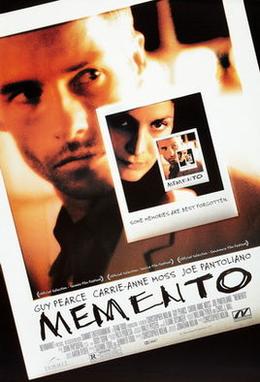

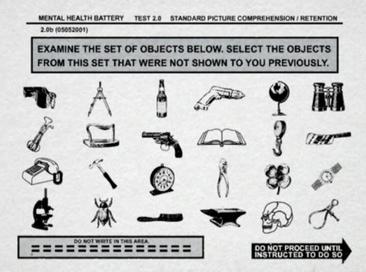
Structure and stylistic devices
Memento is widely recognized for its unconventional narrative design. Two intercut sequences unfold throughout the film: one set of scenes in black-and-white runs in chronological order, while a parallel series in color is presented in reverse chronological order. This juxtaposition places viewers in the protagonist’s disoriented perspective and turns narrative cause and effect into a puzzle the audience must reassemble. The editing and pacing deliberately emphasize fragmentation, memory gaps and the limits of self-knowledge.
Plot elements and techniques
The central conceit—relying on external memory aids—drives many of the film’s practical details and moral questions. Leonard’s Polaroids, notes and tattoos are both practical tools and symbolic markers of identity, trust and obsession. The film foregrounds the idea of an unreliable narrator: because Leonard cannot remember new information for more than minutes, every new encounter can reset what he knows or believes. This framing encourages repeated viewings and close attention to small visual and textual details.
Themes, reception and notable facts
Memento explores themes of memory, perception, grief, vengeance and self-deception. Critics praised the film for its daring form and psychological depth, and it quickly became a touchstone of early 21st-century independent cinema. The film premiered at the 57th Venice International Film Festival and attracted awards attention, including Academy Award nominations for Best Original Screenplay and Best Film Editing. It performed well against a modest budget and helped establish Christopher Nolan as an innovative filmmaker.
Legacy and influence
Beyond immediate critical success, Memento is often cited as a landmark in nonlinear storytelling and as a defining work in Nolan’s career. Its inventive structure influenced subsequent films and television that play with chronology and perspective. In recognition of its cultural and artistic significance, the United States Library of Congress selected the film for preservation in the National Film Registry.
- Genre: mystery-thriller
- Director: Christopher Nolan
- Origin: based on a pitch by Jonathan Nolan and his later short story "Memento Mori"
- Lead actor: Guy Pearce
- Medical condition depicted: anterograde amnesia
- Accolades: nominated at the Academy Awards including Best Film Editing
- Preservation: selected by the Library of Congress for the National Film Registry
For readers interested in narrative technique, Memento remains a frequently cited example of how form can reinforce theme: memory’s fragmentation becomes both the subject and the structural principle of the film. Its economical production, strong critical reception and continued study in film courses contribute to its reputation as one of the most influential films of the early 2000s.
Related articles
Author
AlegsaOnline.com Memento (2000 film) Leandro Alegsa
URL: https://en.alegsaonline.com/art/63726