
Meigs Field (Merrill C. Meigs Field Airport)
Former single-runway airport on Chicago's Northerly Island, open 1948–2003; known for general aviation, a prominent lakefront presence and a controversial closure that reshaped the site into parkland.
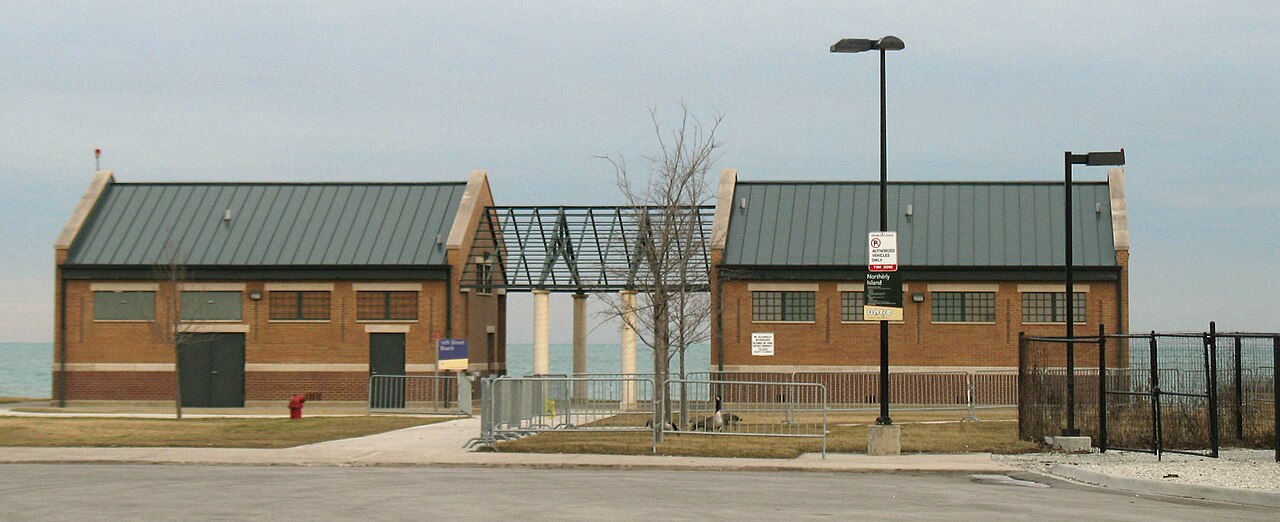
Merrill C. Meigs Field Airport was a small but prominent single-runway airport located on Chicago's man-made Northerly Island along Lake Michigan. Opened to the public on December 10, 1948, it served general aviation, business flights and helicopter operations for more than half a century. The field was named for aviation enthusiast Merrill C. Meigs and was usually identified by its IATA code CGX.
Image gallery
9 Images




Physical characteristics
Meigs Field was notable for its single paved runway and compact layout optimized for light aircraft and corporate traffic. The main runway measured 3,900 by 150 feet (approximately 1,189 by 46 meters), and the site included multiple helicopter pads at the southern end. An air traffic control tower was added in 1952 and a dedicated passenger terminal building followed in 1961. Because of its single-runway configuration it was long described as the nation's busiest single-strip airport by aircraft operations in the mid-20th century.
History and development
The airfield grew in visibility through the 1950s and 1960s as Chicago expanded its lakefront facilities. Improvements to the terminal and apron supported corporate aviation, flight instruction and public access for business travelers. Over decades it became a familiar element of the city's lakeshore skyline, offering quick downtown access that differentiated it from larger regional airports.
Uses, media and culture
Meigs Field functioned primarily as a general aviation and corporate airport. It hosted private flights, sightseeing flights, helicopter operations and flight training. Beyond aviation, the airport became part of popular culture: it was widely used as the default airport in many versions of Microsoft Flight Simulator, appeared in the video game Driver 2 and other titles, and was a filming location for the short film "Powers of Ten." Its compact, urban setting made it visually and practically distinctive.
Closure and legacy
Operations at Meigs Field ended in March 2003. The airport's abrupt closure and the disabling of the runway by city crews provoked substantial public debate about airport use, aviation access and the future of lakefront land. In the years that followed, the site was incorporated into broader plans for expanded public green space and recreation on Northerly Island; the transformation remains a frequent reference point in discussions of urban planning, transportation policy and waterfront management.
Notable facts
- Named for Merrill C. Meigs, an active supporter of aviation and aeronautical journalism.
- Often cited as a busy single-strip airport during its peak years; its small size contrasted with its central city location.
- Featured in multiple computer games and simulation programs, which helped maintain its public profile after closure.
- Runway specifications and facilities: see references to the runway size here and historical summaries here.
For further historical and technical information about Meigs Field and the evolution of Northerly Island, see municipal and aviation archives or digital retrospectives that document Chicago's lakefront development and the airport's role in it. Additional resources and media references are available through city historical pages and aviation publications about the airport's operations and through cultural retrospectives that cite its appearances in entertainment media and simulations.
Related links and multimedia references: operational summaries, site maps, historical timelines, flight simulation portrayals, video game appearances and technical runway details.
Related articles
Author
AlegsaOnline.com Meigs Field (Merrill C. Meigs Field Airport) Leandro Alegsa
URL: https://en.alegsaonline.com/art/63561
Sources
- dealtime.com : Midtown Madness for Windows