
Mariehamn — capital of the Åland Islands
Mariehamn is the administrative and maritime centre of the Åland Islands, an autonomous, Swedish-speaking region of Finland. It is a busy ferry port, cultural hub and the historic focus of Åland’s shipping industry.
Mariehamn is the capital and largest town of the Åland Islands, an autonomous archipelago region of Finland. The town is known in Finnish as Maarianhamina and lies at the heart of the Åland archipelago. Mariehamn combines public administration, maritime trade and tourism, and serves as the principal harbour for passenger and freight traffic linking Åland with the Finnish mainland and Sweden.
Image gallery
10 Images


Location and character
Mariehamn occupies a sheltered harbour on the main island and functions as the regional centre for services, education and culture. The town is predominantly Swedish-speaking and reflects the islanders’ distinct identity within the Finnish state. Its urban fabric includes a compact centre of wooden and stone buildings surrounded by typical coastal landscapes and smaller islands.
History and development
Founded in 1861 to serve growing sea traffic in the Baltic, Mariehamn was named in honour of a Russian imperial figure associated with that era. Over time it developed as a shipowning and shipping centre; Åland’s long maritime tradition shaped the town’s economy and built heritage. The town retains several maritime monuments and museums that document that history.
Economy, transport and maritime importance
Mariehamn’s economy is dominated by services, tourism and shipping. The port handles frequent ferry and cargo connections; many sailings link Mariehamn with Turku on the Finnish mainland and with Swedish ports. For example, regular services connect to Turku and to Swedish routes, making the town a busy stop for passenger ferries. Åland’s special tax status has long supported duty-free sales on qualifying ferries that call at Mariehamn.
Attractions and institutions
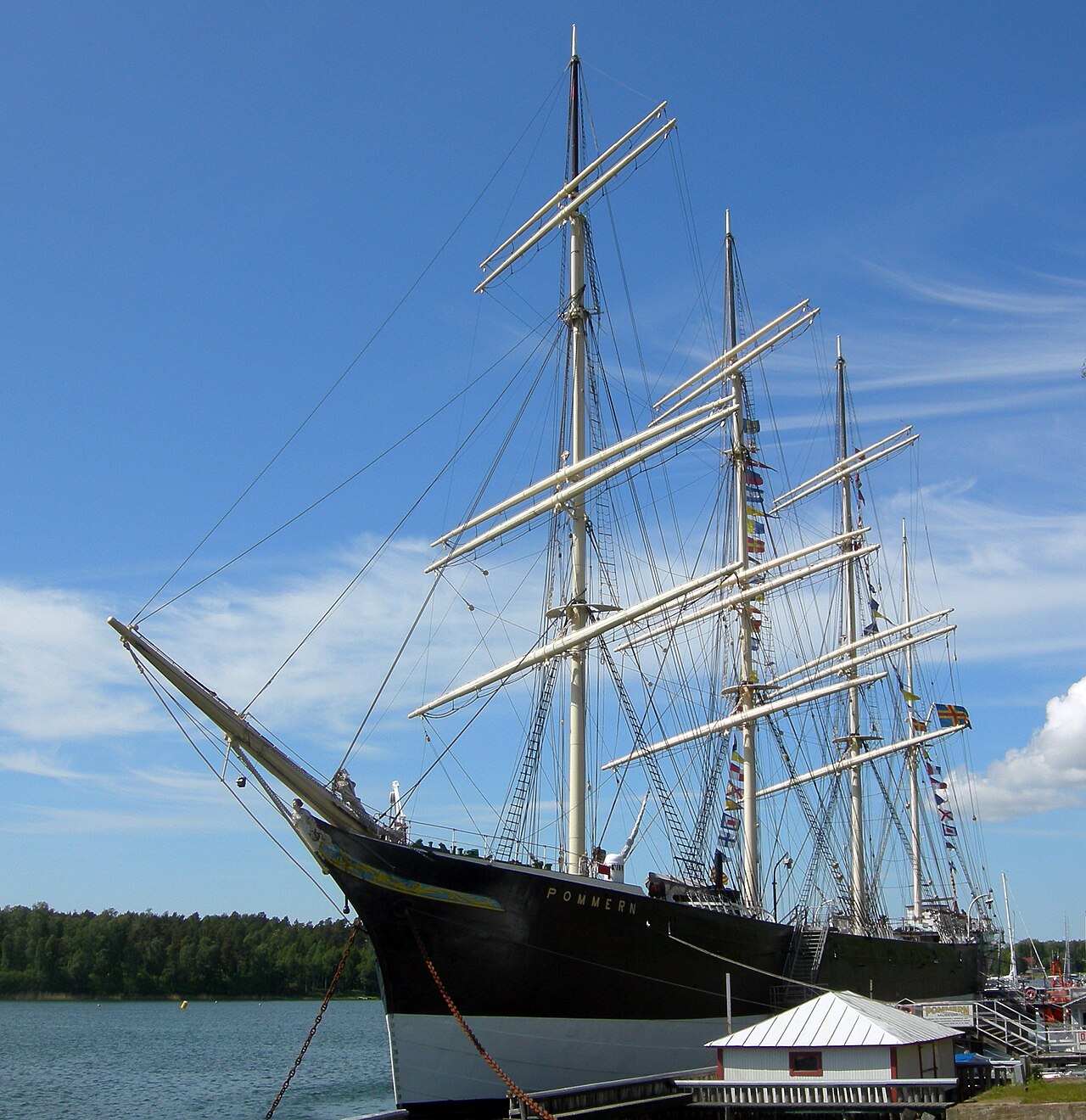
- Maritime museum and historic vessels, including the preserved windjammer Pommern and exhibits on shipbuilding.
- Regional administrative buildings, cultural centres and museums that explain Åland’s autonomous status.
- Parks, promenades and boating facilities that serve both residents and summertime visitors.
Mariehamn is also the seat of the Åland provincial government and plays a central role in the islands’ self-government arrangements. The town illustrates how a small port can combine historic maritime identity with contemporary public services and tourism. For more regional context, see information on the Åland Islands and the relationship with the Finnish state (Finland).
Related articles
Author
AlegsaOnline.com Mariehamn — capital of the Åland Islands Leandro Alegsa
URL: https://en.alegsaonline.com/art/61878