
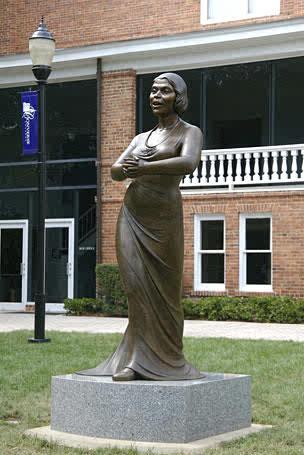
Marian Anderson (1897–1993)
Marian Anderson was an American contralto celebrated for her rich voice, historic 1939 Lincoln Memorial concert and for becoming the first African American to sing at the Metropolitan Opera.
Marian Anderson (February 27, 1897 – April 8, 1993) was an American contralto whose voice and career crossed musical and social boundaries. Renowned for its warmth, clarity and expressive range, her singing encompassed art songs, spirituals, oratorio and operatic repertoire. Anderson is remembered both for her musical achievements and for performances that carried symbolic weight in the struggle for racial equality.
Image gallery
10 Images



Early life and training
Born to a musical family in Philadelphia, Anderson showed talent early and studied locally before embarking on a concert career. Limited opportunities for Black artists in the United States led her to perform frequently in Europe and on concert tours, where critics and audiences praised her tonal richness and interpretive sensitivity. These tours helped establish an international reputation that she later brought back to American stages.
Lincoln Memorial concert and public impact
In 1939, when the Daughters of the American Revolution refused her use of Constitution Hall because of segregationist policies, the incident prompted public outcry and political attention. With support from advocates including Eleanor Roosevelt, Anderson gave an open-air recital at the Lincoln Memorial on Easter Sunday, drawing a very large, mixed audience. That concert became a defining cultural moment linking artistic achievement with civil rights aspiration.
Metropolitan Opera debut and career highlights
After decades as a celebrated recitalist and concert artist, Anderson achieved another milestone in 1955 when she became the first African American to sing at the Metropolitan Opera in New York. Her career included many notable engagements: international tours, performances with leading orchestras, radio and recorded releases, and invitations to perform for national and international dignitaries.
Style, repertoire and influence
Anderson's contralto was admired for its secure low range, smooth legato and dignified stage presence. She performed a wide spectrum of music—classical lieder and arias, spirituals rooted in African American tradition, and large-scale choral works. Younger singers and civil rights leaders alike cited her as an artistic and moral exemplar, and her concerts helped open doors for subsequent generations of artists of color.
Legacy and commemoration
Anderson continued to sing, teach and advocate for music education late into her life. She received numerous honors and honorary degrees, and her recordings remain in circulation. Institutions, scholarships and public commemorations preserve her memory as both an artist of rare vocal gifts and a cultural figure whose public performances had lasting social resonance.
- Notable events: 1939 Lincoln Memorial concert; 1955 Metropolitan Opera debut.
- Repertoire highlights: spirituals, art song, oratorio and selected operatic roles.
- Enduring importance: bridge between musical excellence and civil rights progress.
Related articles
Author
AlegsaOnline.com Marian Anderson (1897–1993) Leandro Alegsa
URL: https://en.alegsaonline.com/art/61833
Sources
- fdrlibrary.org : "Home - FDR Presidential Library & Museum"
- life.time.com : life.time.com
- msnbc.com : "On this date in history: Marian Anderson sings at Lincoln Memorial"
- nytimes.com : "Marian Anderson Is Dead at 96; Singer Shattered Racial Barriers"
- imdb.com : "Marian Anderson"
- usatoday30.usatoday.com : "Concert pays tribute to Marian Anderson - USATODAY.com"
- books.google.com : Marian Anderson: A Voice Uplifted