
Marathon, Greece: town, historic battlefield, and origin of the marathon race
Marathon is a town and plain in Greece known for the 490 BCE battle, its name from the Greek word for fennel, and its lasting legacy in commemoration, archaeology, and the modern marathon run.
Overview
Marathon (Greek: Μαραθών / Μαραθώνας) is a town and plain northeast of Athens notable for its ancient battlefield and its cultural legacy. The site is best known for the Battle of Marathon in 490 BCE, when Athenian forces met a Persian invasion. Today Marathon combines archaeological monuments, commemorative memorials and a modern community that draws visitors interested in history, sport and natural scenery.
Image gallery
10 Images


Name and landscape
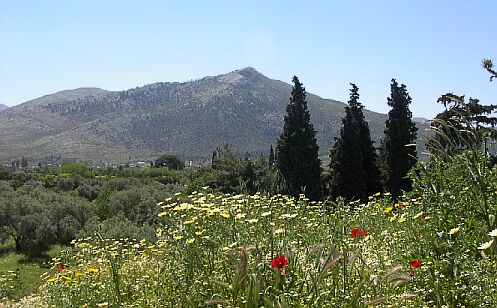
The place-name derives from the Ancient Greek word marathon (μάραθον), an appellation for the wild fennel plant that grows in the area. Thus Marathon literally meant a place where fennel was plentiful. The terrain is a coastal plain backed by low hills and includes freshwater works built to supply the nearby city of Athens.
Historical significance
The Battle of Marathon (490 BCE) is the site's defining event. Greek hoplites, primarily Athenian, confronted a Persian expeditionary force on the plain and secured an important victory for the Greek city-states. The battle entered classical memory through contemporary and later literary sources and produced enduring stories, including a celebrated account of a long run to announce the victory.
Archaeology and monuments
Visitors encounter several marked locations and memorials connected to the battle and to the fallen. Notable points of interest include the burial mound and commemorative monuments, a local museum displaying finds from the plain, and accessible markers that interpret the ancient battlefield. Examples include:
- The burial mound erected for the Athenian dead.
- Commemorative memorials honoring those who fell in ancient combat.
- A regional archaeological museum that exhibits artifacts from local excavations.
Modern legacy and the race
Marathon is intimately linked to the modern footrace that bears its name. The popular long-distance event was inspired by the legendary run from the battlefield to Athens and has become an international athletic symbol. Contemporary marathon courses and events worldwide recall that association, and the route between Marathon and Athens remains a focal point for commemorative runs.
Further reading and context
For readers seeking more detail on the town's classical name forms, local administration and contemporary descriptions, see resources on the place's ancient appellations and general Greek geography. Background on the battle and its later reception in literature and sport is available through historical summaries and specialized studies. Helpful starting points include pages on the ancient name and language forms, general information about the country, focused accounts of the 490 BCE conflict, and botanical references for the fennel that gave the place its name: ancient forms, Greece overview, Battle of Marathon, fennel (marathon).
Related articles
Author
AlegsaOnline.com Marathon, Greece: town, historic battlefield, and origin of the marathon race Leandro Alegsa
URL: https://en.alegsaonline.com/art/61550
Sources
- statistics.gr : "(875 KB) 2001 Census"
- perseus.tufts.edu : μάραθον
- palaeolexicon.com : "The Linear B word ma-ra-tu-wo"
- minoan.deaditerranean.com : "ma-ra-tu-wo"
- www2.hf.uio.no : "MY 602 Ge (57)"
- www2.hf.uio.no : "MY 606 Ge + fr. (57)"
- www2.hf.uio.no : "MY 605 Ge + 607 + fr. [+] 60Sa + fr. [+] 605b + frr. (57)"
- perseus.tufts.edu : Μαραθών