
Madeleine Vionnet
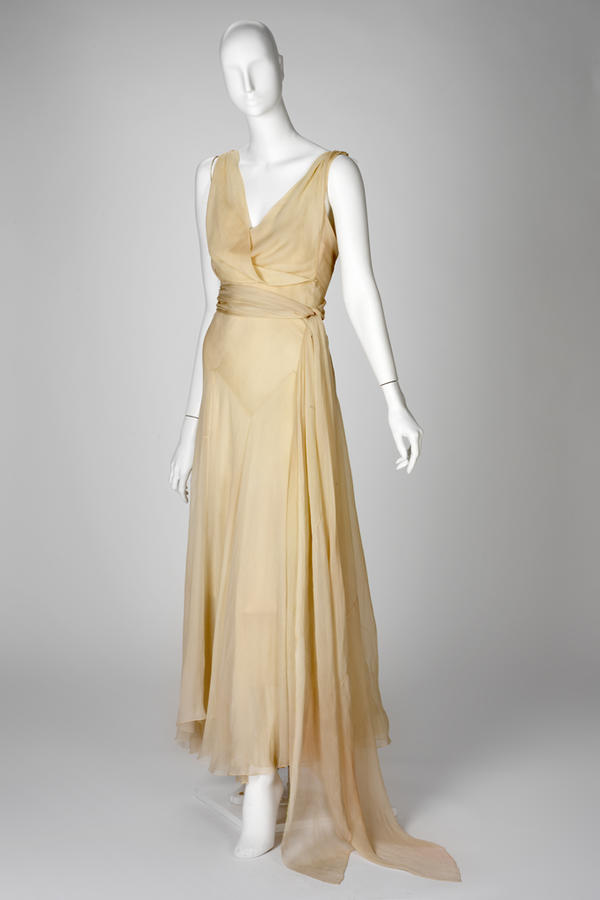
French couturière Madeleine Vionnet (1876–1975) revolutionized dressmaking with the bias cut, creating flowing Grecian-style gowns and bringing couture principles into ready-to-wear fashion.
Madeleine Vionnet (22 June 1876 – 2 March 1975) was a French fashion designer whose work reshaped twentieth-century dressmaking. She is best known for popularizing the bias cut, a method of cutting fabric diagonally to produce garments that cling, drape and move with the body. Vionnet combined technical precision with a classical aesthetic inspired by ancient sculpture.
Image gallery
8 Images




Design characteristics
Vionnet’s designs are commonly described by their elegance, economy of seams and emphasis on natural silhouette rather than heavy underpinnings. Key features include:
- Diagonal or bias cutting to create fluid lines and elasticity.
- Minimal internal structure—less corsetry and rigid boning than earlier fashions.
- Simplified, often Grecian-inspired draping that follows the body’s contours.
Technique and studio practice
Rather than relying solely on flat patterns, Vionnet refined a draping-first approach: fabrics were often arranged and pinned directly on a mannequin or model, then translated into patterns. She selected soft, responsive textiles such as silk and lightened weaves to maximize the effect of the bias. This hands-on method demanded precision and an understanding of how grain and tension affect the finished garment.
Business and influence
Vionnet operated a couture house in Paris and was notable for bringing haute traditions into broader circulation. She helped bridge bespoke couture techniques and more accessible production, influencing how high fashion could inform ready-to-wear collections. Her emphasis on comfort and movement changed expectations for evening and daywear alike, and her techniques were widely studied by later designers.
Legacy and notable points
Vionnet’s name remains associated with the bias cut and with a modern, body-conscious approach to dressmaking. Her work is often linked to classical, Grecian silhouettes and to the evolution of haute couture sensibilities in twentieth-century clothing. Museums, fashion historians and designers continue to cite her methods when discussing seamless draping and the relationship between fabric and form.
Related articles
Author
AlegsaOnline.com Madeleine Vionnet Leandro Alegsa
URL: https://en.alegsaonline.com/art/60459
Sources
- bettykirke.com : Betty Kirke (no date) A dressmaker extraordinary
- latimes.com : latimes.com/news/la-oe-dilberto10oct10-story.html
- fashionlawwiki.pbworks.com : Madeline Vionnet: France's fashion soap opera