
Louis de Saint-Just: Revolutionary leader and architect of the Terror
Biography and assessment of Louis Antoine Léon de Saint-Just, a leading Jacobin, member of the Committee of Public Safety and a principal figure in the Reign of Terror during the French Revolution.
Louis Antoine Léon de Saint-Just (1767–1794) was a prominent and polarizing figure of the French Revolution. A lawyer by education and a talented orator, he rose rapidly as one of the youngest deputies in the National Convention and became a close ally of Maximilien Robespierre. His stern rhetoric, uncompromising view of virtue, and support for revolutionary justice earned him the sobriquet "the Angel of Death" among contemporaries and later historians.
Image gallery
9 Images


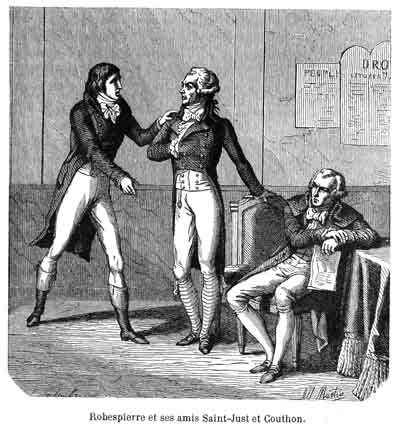
Political role and beliefs
Saint-Just argued that the Revolution required moral rigor and decisive action: he insisted that the republic must defend itself against internal and external enemies through swift and, when necessary, severe measures. As a member of the Committee of Public Safety from 1793, he combined questions of policy, war, and administration, and supported laws and practices intended to centralize authority, increase wartime mobilization, and punish counter-revolutionary activity.
Actions during the Reign of Terror
During the period commonly known as the Reign of Terror, Saint-Just played a leading part in shaping prosecutions of suspected opponents and in directing revolutionary tribunals. He defended the use of revolutionary courts and emergency measures as instruments to preserve the republic, while critics saw in his stance the justification for political purges and executions.
Downfall and legacy
Saint-Just fell with Robespierre during the Thermidorian Reaction and was executed by guillotine on 28 July 1794. In the decades since, historians have debated his motives and influence: some portray him as an idealist willing to sacrifice individuals for the greater good of a virtuous republic, others as an uncompromising ideologue whose policies contributed to repression. His speeches and reports remain studied as exemplars of revolutionary thought.
- Early life and rapid rise to the Convention
- Member of the Committee of Public Safety (1793–1794)
- Central role in policies of the Reign of Terror
- Executed after Thermidor; enduring controversial legacy
For primary documents and further reading, see collected speeches and reports attributed to Saint-Just and modern studies of the Jacobin government: further sources.
Related articles
Author
AlegsaOnline.com Louis de Saint-Just: Revolutionary leader and architect of the Terror Leandro Alegsa
URL: https://en.alegsaonline.com/art/59423