
London County Council Tramways
Municipal street tram network created by London County Council in 1899; electrified and expanded through early 20th century and transferred to the London Passenger Transport Board in 1933.
Overview
The London County Council Tramways were a municipally operated system of street tramways serving the central area governed by the London County Council in the County of London, United Kingdom. Formed at the end of the 19th century, the service became a major element of urban public transport in the capital, providing frequent, electrically powered tram services on many central and suburban streets until the early 20th century reorganization of London transport.
Image gallery
2 Images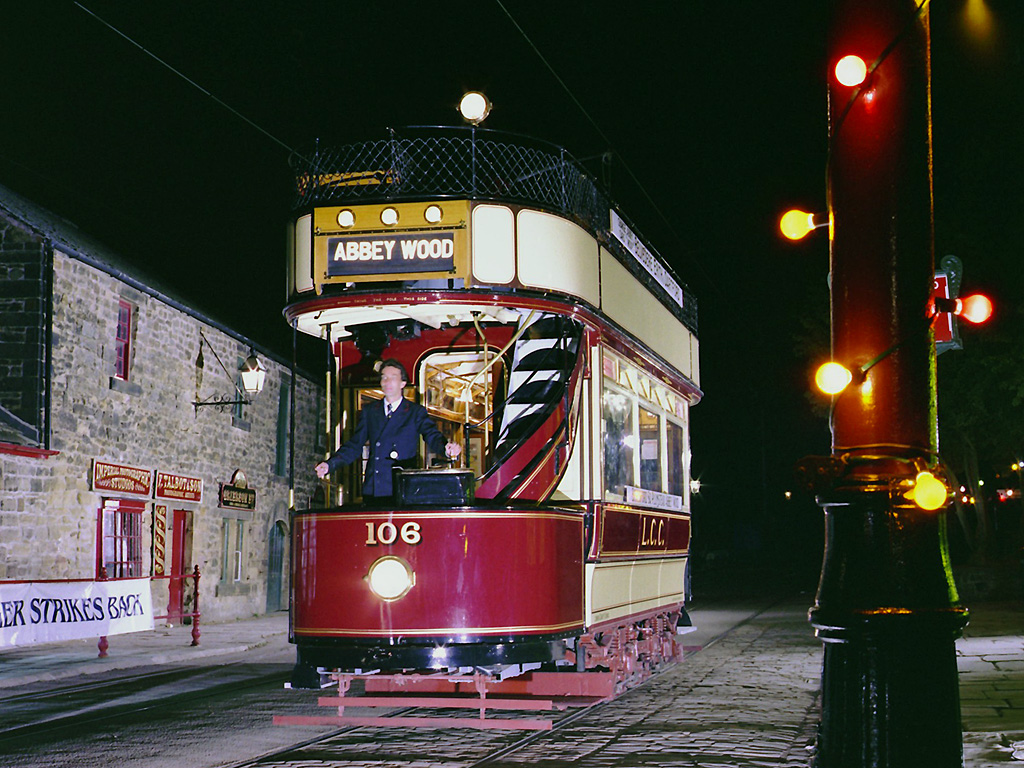

History and development
Established in 1899 as part of a wider municipalisation trend, the LCC Tramways took over and consolidated many privately run or locally controlled horse and steam tram operations. Over the following decades the network was modernized and largely electrified, reflecting broader technological shifts in urban transit. In 1933 responsibility for most of London's public transport—including the tramways—was transferred to the newly created London Passenger Transport Board.
Characteristics and operations
Services ran on standard street tram tracks, sharing road space with other traffic. The system used single- and double-deck electric tramcars and was supported by depots and maintenance workshops. Typical features included:
- Street-running routes serving busy thoroughfares and feeders to mainline rail termini.
- Electric traction supplied via overhead wiring, replacing earlier horse- and steam-powered vehicles.
- Municipal fare collection and timetable coordination under council management.
Importance and legacy
The LCC Tramways played an important role in shaping daily travel patterns and the expansion of suburbs in the early 20th century. Its municipal ownership was part of a broader movement to coordinate and improve urban services. After transfer to the London Passenger Transport Board in 1933, trams continued to operate in London for some years before being progressively replaced by buses and trolleybuses. Many former routes and operating practices influenced later transport planning, and a number of tramcars and historic records survive in preservation collections and transport archives.
Notable distinctions
While not the only tram operator in the capital, the London County Council Tramways were notable for being a large, municipally run network that helped set standards for urban electric tram operation in Britain. Its integration into city-wide transport governance in 1933 marked a significant change toward centralized coordination of London's public transit services.
Related articles
Author
AlegsaOnline.com London County Council Tramways Leandro Alegsa
URL: https://en.alegsaonline.com/art/59022