
Armenian Quarter (Old City of Jerusalem)
Historic district of Jerusalem's Old City; a compact Armenian neighborhood centered on the Patriarchate and St. James Cathedral, with monastic institutions, manuscript collections and a continuous Armenian presence.
Overview
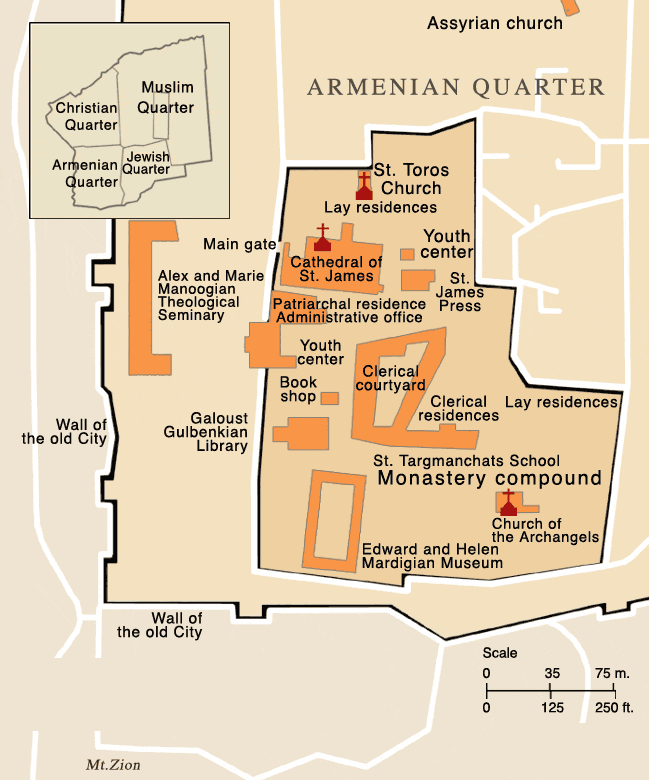
The Armenian Quarter is one of the four traditional quarters of Jerusalem's Old City. It forms a compact, largely monastic neighborhood distinguished by the presence of the Armenian Patriarchate and the complex around St. James Cathedral. The quarter preserves distinct religious, linguistic and cultural traditions of the Armenian community within Jerusalem's multi‑faith urban fabric.
Image gallery
10 Images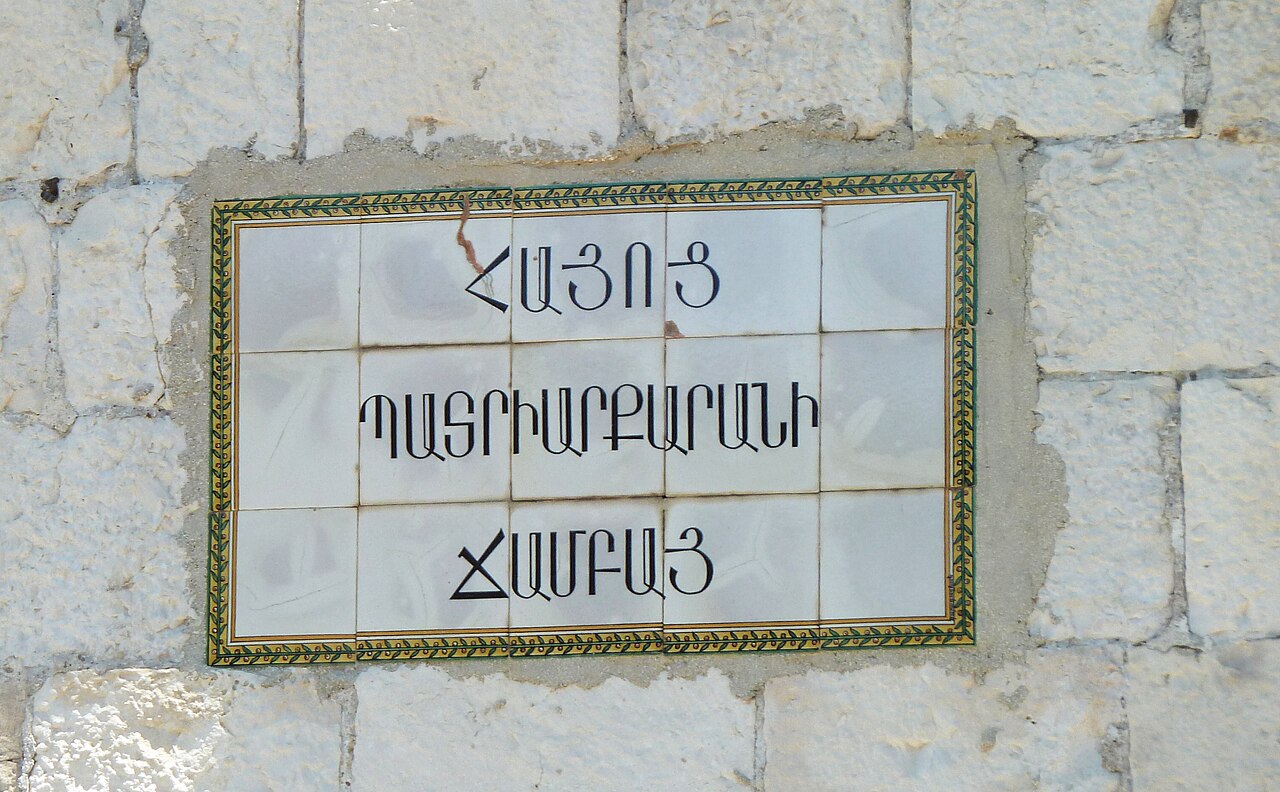




Geography and layout
The quarter lies in the southwestern sector of the walled city, adjacent to the Jewish Quarter and near Zion Gate. Its boundaries are informal and defined by streets, courtyards and walls rather than modern municipal divisions. Narrow alleys, stone houses, church courtyards and institutional complexes create a dense urban fabric that reflects centuries of continuous occupation.
History
Armenians have maintained a presence in Jerusalem since the early centuries of Christianity. Over time the community established monasteries, a patriarchal residence and structures to serve pilgrims, clergy and residents. The quarter developed through Byzantine, medieval and later periods, adapting to changing political circumstances while retaining a distinctive communal identity centered on the Armenian Apostolic Church.
Notable sites and institutions
- St. James Cathedral and adjoining monastic buildings, a focal point for worship and liturgy.
- The Armenian Patriarchate, which administers religious affairs, property and community institutions.
- Collections of manuscripts, religious artifacts and historical archives used for scholarship and preservation.
- Historic printing and publishing activity connected with the preservation of the Armenian language and literature.
- Cemeteries, small schools, workshops and residential compounds that support community life.
Culture and social life
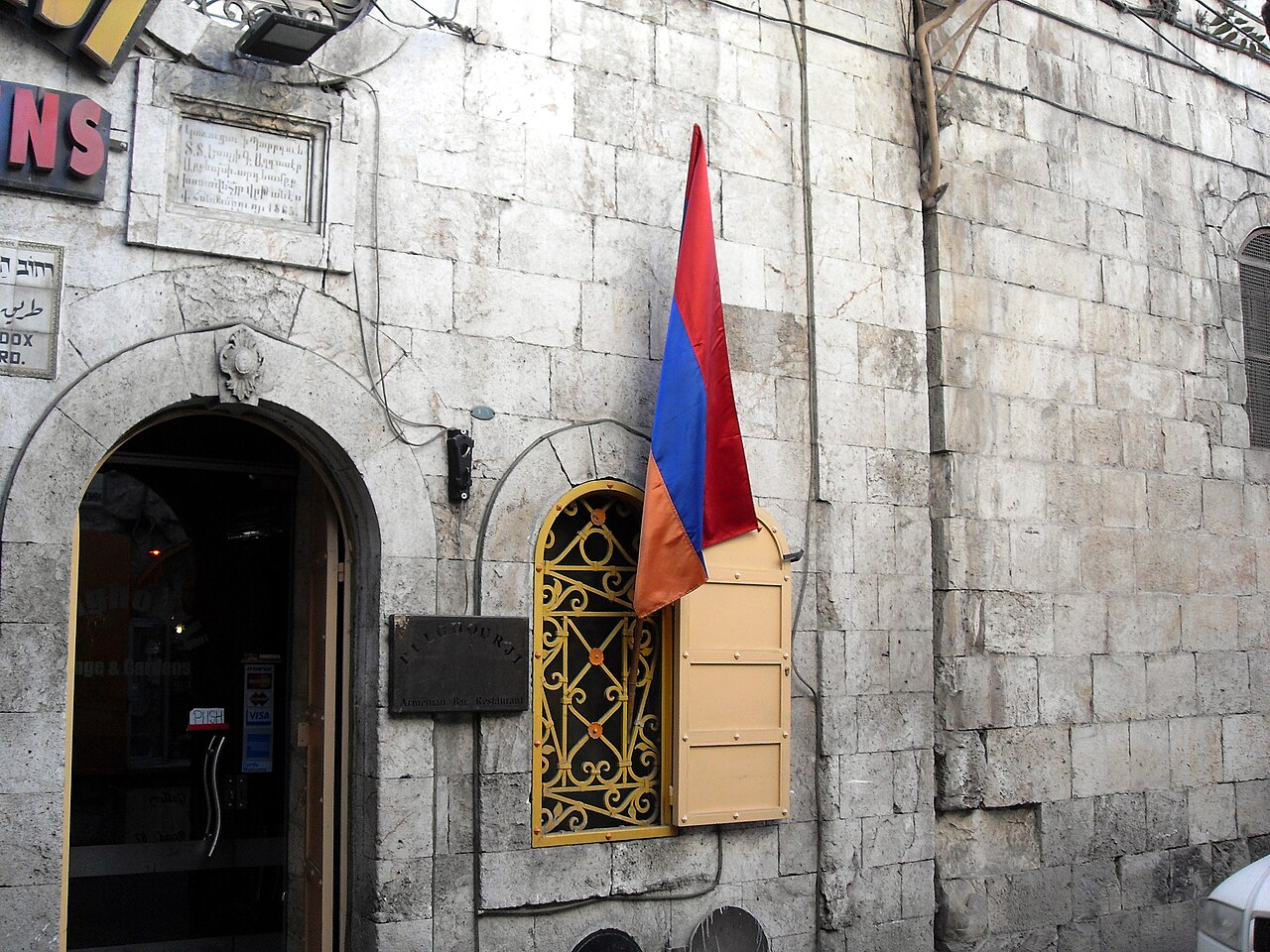
The quarter functions as both a living neighborhood and a center for pilgrimage, education and cultural expression. Armenian liturgy and the Western Armenian language remain visible in religious services, schools and community events. Artistic crafts, liturgical music and manuscript illumination are part of local cultural practices.
Distinct status and relations
Although Armenian Christians share many religious practices with other Christian communities, the Armenian Quarter is treated as a separate entity. The patriarchate has long served as the community's administrative and spiritual center, and the quarter maintains institutional autonomy while interacting with neighboring communities in the Old City.
Preservation and contemporary issues
Today the Armenian Quarter faces challenges common to historic urban districts: conservation of ancient buildings, upkeep of manuscript collections, and balancing the needs of residents with tourism and pilgrimage. Efforts by the community, scholars and preservation bodies aim to protect its architectural and cultural heritage while maintaining its role as a living neighborhood in Jerusalem's historic core.
Related articles
Author
AlegsaOnline.com Armenian Quarter (Old City of Jerusalem) Leandro Alegsa
URL: https://en.alegsaonline.com/art/5715