
Lechites: the Lechitic peoples and languages of the West Slavs
Lechites (Lechici) are a West Slavic ethnolinguistic subdivision whose members and languages include the ancestors of modern Poles, Kashubians and several extinct groups.
Overview
The Lechites, sometimes called Lechitic peoples, form an ethnolinguistic branch of the West Slavs. The name derives from the legendary figure Lech and from endonyms used in medieval sources; in Polish the group is called Lechici. Lechitic identity is primarily linguistic but has also been used historically to describe related tribes and medieval polities in the area of present-day Poland and adjacent regions.
Image gallery
4 Images


Characteristics and components
Lechitic speech varieties share a set of phonological and lexical features that distinguish them from other West Slavic groups (such as Czech–Slovak and Sorbian). These similarities justify treating them as a subgroup within the West Slavic family, although internal boundaries and classifications (for example, the status of Silesian) are debated among linguists.
Languages and tribes
- Living: Polish and Kashubian (a regional language of Poland).
- Extinct or historical: Polabian (extinct), Pomeranian varieties, and several medieval tribal dialects.
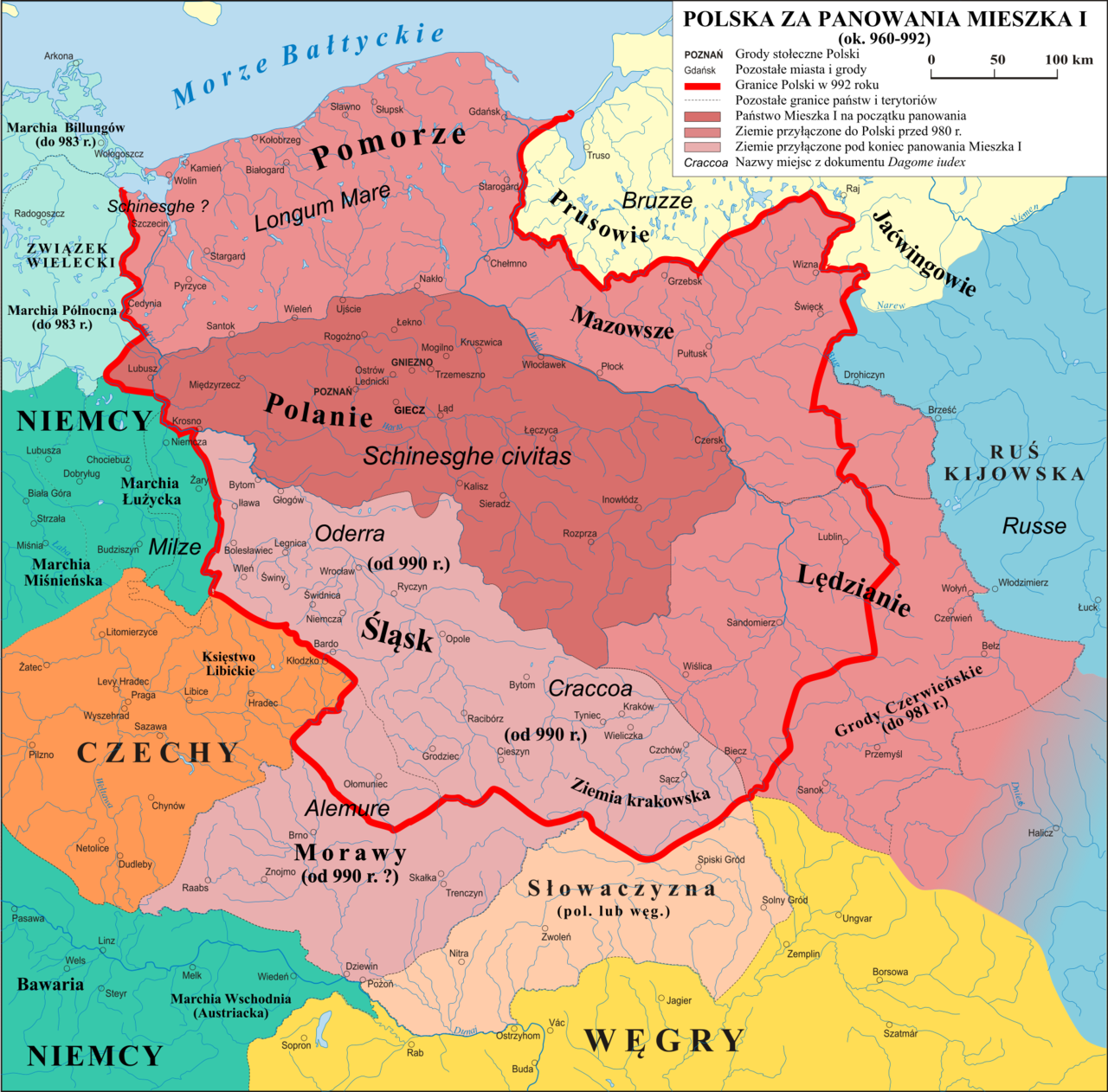
- Notable tribes: Polans, Pomeranians, Vistulans and other groups whose names appear in early chronicles.
Origins and historical development
In the early medieval period various West Slavic tribes settled and organized in the Vistula basin and along the southern Baltic coast. Over time some groups coalesced into larger political units: notably the Piast polity that became the Polish state. Other Lechitic-speaking communities were absorbed or displaced by neighboring peoples, and some languages gradually disappeared through assimilation or Germanization.
Modern importance and distinctions
Polish is today the largest and most prominent Lechitic language. Kashubian survives as a distinct regional language with recognized cultural status in Poland. Polabian is a case often cited for language loss in the region. Scholars emphasize both shared Lechitic traits and the diversity within the group, noting that classification can depend on linguistic, historical and political criteria.
Notable facts
- The legend of Lech, Czech and Rus, a foundational myth, has long influenced the name and identity of Lechitic peoples.
- Some speech varieties traditionally labeled Lechitic are the subject of ongoing research into their exact relationships and historical developments.
Author
AlegsaOnline.com Lechites: the Lechitic peoples and languages of the West Slavs Leandro Alegsa
URL: https://en.alegsaonline.com/art/56856