
Latvian Soviet Socialist Republic
Constituent republic of the Soviet Union covering Latvia; formed briefly after World War I and then under Soviet control from 1940s until restoration of independence in 1991.
Overview
The Latvian Soviet Socialist Republic was the Soviet-era state covering the territory of present-day Latvia. Known in Latvian as Latvijas Padomju Sociālistiskā Republika and in Russian as Латвийская Советская Социалистическая Республика, it was one of the union republics of the Soviet Union (USSR). The entity appeared in two main periods: a short-lived revolutionary republic after World War I and a prolonged Soviet administration established during and after World War II.
Image gallery
10 Images


History and political development
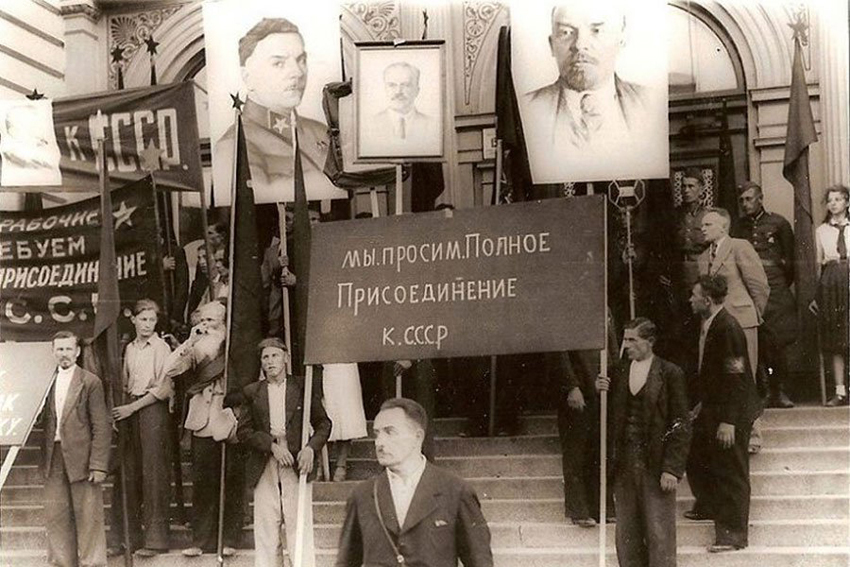
In the turmoil following World War I and the Russian Revolution, a Soviet-aligned government was proclaimed in Latvia for a brief period around 1918–1920. The better-known Latvian SSR emerged in 1940 when Soviet authorities incorporated Latvia into the USSR after the Soviet occupation. German forces occupied the country during World War II, and Soviet control was re-established in the mid-1940s. The republic remained under Moscow's authority until the late 1980s and early 1990s, when a domestic movement for restoration of independence led to the re-establishment of the Republic of Latvia.
Institutional structure and policies
Formally a Soviet socialist republic, the Latvian SSR was governed under the framework of the USSR: the Communist Party held central power, and most state institutions were integrated into Soviet ministries and structures. Economic policy emphasized nationalization of industry, collectivization of agriculture, and large-scale industrial development. Soviet planners prioritized heavy industry and urban projects, while central authorities directed economic planning and resource allocation.
Society, culture and demographics
Soviet rule brought notable changes in education, healthcare and urbanization: literacy rates rose and many social services were expanded. At the same time, policies from Moscow affected language use, cultural institutions and public life. Migration from other parts of the USSR increased the Russian-speaking population in cities and contributed to demographic shifts. Political dissent was restricted; actions such as deportations and suppression of independent organizations are important aspects of this period’s legacy.
Legacy and international status
The legal and political status of the Latvian SSR has been the subject of international debate. Many Western governments treated the Soviet incorporation of Latvia as an occupation and continued to recognize prewar Latvian diplomatic missions. The independence movement of the late 1980s, including mass demonstrations and political campaigns, culminated in restored independence in 1991 and ongoing efforts to address historical injustices, citizenship, and memory.
Notable facts
- Two distinct Soviet-era periods: a short revolutionary government after World War I and a longer Soviet period beginning in 1940.
- Interrupted by German occupation during World War II, with Soviet control reasserted afterwards.
- Major social changes included industrialization and urban growth alongside political repression and cultural controls.
- The late-20th-century independence movement in Latvia was part of a wider Baltic challenge to Soviet rule.
Related articles
Author
AlegsaOnline.com Latvian Soviet Socialist Republic Leandro Alegsa
URL: https://en.alegsaonline.com/art/56240