
Las Bela (princely state)
Las Bela was a princely state on the southern edge of British India and later part of Pakistan; ruled by Jams, it merged into West Pakistan in 1955 and later became part of Balochistan's administrative units.
Las Bela was a princely state located on the southern coast of what is now Pakistan. During the period of British paramountcy in South Asia it retained internal autonomy under hereditary rulers while recognizing British suzerainty. After the end of British rule in 1947, Las Bela's ruler opted to join Pakistan and the state was administratively absorbed into modern Pakistani structures in the 1950s.
Image gallery
5 Images
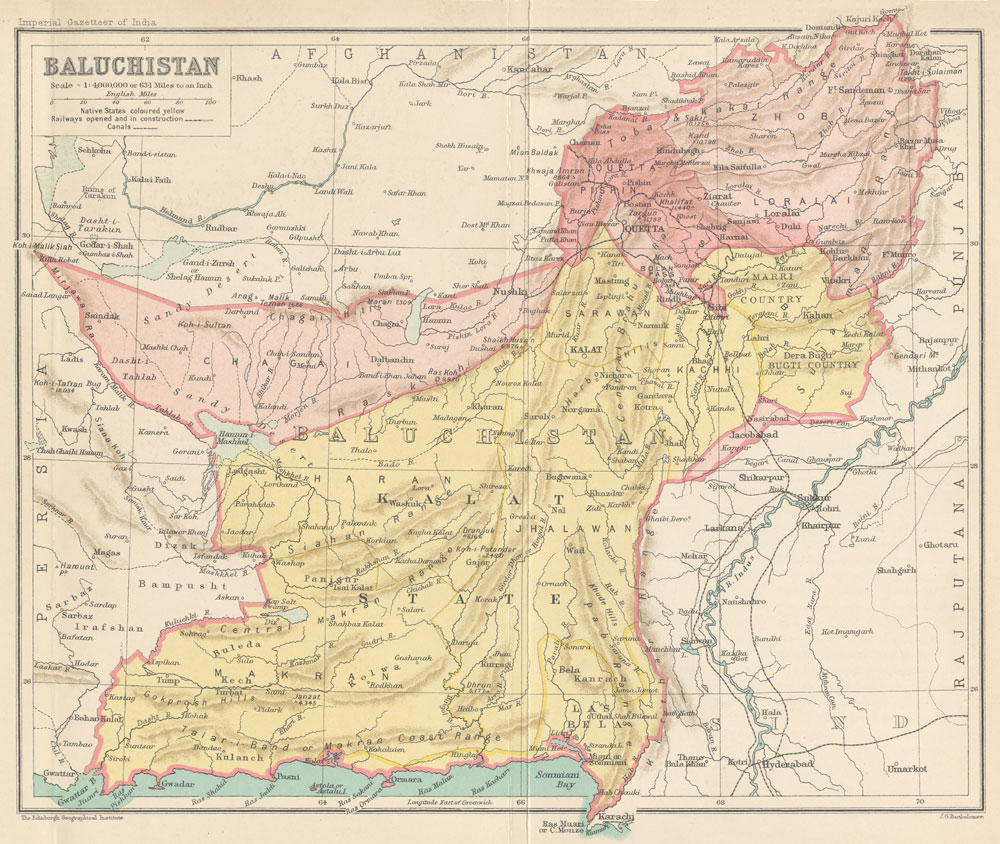


Territory and governance
The state covered a coastal and inland area that linked the Makran hinterland with the Sindh plain. Its capital was the town of Bela. The ruling family used the traditional title "Jam" and administered local affairs through customary councils and appointed officials. Society in Las Bela was largely tribal and rural, with livelihoods based on agriculture, pastoralism and coastal fishing.

History and political development
Las Bela appears in regional records as a recognized polity by the 18th and 19th centuries and came under British influence during the era of indirect rule in Baluchistan. Like other princely states of the region, it negotiated its relationship with colonial authorities while maintaining customary rule. Following the partition of British India, the state acceded to Pakistan and was later merged into larger administrative units under national reforms.

Legacy and modern status
In 1955 Las Bela was incorporated into the One Unit scheme that created West Pakistan and was subsequently reorganized within Pakistan's provincial system. Territorial and administrative changes over time placed its former area within the modern province of Balochistan and nearby divisions. Its historic courts, family archives and local traditions remain of interest to historians and to the communities that trace lineage to the old state.
Key facts
- Rulers bore the title "Jam" and exercised hereditary authority.
- Economy historically based on farming, livestock and fishing.
- Acceded to Pakistan after 1947 and merged in 1955 under national reorganization.
- Relevant links: British India context and Karachi-Bela Division.
Related articles
Author
AlegsaOnline.com Las Bela (princely state) Leandro Alegsa
URL: https://en.alegsaonline.com/art/56100