
La Vita Nuova — Dante Alighieri's Prosimetric Tribute to Beatrice
La Vita Nuova (The New Life) is Dante's short prosimetrum blending prose and poetry around his idealized love for Beatrice, an early work that shaped his spiritual vision and later The Divine Comedy.
La Vita Nuova, often rendered in English as The New Life, is a compact literary work by Dante Alighieri that combines lyrical poems with short prose commentaries. Composed near the end of the 13th century, the book presents Dante's memory of his love for Beatrice Portinari. It is widely read as both a record of personal devotion and a deliberate transformation of medieval courtly love into a Christianized, spiritual ideal. The work stands between private lyric and theological meditation, and it prepared many of the thematic and symbolic elements Dante later uses in The Divine Comedy.
Image gallery
2 Images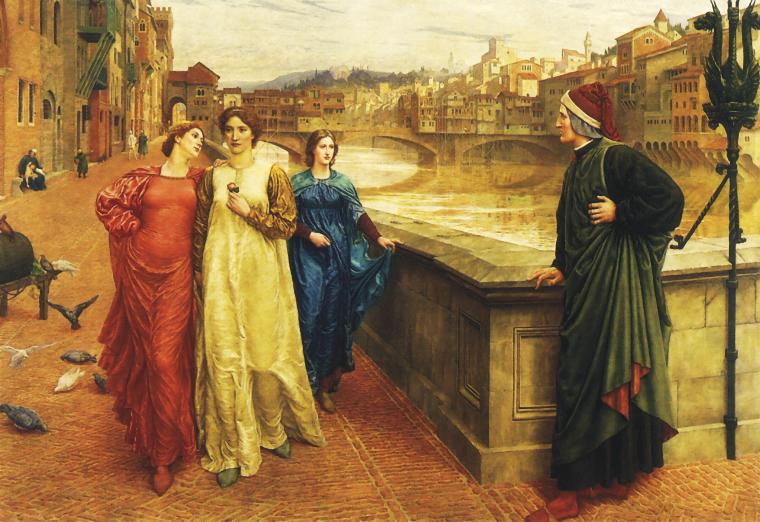

Form and style
Dante wrote La Vita Nuova in a prosimetrum style, alternating brief prose sections with poems. The prose passages explain circumstances, supply autobiographical detail, and comment on the meaning or composition of the enclosed verse; the poems—mainly sonnets and other lyric forms—are presented as expressions of feeling or as poems Dante claims to have written at particular moments. This alternation of prose and verse was a medieval practice that allowed authors to combine narrative clarity with poetic intensity.
Themes and content
At its core the book narrates Dante's encounters with Beatrice, treating her first as an object of courtly admiration and eventually as a spiritual guide whose presence elevates the lover's soul. While echoing conventions of courtly love, Dante reshapes that tradition: affection becomes a ladder to divine contemplation rather than a purely social or romantic game. The work explores memory, poetic creation, grief, and the belief that earthly love can point beyond itself toward salvation.
Historical context and importance
Written before Dante's exile and before the completion of his major epic, La Vita Nuova occupies a distinctive place in his development. It shows his early mastery of Tuscan vernacular and his interest in making Italian a vehicle for refined thought and spiritual reflection. The book influenced generations of poets who sought to fuse passion with moral purpose, and it clarified the symbolic role of Beatrice, who later reappears as a key interlocutor and guide in Dante's grander allegory.
Key aspects and legacy
- Structure: alternation of narrative prose and lyrical poems, a classic prosimetrum approach.
- Language: use of the vernacular Tuscan idiom rather than Latin, helping shape Italian literary language.
- Transformation of courtly motifs into a Christianized vision of love and salvation.
- Continuity with later work: themes and the figure of Beatrice link directly to The Divine Comedy.
Readers approaching La Vita Nuova today find a work that is at once intimate and deliberately emblematic: a sequence of recollections and poems where personal feeling becomes a vehicle for literary innovation and spiritual reflection. Dante's blending of autobiography, lyric art, and allegory makes the book an instructive example of how medieval writers adapted inherited forms to new expressive and theological ends. For biographical orientation and study of Dante's imagery, see editions and commentaries that map the interplay of life, poem, and symbol in this brief but influential text, and consult resources on Dante's life and medieval literary culture for broader context by following references such as Dante's biography and critical summaries available in scholarly guides The New Life readers' notes or translations on courtly love and prosimetrum technique in medieval literature.
Related articles
Author
AlegsaOnline.com La Vita Nuova — Dante Alighieri's Prosimetric Tribute to Beatrice Leandro Alegsa
URL: https://en.alegsaonline.com/art/55164