
La Rosaleda (Málaga football stadium)
La Rosaleda is Málaga's principal football stadium and home ground of Málaga CF. Opened in the mid-20th century, it hosted three matches at the 1982 FIFA World Cup and now serves sports and cultural events.
La Rosaleda is the principal football stadium in Málaga, Spain. Located near the city centre on the Costa del Sol, it is best known as the home ground of Málaga CF and as one of the host venues for the 1982 FIFA World Cup. For more information and event listings see the official site.
Image gallery
5 Images

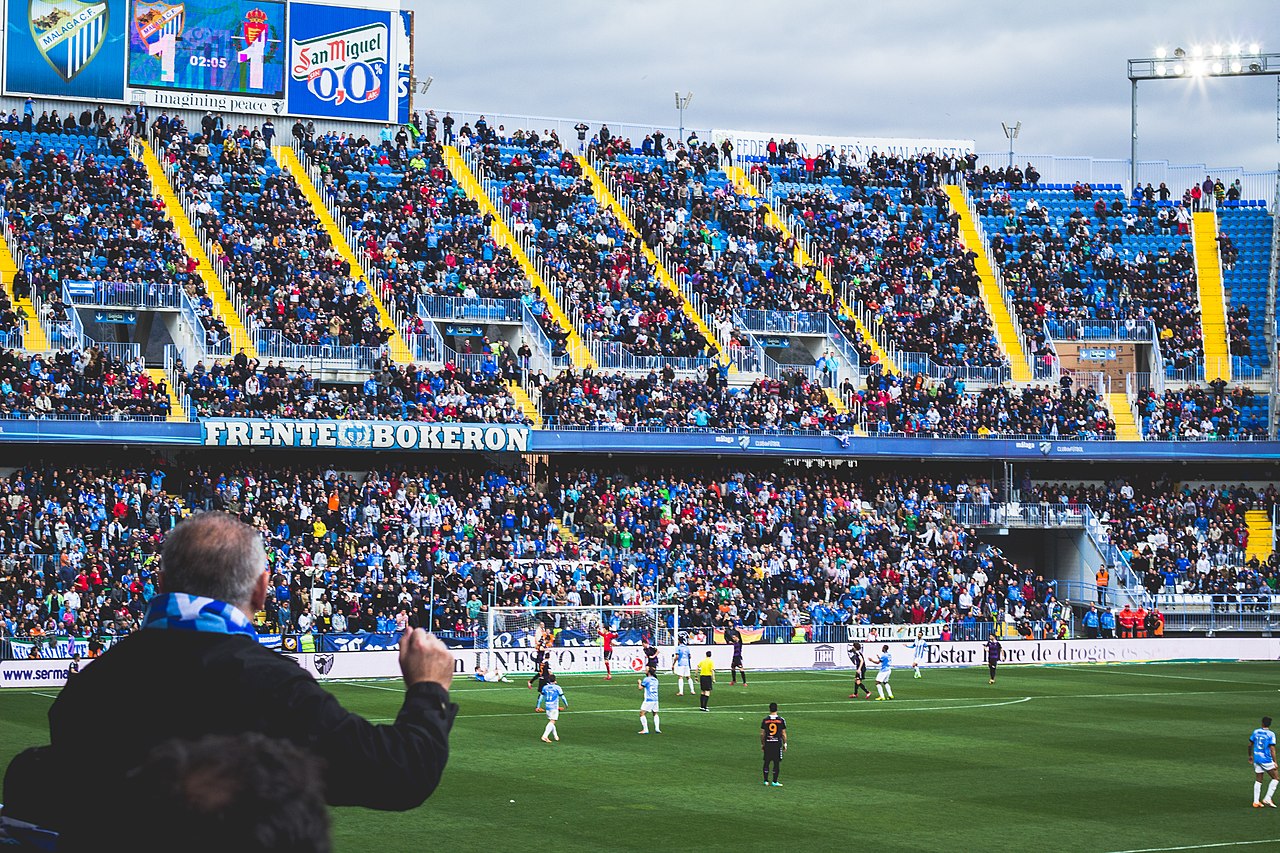


Overview and name
The stadium’s name, La Rosaleda, literally means "rose garden" in Spanish. Built in the mid-20th century, the venue has been adapted over time to meet modern safety and comfort standards while retaining its compact, urban character. It typically accommodates an audience of around 30,000 spectators and is arranged as a rectangular pitch surrounded by continuous stands.
Characteristics and facilities
La Rosaleda combines traditional bowl seating with more recently covered sections and modern service facilities. Key features include:
- Natural grass playing surface kept to regulation dimensions for professional football.
- Mixed seating with both uncovered and roofed areas to improve spectator comfort.
- Support facilities for players and teams, press areas and hospitality zones used for corporate and match-day functions.
History and development
Originally opened in the early 1940s, the stadium has undergone several renovation phases in the late 20th and early 21st centuries to upgrade safety, seating and media infrastructure. These improvements have allowed it to retain a role in national and international football schedules while serving the local club through its changing competitive fortunes.
Uses and notable events
La Rosaleda stages the home matches of Málaga CF in domestic leagues and cup competitions and has hosted international fixtures and friendly matches. One of its most prominent moments was hosting three matches during the 1982 FIFA World Cup. Beyond sport, the ground is occasionally used for concerts and community events, reflecting its role as a multi‑purpose urban venue.
Significance and community role
As Málaga’s main football arena, La Rosaleda is a focal point for local identity and sporting culture. It serves fans across the province and contributes to the city’s visitor economy on match days. While not among the largest stadiums in Spain, it is valued for its history, central location and adaptability for a variety of public events.
Related articles
Author
AlegsaOnline.com La Rosaleda (Málaga football stadium) Leandro Alegsa
URL: https://en.alegsaonline.com/art/55105