
Kokoda Front Line! — 1942 Australian wartime documentary
Kokoda Front Line! is a 1942 Australian newsreel-style documentary filmed on the Kokoda Track. Shot by Damien Parer and directed by Ken G. Hall, it won an Academy Award and remains a key record of the campaign.
Overview
Kokoda Front Line! is a full-length wartime newsreel–style documentary produced in 1942 that records aspects of the fighting on the Kokoda Track in Papua New Guinea. Filmed on location, the footage focuses on the daily experience of Australian soldiers engaged in jungle warfare, the conditions of supply and casualty evacuation, and the human cost of the campaign. The film was distributed as part of Australia’s wartime information efforts and was widely seen by domestic audiences.
Image gallery
1 Image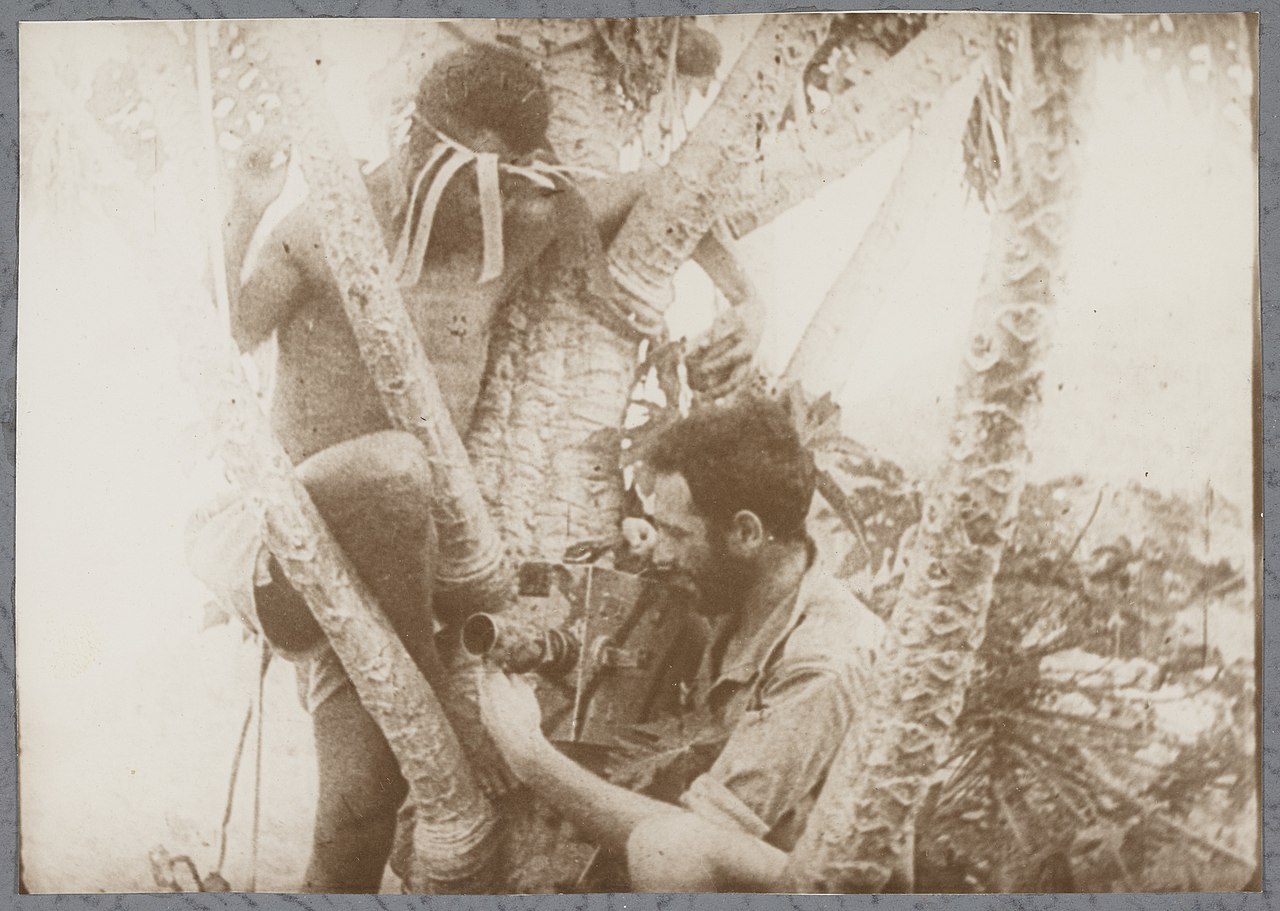
Production and creators
The film was produced by the Australian News & Information Bureau in collaboration with Cinesound Productions. The principal cinematographer was the Australian war photographer Damien Parer, whose frontline footage provides much of the film’s visual authority. Direction and editorial assembly were handled by producer-director Ken G. Hall, who shaped the footage into a coherent documentary record. For background on the newsreel context, see the contemporary sections of Australian newsreels.
The project was made under wartime constraints: limited equipment, difficult jungle terrain, and the need to transmit film and information to both military and civilian audiences. It was released in 1942 and formed part of a series of short documentary and news films made to inform and sustain morale at home. Contemporary distribution and exhibition followed the patterns of government-backed wartime publicity; more on the era is available at 1942-era records.
Content and characteristics
Kokoda Front Line! combines raw, on-the-ground camerawork with narration and explanatory intertitles typical of the newsreel form. Its most notable characteristics are:
- Black-and-white frontline cinematography capturing small-unit actions, jungle conditions, and medical evacuation.
- An emphasis on soldiers’ daily experience rather than grand strategic overview.
- A concise running time and a format designed for theatrical newsreel programs rather than feature film exhibition.
The visual immediacy of Parer’s footage and the editorial shaping by Hall give the film both documentary value and a persuasive tone intended for wartime audiences.
Reception and legacy
The film received international recognition and is widely noted for being the first Australian-made motion picture to receive an Academy Award, winning in the documentary category. That success underscored the global attention attracted by frontline reportage from the Pacific theatre and marked an important moment for Australian cinema in the wartime period. Parer’s work in Kokoda Front Line! consolidated his reputation as a leading wartime cinematographer; he later lost his life while filming in New Guinea.
Today the film is regarded as a historically important visual record of the Kokoda campaign and as a milestone in documentary filmmaking in Australia. Film historians cite it when discussing wartime propaganda, the development of documentary practice, and the relationship between reportage and national memory. For more on the film’s director and production context, see materials on Ken G. Hall.
Related articles
Author
AlegsaOnline.com Kokoda Front Line! — 1942 Australian wartime documentary Leandro Alegsa
URL: https://en.alegsaonline.com/art/54156