
Koyaanisqatsi (1982) — experimental film by Godfrey Reggio
1982 experimental, dialogue-free film directed by Godfrey Reggio with a score by Philip Glass. A visual meditation contrasting nature and industrial modernity; part of the Qatsi trilogy.
Overview
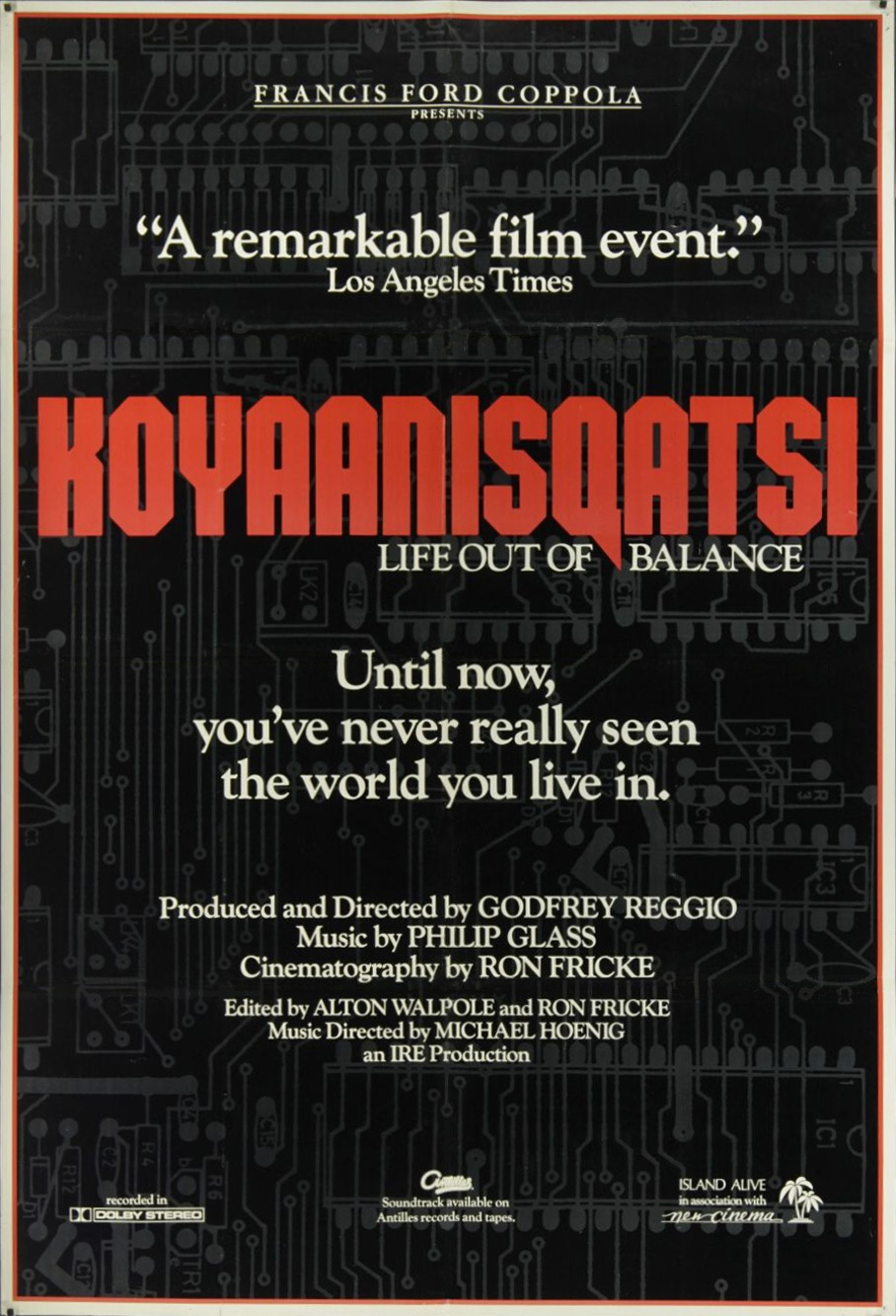
Koyaanisqatsi is a 1982 experimental feature film directed and produced by Godfrey Reggio. The work contains no conventional dialogue or plot; instead it presents a prolonged visual meditation contrasting images of the natural world with scenes of urban and industrial life. Its title is taken from the Hopi language and is commonly translated as "life out of balance," a phrase that shapes the film's thematic intent: to prompt reflection on the relationship between human systems and the environment.
Image gallery
6 Images


Visual approach and techniques
The film is built from sequences of striking cinematography and editing rather than narrative exposition. Cinematographer Ron Fricke employed time-lapse, slow motion, close-up detail, aerial photography and long, composed takes to create rhythms and motifs. These techniques transform ordinary urban and industrial scenes—traffic, factory assembly lines, crowded sidewalks—into patterns that emphasize repetition and scale. The montage frequently juxtaposes machines and architecture with landscapes and human faces to suggest tension between natural processes and mechanized modern life.
Music and sound
Philip Glass provided a minimalist score that functions as an equal partner to the images. Built from repeating musical phrases, evolving harmonies and shifting tempo, the soundtrack intensifies the visual pacing and emotional undercurrent without using words. The interplay of Glass's music and the film's editing produces an immersive sensory experience; many viewers note that the score amplifies the film's meditative, sometimes unsettling atmosphere.
Notable scenes and examples
Among the film's most discussed sequences is the documented demolition of the Pruitt–Igoe public housing complex, a stark urban ruin that has become emblematic of postwar planning failures. Other memorable material includes factory interiors where identical objects move in endless repetition, close-ups of faces in crowded streets, and accelerated footage of highways and airports that turn movement into visual texture. The absence of narration invites viewers to form their own interpretations and associations.
Context, trilogy and influence
Koyaanisqatsi is the first installment of the so-called Qatsi trilogy, followed by Powaqqatsi (1988) and Naqoyqatsi (2002), each exploring different aspects of the human condition in relation to technology and tradition. The film's hybrid of documentary imagery and experimental film language influenced later filmmakers, composers and visual artists; its methods can be seen echoed in documentary montages, environmental media, and concert visuals. Cinematographer Ron Fricke would later direct similarly meditative films such as Baraka, continuing the visual tradition begun here.
Legacy and further information
Today Koyaanisqatsi is frequently discussed in film studies, environmental humanities and music courses for its distinctive synthesis of image and sound and for its open-ended critique of modernity. Because it eschews explanatory voiceover, the film remains a work that prompts conversation about balance, progress and consequence. For additional context and archival material consult resources listed here: further reading and related materials.
- Key features: non-narrative structure, emphasis on montage, strong audiovisual integration.
- Common uses: classroom screenings, museum installations, soundtrack study.
- Distinctions: part of a thematic trilogy; notable for Philip Glass score and iconic cinematography.
Questions and answers
Q: Who directed and produced the movie Koyaanisqatsi?
A: Godfrey Reggio directed and produced the movie Koyaanisqatsi.
Q: Who composed the music for the movie Koyaanisqatsi?
A: Philip Glass composed the music for the movie Koyaanisqatsi.
Q: What does the title Koyaanisqatsi mean in the Hopi Indian language?
A: The title Koyaanisqatsi means "life out of balance" or "crazy life" in the Hopi Indian language.
Q: What is the movie Koyaanisqatsi designed to do?
A: The movie Koyaanisqatsi is designed to make us question our modern way of life and to see that the way we live now is not in balance with nature.
Q: What are some of the images shown in the movie Koyaanisqatsi?
A: Some of the images shown in the movie Koyaanisqatsi include the organised demolition of the Pruit Igoe housing complex, the inside of a factory producing endless copies, the faces of strangers in crowded streets, and time-lapse images of cars and other vehicles speeding along cities.
Q: How would you describe the effect of the music and the movie together in Koyaanisqatsi?
A: The effect of the music and the movie together in Koyaanisqatsi is very powerful.
Q: Is Koyaanisqatsi a standalone movie or part of a trilogy?
A: Koyaanisqatsi is part of the Qatsi trilogy.
Related articles
Author
AlegsaOnline.com Koyaanisqatsi (1982) — experimental film by Godfrey Reggio Leandro Alegsa
URL: https://en.alegsaonline.com/art/54382
Sources
- koyaanisqatsi.org : "Koyaanisqatsi Home Page"