
Kiss of Death (1995 film)
1995 crime thriller directed by Barbet Schroeder. An ex-con in New York struggles to stay straight but is pulled into stolen-car trafficking and threatened by a violent gangster. Stars Caruso, Cage, Hunt, Jackson.
Kiss of Death is a 1995 crime thriller directed by Barbet Schroeder that reinterprets classic noir themes for an urban 1990s setting. Set in New York City, the film follows an attempt at reinvention by a recently released prisoner who seeks a lawful life but becomes entangled with organized crime. The movie functions as both a character drama and a tense suspense piece, and it was released in April 1995 to a mixed critical response.
Image gallery
1 Image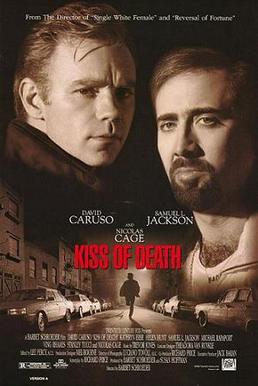
Plot overview
The central figure is Jimmy Kilmartin, an ex-con trying to rebuild his marriage and avoid old habits. Pressures and opportunistic criminals draw him into transporting stolen vehicles, a choice that escalates as his path crosses with a dangerous and unpredictable crime boss known as Little Junior Brown. The story focuses on moral choices, the pull of past associations, and the consequences of getting drawn back into illegal dealings; it keeps many precise twists deliberately out of synopsis to preserve the film's suspense.
Cast and characters
Performances anchor the film: David Caruso plays the conflicted Jimmy Kilmartin, while Nicolas Cage portrays the volatile antagonist Little Junior Brown. Helen Hunt appears as Bev Kilmartin, Jimmy's wife, and Samuel L. Jackson plays a law-enforcement figure whose investigations complicate Jimmy's attempts to stay clean. Each actor brings a different tonal register, from quiet desperation to explosive menace.
- David Caruso as Jimmy Kilmartin
- Nicolas Cage as Little Junior Brown
- Helen Hunt as Bev Kilmartin
- Samuel L. Jackson as Detective Calvin
These leads create a dynamic in which personal stakes and procedural urgency collide. The film emphasizes tense confrontations and the ways ordinary routines can fracture under criminal pressure.
Style, themes and reception
Kiss of Death draws on noir conventions—moral ambiguity, urban malaise, and a protagonist trapped between two worlds—but places them in contemporary surroundings. Critics noted the film's moody atmosphere and its interest in recidivism, betrayal, and volatile violence; opinions diverged on pacing and whether the remake matched the impact of earlier films in the same vein. It has been discussed as part of a 1990s trend of revisiting mid‑century crime stories with modern sensibilities.
The film remains of interest to viewers who follow actor-driven thrillers and those curious about how classic noir narratives are adapted for late‑20th‑century cinema. For further reference on production details and contemporary critiques, see related reviews and film summaries linked through archival and film-study resources.
New York setting and locations are integral to the film's tone, and cast interviews and production notes (see actor profiles and cast commentaries) provide additional perspective on the movie's creative choices. Additional materials and database entries can be consulted for box-office figures and a fuller critical history here.
Related articles
Author
AlegsaOnline.com Kiss of Death (1995 film) Leandro Alegsa
URL: https://en.alegsaonline.com/art/53821