
Kingsway (London) — central London boulevard and thoroughfare
Kingsway is a principal north–south boulevard in central London (A4200), created in the early 20th century to link High Holborn and Aldwych; it hosts notable institutional buildings and a disused tram tunnel beneath it.
Kingsway is a major north–south thoroughfare in central London carrying the A4200 designation. It runs from High Holborn in the north to Aldwych in the south, forming one of the principal links between the historic east–west routes of High Holborn and the Strand. The road lies at the meeting point of the London Borough of Camden and the City of Westminster and serves a mix of commercial, institutional and transport functions.
Image gallery
10 Images


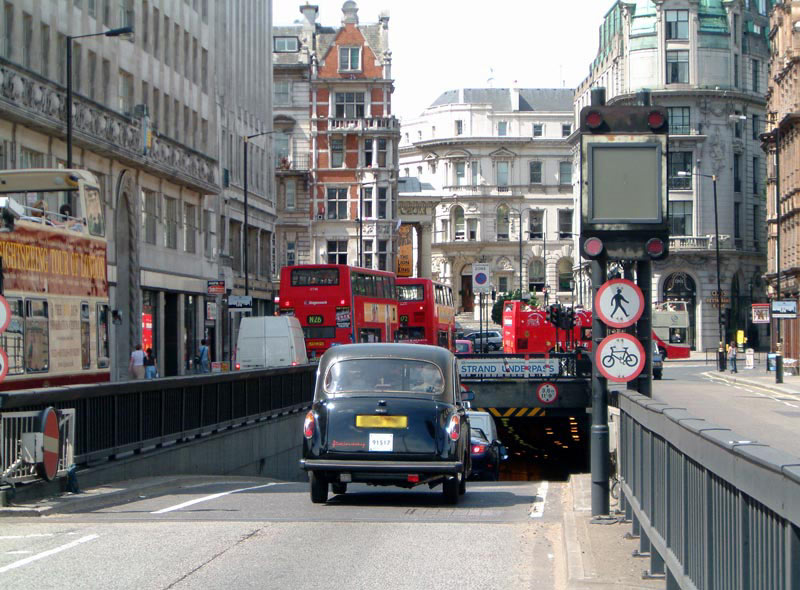


Design and physical features
Conceived as a wide tree-lined boulevard rather than a narrow medieval street, Kingsway was laid out as part of an early 20th-century redesign of central London. The surface is dominated by multi-lane traffic and broad pavements; the buildings that line it include large office blocks, public institutions and interwar commercial façades. Beneath the street is a notable piece of infrastructure: the Kingsway tramway subway, a subsurface tunnel built to carry trams under the centre of London and later repurposed for other uses.
History and development
Kingsway was created during major urban improvement works in the early 1900s when older, congested neighbourhoods were cleared to make way for a modern thoroughfare. The scheme reflected contemporary planning ambitions to provide straight, wide routes for traffic, light and air. Over subsequent decades the area evolved with the addition of large government and commercial buildings and alterations to cater for changing transport patterns.
Uses and notable places
The road is flanked by institutions and landmarks associated with law, media and commerce. One prominent complex on the route is Bush House, long associated with international broadcasting. Nearby are the cultural and civic amenities of the Strand and the Aldwych area. Several Underground stations close to Kingsway connect it to central London, and the disused Aldwych tube station—no longer open for regular passenger service—has been used as a film location and for occasional heritage visits.
Distinctions and contemporary importance
Kingsway remains important as a traffic artery in central London and as a spine for business and public services. Its creation transformed a densely built medieval quarter into a deliberately planned boulevard, and the buried tramway is frequently cited as an interesting example of early 20th-century transport engineering. Today the street balances heavy traffic flows with a concentration of offices, studios and institutional buildings that together reflect its role in the civic and commercial life of central London.
Related articles
Author
AlegsaOnline.com Kingsway (London) — central London boulevard and thoroughfare Leandro Alegsa
URL: https://en.alegsaonline.com/art/53677
Sources
- tools.wmflabs.org : 51°30′55.2″N 0°07′08.2″W / 51.515333°N 0.118944°W / 51.515333; -0.118944