
Kampala — capital and largest city of Uganda
Kampala is Uganda’s political, cultural and economic centre on rolling hills near Lake Victoria. It hosts national institutions, universities such as Makerere, theatres, markets and serves as a regional transport hub.
Overview
Kampala is the capital and principal city of Uganda. Originally built on a group of hills, it has expanded into the country’s administrative, commercial and cultural heart. The municipal population is commonly given as more than 1,800,000 residents, with a larger metropolitan population in surrounding districts and suburbs. Kampala blends government offices and modern shopping centres with informal markets, varied neighbourhoods and historic sites.
Image gallery
10 Images




Geography and urban structure
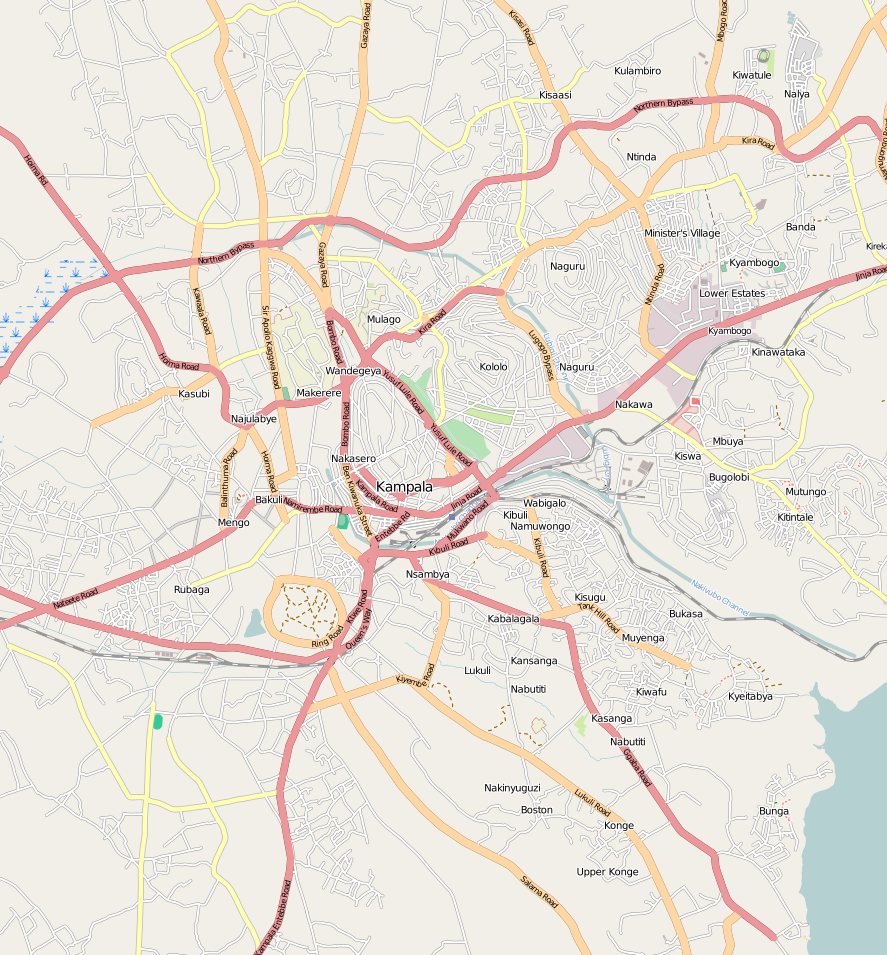
The city sits near the northern shore of Lake Victoria and occupies a series of low, undulating hills and valleys. Streets and neighbourhoods follow the natural topography, producing distinct quarters, market areas and residential slopes. Urban growth has extended into adjacent plains and wetlands; planning seeks to balance development with environmental concerns, especially around watercourses that drain to the lake.
History and development
The area that became Kampala was inhabited for centuries and rose in regional importance during the late 19th and early 20th centuries as colonial administrators established administrative centres. After Uganda’s independence Kampala developed as the national seat of government and a focal point for infrastructure and services. The city has grown through phases of rapid migration, economic change and efforts to modernise transport, housing and public utilities.
Demographics and administration
Kampala is administratively distinct within Uganda and contains multiple divisions and local councils that manage municipal services. Its population is diverse in ethnicity, language and religion, reflecting migration from across the country and the region. Municipal authorities and national ministries share responsibilities for planning, sanitation and public works in the urban area.
Economy and markets
The city is Uganda’s primary commercial hub. Formal sectors such as banking, government services, hospitality and retail coexist with a large informal economy: street vendors, open-air markets and small enterprises provide livelihoods for many residents. Major markets and shopping districts draw traders from across the country, while light industry and services support regional trade.
Culture, education and sport
Kampala hosts important cultural institutions, including the Uganda National Theatre and a variety of museums, galleries and performance venues. Higher education is anchored by prominent institutions such as Makerere University, which has long attracted students from across East Africa. Music, theatre and festivals are active parts of city life. Sport is popular, notably football; historic clubs such as Kampala City Council (KCC) Football Club have played major roles in national competitions.
Transport and landmarks
The city functions as a transport nexus for road and air links. Entebbe International Airport lies to the southwest and connects the country internationally, while an extensive road network links Kampala with other regions and neighbouring states. Landmarks include government buildings, major markets, religious sites and public parks. Lakeside areas near Lake Victoria are used for recreation, small-scale fishing and leisure activities.
Environment and contemporary issues
Kampala faces common challenges of rapidly growing cities: pressure on infrastructure, traffic congestion, solid waste management and the loss of wetlands. Authorities, non-governmental organisations and community groups work on upgrading services, improving public transport and implementing regulations to protect key natural areas. Planning aims to improve living conditions while accommodating continued growth.
Further information
For civic services, tourism details and official documents, readers can consult municipal and national resources. A general city resource is available here, and further context on the region and its waterways can be found via resources on Lake Victoria and national portals for Uganda.
Related articles
Author
AlegsaOnline.com Kampala — capital and largest city of Uganda Leandro Alegsa
URL: https://en.alegsaonline.com/art/52051
Sources
- ubos.org : ubos.org/wp-content/uploads/publications/09_2019Final_2020_21_LLG_IPFs_Sept_2019.pdf
- pulselive.ug : "Who Is Andrew Kitaka Mubiru, The KCCA Acting Executive Director?"