
John and Mary (1969 film)
1969 romantic drama film directed by Peter Yates, adapted from Mervyn Jones's novel, starring Dustin Hoffman and Mia Farrow; an intimate, conversation-driven study of modern relationships.
Overview
John and Mary is a 1969 American romantic drama that examines the fragile, often comic dynamics between two people who briefly meet and then attempt to explore whether their connection can become something more. The picture was directed by Peter Yates and is adapted from the novel by Mervyn Jones. It was released by a major studio and is notable for its focus on dialogue and character rather than spectacle.
Image gallery
1 Image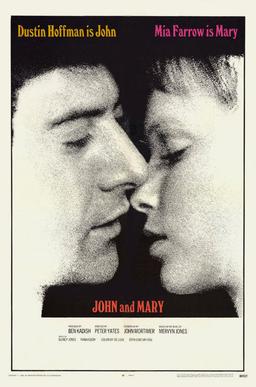
Principal cast and credits
- Dustin Hoffman as John
- Mia Farrow as Mary
- Tyne Daly in a supporting role
- Olympia Dukakis among the ensemble
- Michael Tolan and others in supporting parts
Plot and themes
The story centers on two strangers who spend a night together and then must confront what that encounter means for their lives. Much of the film proceeds through conversations, revisited memories, and the small, revealing moments that can determine whether a relationship has staying power. Themes include intimacy and miscommunication, urban loneliness, changing social mores of the late 1960s, and the way memory reshapes brief encounters.
Production and historical context
Made at the end of the 1960s, John and Mary reflects a period when American cinema was experimenting with realism and character-focused narratives. Its director had recently garnered attention for a very different kind of film, and the casting paired two actors who were widely recognized from high-profile projects of the era. The movie is an adaptation of a novel and was produced and distributed within the studio system while embracing a more intimate, modern sensibility.
Reception and legacy
At the time of release, critics and audiences responded variably; many reviewers singled out the performers' chemistry and the film's conversational approach, while others wished for a stronger narrative propulsion. Over time it has been noted as an example of late-1960s romantic drama that privileges character study over plot, and it is often remembered for the lead performances and its snapshot of a changing social moment.
Notable facts and distinctions
John and Mary stands apart from contemporary studio fare by concentrating on two characters' emotional lives rather than genre trappings. Its ensemble includes actors who later built significant careers, and the film is frequently cited in discussions of intimate cinema from the period. For readers seeking more details on the director, cast, or source novel, consult dedicated filmographies and bibliographies for further context.
Related articles
Author
AlegsaOnline.com John and Mary (1969 film) Leandro Alegsa
URL: https://en.alegsaonline.com/art/50535