
Approximation theory: methods, history, and applications
Overview of approximation theory: goals, common methods (polynomials, splines, Fourier), historical development, applications in computation and engineering, and important distinctions.
Approximation theory is the area of mathematics that studies how functions can be approximated by simpler, more tractable objects while controlling the size and nature of the error. The central question is practical: given a target function and a region of interest, how can one construct an approximation that is sufficiently accurate according to a chosen measure (for example, maximum error, mean-square error, or relative error)? Approximations are essential when exact formulas are unknown, expensive to evaluate, or when data are noisy.
Image gallery
4 Images
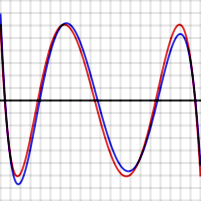
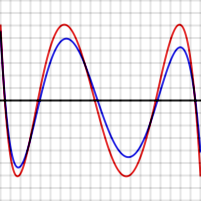
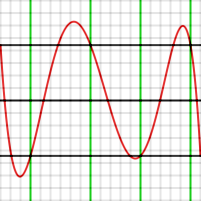
Core concepts
Key ideas include the choice of approximation family (polynomials, trigonometric series, rational functions, splines), the error norm used to quantify accuracy (uniform, L2, weighted norms), and notions of convergence (pointwise, uniform, in norm). A related concept is best approximation: within a specified class of approximants, one seeks the element that minimizes the chosen error. Stability and computational cost are also important in practice.
Common methods
- Polynomial approximation: using polynomials of low degree; includes Taylor polynomials and minimax approximations.
- Trigonometric and Fourier methods: representing periodic functions by sums of sines and cosines and studying convergence in various norms.
- Spline and piecewise methods: piecewise polynomials with smoothness constraints, widely used for interpolation and data fitting.
- Rational approximation: ratios of polynomials useful for functions with poles or rapid variation.
Historical notes
The field grew from 19th- and early 20th-century work on series and interpolation. Classical results include Stone–Weierstrass type theorems that guarantee uniform approximation under broad hypotheses, and the development of Chebyshev polynomials and related minimax theory describing optimal polynomial approximants. Over time the subject has interfaced with numerical analysis, functional analysis, and computational methods.
Applications and examples
Approximation theory underlies many numerical techniques: designing efficient algorithms for evaluating functions, constructing numerical quadrature rules, compressing signals, and creating computer-aided geometric design via splines. In statistics and machine learning, approximation ideas appear in basis expansions and kernel methods. Engineers use approximation to simplify models for simulation and control.
Important distinctions and facts
Approximation differs from interpolation: interpolation insists on matching given data exactly, while approximation allows controlled deviation to reduce overall error or instability. Uniform approximation focuses on worst-case error, whereas L2 (mean-square) approximation emphasizes average behavior. The study of rates of approximation links function smoothness to how fast approximation error can decay as the complexity of the approximant increases.
For introductions, surveys and computational resources see general references, algorithmic notes at numerical sources, historical overviews at survey pages, and software-related material at implementation guides. These pointers can help bridge theory and practice when selecting approximation techniques for a given problem.
Related articles
Author
AlegsaOnline.com Approximation theory: methods, history, and applications Leandro Alegsa
URL: https://en.alegsaonline.com/art/5021