
Jack and the Beanstalk (English fairy tale)
A classic English folktale about a boy named Jack, a magic beanstalk, a giant's treasure and a golden-egg-laying goose; notable for its motifs, moral debates, and many stage and screen adaptations.
Jack and the Beanstalk is a traditional English fairy tale told about a poor boy named Jack who climbs a magic beanstalk into the realm of a giant, seizes treasures that promise wealth, and returns home having defeated the giant. The short narrative has entered popular culture through books, theatre, film and television, and is often told to children while provoking discussion about its moral implications.
Image gallery
8 Images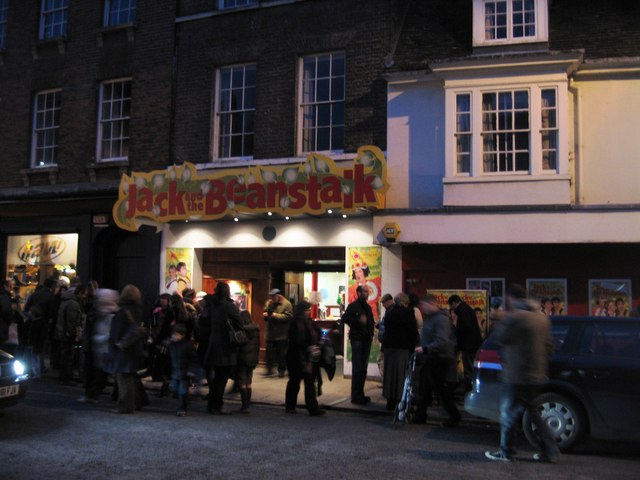


Plot summary
Typical retellings begin with Jack living in poverty with his mother and a cow. Jack trades the cow for a handful of mysterious beans; the beans sprout overnight into an enormous beanstalk reaching the clouds. Jack climbs and discovers a giant's castle containing a hen that lays golden eggs and a self-playing harp, among other riches. He takes items on successive visits, and in the best-known ending he cuts down the beanstalk as the giant descends, causing the giant's fall and leaving Jack and his family prosperous.
Characteristics and motifs
The tale combines a limited cast, episodic thefts, and supernatural growth. Recurrent motifs include magical plants, a journey to an otherworldly realm above the sky, a monstrous antagonist (the giant), and enchanted objects that confer wealth. Different tellings vary which treasures appear and how Jack acquires them, but the structure—risk, ascent, plunder, flight, and resolution—remains consistent.
History and variants
The story appeared in print by the early 18th century and was later popularized in standard collections in the 19th century. It belongs to a broader family of folktales in which a young protagonist takes valuables from a supernatural giant or ogre; versions and analogues circulate in oral traditions and regional storytelling. Collectors and editors have adapted the text for different audiences, producing both longer literary versions and short children's variants.
Themes, reception and adaptations
Readers and scholars note themes of social mobility, resourcefulness, and the ethics of stealing from a more powerful being. The tale has prompted debate about whether Jack is a clever hero or an immoral thief. It has been staged as pantomime, illustrated in children's books, and adapted in films and television, often emphasizing adventure and wonder. The goose that lays golden eggs and the singing harp have become enduring images associated with the story.
Notable facts
- Its concise, action-driven plot makes it a staple of storytelling and childhood reading.
- Adaptations range from faithful retellings to parodies and modern rewritings that explore the giant's perspective or Jack's motives.
- The tale's motifs are widely used in popular media to signal sudden fortune, risky enterprise, or the crossing of boundaries between worlds.
Related articles
Author
AlegsaOnline.com Jack and the Beanstalk (English fairy tale) Leandro Alegsa
URL: https://en.alegsaonline.com/art/48841